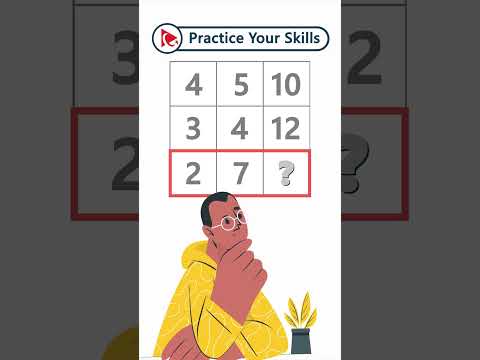
You know those moments when you’re just curious about how your brain works? Like, why can’t I figure out that puzzle everyone else seems to nail?
That’s where something like the 123iq test comes in. It’s not just a bunch of random questions. It’s a way to peek into your mind and see what you’re working with.
Think of it as a little brain workout, right? Some folks rave about it, while others are like, “Nah, not for me.” Either way, it definitely sparks some interesting conversations.
So, let’s unpack this whole thing together and see what makes the 123iq test tick—or maybe even what makes your brain tick!
Understanding the IQ Test: Its Role and Importance in Mental Health Assessment
Understanding IQ tests, like the 123 IQ test, is key to grasping how mental abilities are assessed and what that means for mental health. Essentially, an IQ test measures a range of cognitive skills. Things like reasoning, problem-solving, and logical thinking. You know, those brainy things that help you navigate life.
Now, let’s talk about its role. These tests can help identify a person’s cognitive strengths and weaknesses. For instance, if someone struggles with verbal tasks but shines in spatial reasoning, this could point to specific learning needs or styles. It’s not just numbers; it tells a story about how your mind works.
Here are some important points about the IQ test:
- Diagnostic tool: Mental health professionals often use IQ tests as part of a larger battery of assessments.
- Identify learning disabilities: By understanding cognitive strengths and weaknesses, professionals can spot issues such as dyslexia or ADHD.
- Inform treatment plans: Knowing a person’s intellectual profile can help tailor therapy approaches that fit their needs better.
- Predict academic performance: Higher IQ scores may correlate with better academic outcomes, but it’s not the only factor—motivation plays a huge role too!
It’s pretty interesting when you think about it. Let me share something personal here. I’ve seen friends struggle in school despite their intelligence just because they weren’t tested or taught in ways that matched their style of learning. A good therapist might use an IQ test to get insights and then adapt strategies for those individuals to thrive.
However, there are some caveats too! While these tests provide valuable information, they’re not the full picture of someone’s potential or worth. Much depends on environmental factors like educational opportunities and emotional support systems at home. Also, culture can play a significant role in how individuals perform on these assessments.
Moreover, labeling someone based solely on an IQ score can be harmful—like putting them in a box that doesn’t allow for growth or change. Remember that intelligence is multifaceted! It’s shaped by experience, creativity, emotional intelligence—stuff that doesn’t always come through on paper.
In summary, while instruments like the 123 IQ test hold importance in mental health assessment and understanding mental abilities, they should be viewed as part of a broader conversation about who we are as people. Everyone has unique qualities that contribute to their overall potential—something no single test could ever capture fully!
Understanding the Differences Between Mental Ability Scales and IQ Tests
Understanding the differences between mental ability scales and IQ tests can be a bit confusing, but it’s totally worthwhile to get your head around. So, here’s the lowdown.
Mental ability scales are broad tools that assess various cognitive skills like problem-solving, memory, and reasoning. They’re all about gauging how well you can think and respond to challenges in everyday life. Think of them as a toolbox; each tool measures something different.
On the flip side, IQ tests (Intelligence Quotient tests) specifically focus on measuring intellectual potential. They often zero in on logic, mathematical skills, and language abilities. It’s like honing in on just one tool when you’re trying to understand how handy a person is overall.
Now, let’s dig into some key differences:
- Scope: Mental ability scales tend to cover a wider range of skills than IQ tests. They might assess emotional understanding or practical problem-solving too.
- Purpose: While both aim to understand cognitive abilities, IQ tests usually serve more formal purposes like determining educational needs or identifying giftedness.
- Administration: Mental ability scales can be informal—sometimes even self-reported—while IQ tests are typically standardized and need trained professionals.
- Scoring: The scoring systems differ as well; mental ability scales might give you a profile of strengths across various areas, whereas an IQ test gives you a single score.
To give you a sense of how this plays out in real life: Imagine someone takes an IQ test and scores really high. That means they have strong analytical skills or quick reasoning abilities. But if they take a mental ability scale next, they might find out they’re less great at other types of thinking—like emotional intelligence or social interactions—which is also super important.
A common mental ability scale might be something like the Wechsler Adult Intelligence Scale (WAIS). This looks at multiple facets of intelligence rather than just giving one number. So if you’re not performing well on an IQ test but score decent on WAIS, it could mean your strengths lie elsewhere.
The 123iq test comes into play here as another way people try to assess their cognitive skills. It claims to measure various aspects of intelligence similar to traditional methods but sometimes without those rigorous standards you’d see elsewhere. It can be fun for self-assessment but keep in mind—it shouldn’t replace formal evaluations if accuracy matters.
Ultimately, understanding both mental ability scales and IQ tests lets you appreciate the full picture of someone’s cognitive health. Each has its place—like puzzle pieces that help complete the image of who we are mentally!
Understanding the Role of the 123 IQ Test in Assessing Mental Abilities and Cognitive Function
Alright, let’s chat about the 123 IQ Test and what it really does when it comes to assessing mental abilities and cognitive function. You might have heard of IQ tests before; they’re those little scorecards that give you a peek into your mental skills. So what’s up with the 123 IQ Test?
First off, IQ stands for Intelligence Quotient. It’s basically a score that’s meant to reflect how well someone can think, learn, and solve problems. The whole idea is to measure things like logic, reasoning, problem-solving skills, and sometimes even verbal abilities. The 123 IQ Test sticks to these essential areas but also tries to make things user-friendly.
Now, how does it work? You take a series of tasks or questions designed to challenge your brain. Some of these may involve patterns or puzzles—things that make you think “what comes next?” or “which one is different?” It’s not so much about memorizing facts; it’s more about showing how you can use your brain in different situations.
But here’s where we need to slow down for a moment: IQ tests aren’t perfect! They can sometimes miss the big picture of intelligence. Like emotional intelligence—ever thought about that? That includes understanding feelings—yours and others’. So if you’re an amazing empath but score lower on tests like the 123, it doesn’t mean you’re any less smart overall.
Now let’s talk about what those scores really mean. A score around 100 is considered average. So if you get something higher than that, yay for you! But remember: this is just one tool among many when understanding someone’s cognitive abilities. Think of it like checking your speed on a treadmill; it gives info but not the whole health picture.
Also consider that cultural factors come into play too! A test might favor people from certain backgrounds more than others simply because of how questions are framed or what knowledge is assumed. That’s why having a diverse set of assessments is crucial—it helps level the playing field and recognizes multiple kinds of intelligence.
In summary, while the 123 IQ Test does provide insight into mental abilities and cognitive functions, it’s important not to put all your eggs in this basket. Your worth isn’t tied up in numbers or scores; intelligence comes in many flavors! It might be math skills today or art tomorrow—it all counts in its own way!
So there you have it—understanding this test might feel overwhelming at first glance, but breaking it down makes things clearer. Just remember: it’s a snapshot rather than an entire photo album of your brainpower!
When it comes to figuring out what’s going on in our minds, tools like the 123iq test can make a difference for some folks. This test is designed to measure different aspects of intelligence—like logical reasoning, problem-solving, and even some verbal skills. You know, it’s not just about a single number that pops up at the end; it’s more about getting a sense of where someone might shine or struggle.
I remember a friend of mine who took an IQ test in high school. He was always super bright in subjects like math, but he had a tough time expressing himself in writing. When he got his results back, they weren’t what he expected—his overall score was pretty high but showed that his verbal skills lagged behind. At first, he felt bummed out. But then he realized it highlighted areas where he could grow. So instead of seeing it as a limit, he took it as feedback.
The thing is—it’s crucial to keep things in perspective. Tests like 123iq can offer insights but don’t capture the whole picture of someone’s abilities or potential. Every person has unique talents and strengths that go beyond what those numbers show. For instance, emotional intelligence or creativity can’t really be measured by an IQ test.
Also, there are cultural factors to consider—what may seem obvious or crucial to one group could totally slip by others based on their backgrounds and experiences. So while these tests can help assess mental abilities in certain areas, they shouldn’t define you or anyone else entirely.
In short, yeah, the 123iq test has its place and can be helpful for understanding cognitive strengths and weaknesses—but it’s just one piece of the puzzle when you’re looking at someone’s full capabilities and potential!