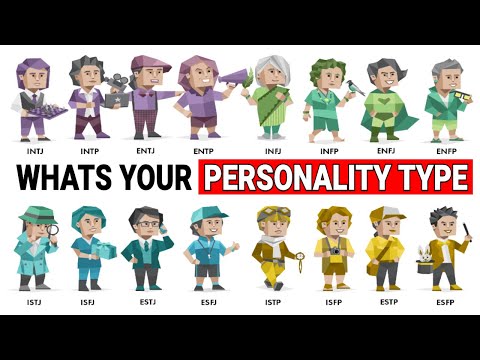
You’ve probably heard about personality types, right? Like, those fun quizzes that claim to tell you if you’re an introvert or extrovert? Well, there’s this whole thing called the 16 Personality Types that digs a bit deeper.
Basically, it all comes from the work of some brilliant folks who wanted to make sense of how we tick. Imagine getting a peek into what makes you, well, you!
It’s kind of like a personality map. You know, helping you navigate your quirks and traits. And maybe even understand why your best friend can’t stop talking at parties while you’re more of a wallflower.
Trust me, figuring out these types can lead to some pretty eye-opening moments. You might find out stuff about yourself that leaves you saying, “Ahh, that’s why I do that!” Want to unpack this together? Let’s go!
The Rarest of the 16 Personality Types: Discover Which One Stands Out
So, let’s talk about the 16 Personality Types. You might have heard of the Myers-Briggs Type Indicator (MBTI), which sorts people into these types based on four key dimensions:
- Introversion (I) vs. Extraversion (E): Where you get your energy from.
- Sensing (S) vs. Intuition (N): How you perceive information.
- Thinking (T) vs. Feeling (F): How you make decisions.
- Judging (J) vs. Perceiving (P): How you approach life and structure your world.
Each combination of these traits gives us a specific personality type, from ISTJ to ENFP, for a total of 16 types.
Now, if we’re diving into who’s rare among these types, we find that the INFJ is often considered one of the rarest. This type stands for Introverted, Intuitive, Feeling, and Judging. They’re known as “The Advocate.” You know how some people just seem to understand others deeply? That’s INFJs for you; they’re empathetic and insightful.
You might be thinking, “Okay, cool! But why is it so rare?” Well, studies suggest that around just 1-2% of the population falls into this category. A friend of mine once told me about her experience as an INFJ. She always felt like she saw things differently than her friends—like she was tuned into emotions and social cues that they often missed. It can feel a bit lonely when most people don’t vibe with your perspective.
Next on our list of rarities is the INTJ—often called “The Architect.” They embody Introversion, Intuition, Thinking, and Judging traits. Around only about 2% fits this mold too! What’s fascinating is how INTJs are big-picture thinkers but also super strategic in their approaches. I had a roommate who was an INTJ; he could spend hours planning projects down to the tiniest detail while remaining totally chill about it all.
Then there’s the ENTJ—the “Commander.” This type is extraverted and decisive but again doesn’t come along too often—maybe around 2-3% of folks fit here. If you want someone who’s going to take charge in any situation? Look for an ENTJ! A buddy once shared how he ended up leading a team at work because he simply couldn’t sit back while everyone floundered with indecision.
So yeah, basically if you’re in a room full of folks, there’s a good chance you’ll run into plenty of ISFJs or ESFPs who are more common—but spotting an INFJ or an INTJ? That’s rare air right there!
It’s neat to think about how these personality types create such diverse experiences and insights among us all. Whether you’re one of those rarer types or not doesn’t really matter; what does matter is understanding each other better through these lenses!
Understanding the Myers-Briggs System: A Simple Guide to Personality Types
The Myers-Briggs Type Indicator (MBTI) is all about figuring out how you think, feel, and interact with the world around you. It’s based on Jungian psychology, which basically means it looks at how we process information and make decisions. The cool thing? Everyone falls into one of 16 different personality types based on their preferences.
So, here’s the gist: there are four pairs of opposing traits. You’ve got:
- Extraversion (E) vs. Introversion (I): Do you get your energy from people or from spending time alone? Extraverts thrive in social settings while introverts recharge when they’re by themselves.
- Sensing (S) vs. Intuition (N): Are you more focused on details and facts or do you like to see the big picture? Sensors pay attention to what’s real and concrete, while intuitives dream about possibilities.
- Thinking (T) vs. Feeling (F): How do you make decisions—based on logic or emotions? Thinkers analyze facts and data, whereas feelers prioritize personal values and relationships.
- Judging (J) vs. Perceiving (P): Do you prefer structure or spontaneity? Judgers like plans and schedules; perceivers enjoy being flexible and adapting to changes.
Now, when you combine these traits, you get a four-letter code that represents your personality type. For example, an INFP might be the dreamy introvert who values deep connections but also loves their alone time.
Let’s talk about why this matters a bit more. Understanding your MBTI type can help in tons of ways! Like navigating relationships; knowing if you’re more a thinker or a feeler can really change how arguments or discussions go down with friends or partners.
You ever noticed that feeling when you’re hanging out with someone who seems to totally get where you’re coming from? Well, that could be because your personality types mesh well together! Think of it like blending flavors in cooking; some combinations just work better than others.
It’s also super helpful for figuring out what kind of job might suit you best—like knowing if you’d thrive in a role that requires lots of social interaction versus one that lets you work quietly behind the scenes.
But here’s the catch: while these types can give us awesome insights into ourselves and our interactions, remember they’re not gospel truths about who we are. People are complex! You might find that sometimes you don’t fit perfectly into one box—because life is messy like that.
So, maybe next time you’re feeling lost in a group project or trying to connect with a new friend, think about how understanding those personality types could help guide your way forward! In the end, it’s all about fostering better connections with those around us—and having a little fun along the way too!
“Unlocking the 16 Personality Types: A Comprehensive Guide to MBTI in Psychology”
The 16 Personality Types, based on the Myers-Briggs Type Indicator (MBTI), are pretty fascinating. Essentially, this approach helps people understand their personalities by categorizing them into one of 16 types. And yeah, it’s all about how you perceive the world and make decisions. So let’s break it down a bit.
The Basics. The MBTI is built on four dichotomies, which means pairs of opposites. Each person has one preference from each pair, which gives you a four-letter code. Those letters stand for:
- Extraversion (E) or Introversion (I) – This tells you where you focus your attention: on the outer world or your inner thoughts.
- Sensing (S) or Intuition (N) – This shows how you gather information: through concrete facts or more abstract ideas and possibilities.
- Thinking (T) or Feeling (F) – This is about decision-making: do you rely on logic or personal values and emotions?
- Judging (J) or Perceiving (P) – Finally, this indicates how you approach life: do you prefer structured plans or keeping things open and flexible?
So when you put these together, like “INTJ” or “ESFP,” it describes pretty specific personality styles.
The 16 Types. Here’s where it gets interesting. The combinations lead to 16 distinct types:
- ISTJ: Practical and responsible. They often stick to what they know works.
- ISFJ: Warm-hearted helpers who value loyalty.
- INFJ: Insightful idealists, often focusing on helping others.
- INTJ: Strategic thinkers with high standards who seek knowledge.
- ISTP: Action-oriented problem solvers; they love hands-on activities.
- Creative and spontaneous; they enjoy expressing themselves through art.
- Deeply loyal to ideals; they seek meaning in everything.
- Analytical individuals who love solving complex problems.
- Energetic thrill-seekers who live in the moment.
- Fun-loving performers; they thrive on social connections.
- EFP: Caring and spontaneous; they prioritize relationships over schedules.
This isn’t just a fun quiz for bored kids at parties; it actually has roots in psychology! Knowing your type can help with stuff like career choices, relationships, and even personal growth.
An Example b>. Let’s say you’re an ENFJ—you’re probably warm, outgoing, and really good at connecting with others. You might thrive in roles like teaching or counseling where empathy is key.
But consider someone like an ISTP—they might not enjoy the same situation at all! They’re more likely to find satisfaction in technical work or adventure sports.
Anecdote Time b>. I remember chatting with my friend Sarah—you know her? Anyway, she was always drawn to artistic pursuits but felt stuck trying to fit into a corporate world that just didn’t vibe with her INFP type. Once she figured out her personality type through MBTI stuff? It was like a light bulb went off! She dove headfirst into graphic design instead, which totally suited her creative side.
So now you see how understanding these 16 personality types can really give some perspective on yourself—and others too! Whether you’re figuring out career paths or navigating friendships, knowing your type opens up insights into behaviors and choices.
The takeaway here? Don’t treat personality types as boxes to fit in but rather as guides for understanding yourself and those around you better. So go ahead—explore those personality types! They might just change how you connect with yourself and others.
Okay, so let’s chat about the 16 personality types in psychology. It’s one of those things that seems kinda wild at first, right? But once you dig in, it actually makes a lot of sense. You see, the personality types come from something called the Myers-Briggs Type Indicator, or MBTI for short. Basically, it’s a tool that helps you figure out how you think, feel, and interact with the world.
Think of it this way: everyone has their unique way of seeing life. Some folks are more outgoing and prefer to be around others—these are the extroverts. Then there are the introverts who recharge by spending time alone or with a few close friends. That difference alone can change the entire vibe of your daily interactions!
I had a friend who was an INFJ—kinda rare—and they were super insightful and empathetic, always thinking about how their words might affect others. They could sense when someone was down without that person even saying a word! I remember one time they just showed up at my place with my favorite snack when I’d had a rough day. That small gesture meant everything.
But then there are other types like ESTJs who can be very structured and decisive. They thrive on organization and often take charge in group settings. I’ve seen them step in during chaotic moments to bring order like it’s second nature to them! It’s fascinating how these traits shape not just decisions but friendships too.
So anyway, exploring these personality types lets us understand ourselves better and also gives insight into how we relate to others—what makes us click or sometimes clash. You might find yourself nodding along as you read descriptions of certain types because it feels so spot-on!
It’s like having a map for human behavior; sure, it’s not perfect, but it definitely helps navigate those tricky social dynamics we all face from time to time. So if you’re curious about your type—or just want to understand your friends better—it can be pretty eye-opening!