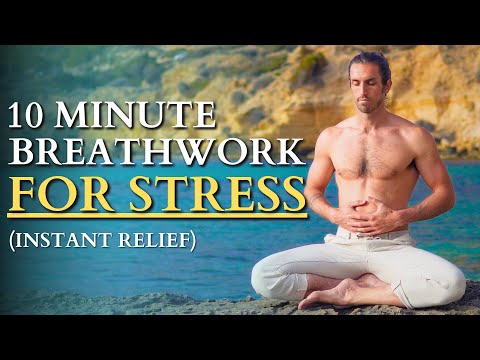
Hey there! Let’s talk about something we all deal with: anxiety. You know, that tight feeling in your chest or the endless loop of worries racing through your mind? Ugh, right?
Sometimes you just need a break from it all. A little pause. An escape route, if you will. And guess what? Your breath can actually be your best buddy in this.
Breathe deeply. It sounds simple, but it’s kinda magical when you really think about it. Just taking a few moments to focus on your breath can help chill out your racing thoughts and boost your mood.
So let’s dig into how breathing deeply can seriously help lift that weight off your shoulders and clear some mental fog. Ready? I promise it’s worth it!
Exploring the Power of Deep Breathing: Can It Help Alleviate Anxiety?
So, let’s talk about deep breathing. It sounds simple, right? But honestly, it can be a powerful tool when it comes to managing anxiety. You know how life can throw you curveballs—work stress, personal problems, or even just that nagging feeling of worry? Deep breathing can step in and help bring you back to a calmer place.
When you’re anxious, your body tends to go into fight-or-flight mode. Your heart races, your muscles tense up, and it feels like you’re on high alert. That’s where deep breathing comes in. By focusing on your breath, you can send signals to your brain that it’s time to chill out a bit. It’s basically a way of tricking your body into relaxing.
Think about how we naturally breathe when we’re relaxed—it’s slow and steady. This contrasts with the quick, shallow breaths we take when we’re stressed. So when you take deep breaths:
- Oxygen flow: It increases oxygen levels in your blood.
- Heart rate: It helps slow down your heart rate.
- Muscle tension: It reduces muscle tension.
This all results in feeling more grounded and less anxious.
Here’s a quick story: My friend Sarah used to get super anxious before public speaking. Like seriously jittery! She decided to try deep breathing before her presentations. Just five minutes of focused breathing made her feel more centered and less nervous. She was surprised by how much this simple technique transformed her experience.
Now, if you’re wondering how to do it, it doesn’t have to be complicated. You can try this:
- Find a comfy spot—could be sitting or lying down.
- Close your eyes if that helps you focus.
- Inhale deeply through your nose for four counts.
- Hold for four counts.
- Exhale slowly through your mouth for six counts.
Repeat this a few times and see how you feel.
What’s cool is that studies show people who use deep breathing regularly report lower levels of anxiety and stress overall. It’s like building up your mental fitness—just as you’d work out at the gym!
But remember, while deep breathing is great for short-term relief, it’s not a one-size-fits-all solution for everyone struggling with anxiety. If anxiety hangs around too long or gets too intense, chatting with a professional might be necessary.
Deep breathing is an easy tool at your disposal anytime you need it—at work, at home, or even while waiting in line! Just take a moment for yourself; you deserve it!
Unlocking Calm: The Mental Health Benefits of Deep Breathing Techniques
Deep breathing techniques can be a total game-changer for your mental health. They’re like a secret weapon against stress and anxiety, and they’re super easy to do anywhere, anytime.
What’s the deal with deep breathing? Well, when you breathe deeply, you’re sending a message to your brain that it’s time to chill out. Seriously! You activate your body’s **parasympathetic nervous system**, which is all about rest and relaxation. It helps reduce heart rate and lower blood pressure, making you feel more grounded.
So, let’s break it down a bit. Here are some key points:
It reminds me of a time when I found myself overwhelmed at work. My deadlines were piling up like laundry on a Sunday afternoon! I took five minutes in the break room to just breathe deeply—slowly in through my nose, out through my mouth—and honestly, it was like flipping a switch in my brain. Everything felt more manageable after that.
How do you actually do this? It’s simple! Just find a comfy seat or even stand if that’s better for you. Close your eyes if that feels good and take a deep breath in for about four counts—hold it for four counts—and then let it go slowly for another four counts. Repeat this several times until you feel that sense of calm wash over you.
Another great way is called the **4-7-8 technique**. Inhale through your nose for four seconds, hold that breath for seven seconds (yep, counting can be calming too!), then exhale forcefully through your mouth for eight seconds. This one feels super satisfying!
Don’t worry if it doesn’t work right away; sometimes it takes practice! Even just remembering to breathe deeply throughout the day can help make this technique second nature.
Incorporating deep breathing into your routine can bring noticeable changes over time—less stress, more peace—even better sleep! The thing is, though: it’s not just about those moments when you’re feeling frazzled; practicing regularly can help build resilience against future stressors too.
So next time life throws at you one of those curveballs—or even on an ordinary day—try taking a few moments to breathe deeply and notice how much lighter things might start to feel!
Mastering the 4-7-8 Breathing Technique to Alleviate Anxiety Naturally
So, let’s talk about the 4-7-8 breathing technique. Yeah, it might sound a bit strange at first, but breathing is one of the easiest ways to help with anxiety. Seriously! It’s all about breath control. When you focus on your breathing, it can shift your mind away from what’s stressing you out.
Here’s how it works: You breathe in through your nose for a count of four, hold that breath for seven seconds, and then exhale slowly through your mouth for eight seconds. Sounds simple? It is! The key is to really pay attention to your breath during this process.
- Step 1: Sit or lie down in a comfortable position. You can even close your eyes if you want to.
- Step 2: Take a deep breath in through your nose for a count of four.
- Step 3: Hold that breath for seven seconds. Now, this part can feel weird at first, but just relax into it.
- Step 4: Exhale fully through your mouth for eight seconds. Make sure you really let it all out!
You should repeat this cycle about four times when you’re starting out. It might feel a little awkward at first, but like anything else, practice makes perfect.
Now, here’s why this can be helpful: This technique helps activate your body’s relaxation response. When you’re anxious or stressed, your body tends to go into fight-or-flight mode. That means it ramps up heart rate and blood pressure—no fun! By focusing on your breathing with the 4-7-8 method, you help calm down that racing heart and lower those stress hormones.
Let me tell you about my friend Sarah. She used to get super anxious before big presentations at work. She felt like her mind was racing and her heart was about to burst out of her chest! One day I suggested she try breathing exercises before stepping up to present her ideas. After just a couple days practicing the 4-7-8 technique, she noticed she felt way calmer and actually enjoyed speaking in front of people again.
Also worth noting: You might want to avoid using this technique when you’re feeling dizzy or lightheaded. If you’re not used to deep breathing exercises, just be mindful of how you’re feeling.
And hey—don’t stress if it doesn’t work perfectly right away! It takes time and practice to really get into the groove of it. Just keep trying whenever you feel those anxious feelings creeping in.
Incorporating the 4-7-8 technique into your daily routine can help make managing anxiety more manageable over time; think of it as adding another tool in your coping toolbox! You’ve got this—you might just find yourself more relaxed sooner than you expected.
You know that feeling when anxiety creeps in, and it’s like a tight band squeezing your chest? I’ve been there, and honestly, it can be such a struggle. But one thing I’ve found really helps is—get this—just breathing. Sounds simple, right? But there’s so much power in just taking a moment to breathe deeply.
I remember this one time at work. Everything was piling up, deadlines were looming, and my mind was racing like it was on a treadmill. You know how it goes! I felt overwhelmed and kind of panicky. So, I decided to take five minutes for myself. I found a quiet corner, closed my eyes, and focused on my breath. Inhale… hold… exhale. It felt like I pressed pause on everything swirling around me.
Breathing deeply can actually send signals to your body that help calm you down. When you slow your breath, your heart rate lowers too—like hitting the brakes on that runaway train of thoughts. You know? What happens is that it shifts your brain from fight-or-flight mode to something more chill.
And here’s the kicker: You don’t need any fancy equipment or special classes to do this! Just you and your breath. It’s free therapy in a way! Plus, doing this regularly can kinda boost your overall mental health over time—a bit like watering plants; they perk up when they get the care they need.
So yeah, whenever life starts throwing curveballs or anxiety feels like it’s wrapping around you tight again, give yourself permission to take a breather—literally! Breathe deeply and let those worries float away for just a little while. It really can make a difference!