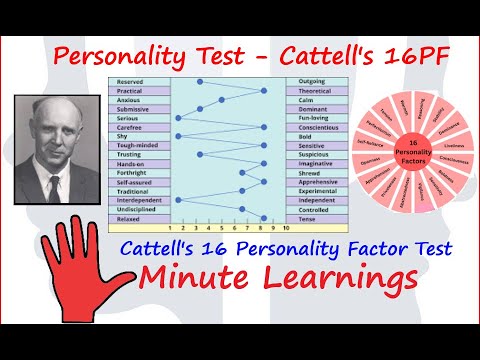
So, you know how we all have those quirky little traits that make us who we are? Like, maybe you’re the organized one in your friend group or the jokester who lights up the room.
Well, there’s this cool tool called the Cattell 16PF that dives into our personalities in a pretty neat way. It helps psychologists figure out what makes people tick.
Imagine having a secret map of your own personality! Pretty wild, right? This tool breaks things down into 16 different factors, giving insight into strengths and quirks alike.
Curious yet? Let’s unpack it a bit more and see how it all works!
Understanding Cattell’s 16PF Assessment: Its Purpose and Benefits for Mental Health
Understanding Cattell’s 16PF Assessment is pretty fascinating! This tool, developed by psychologist Raymond Cattell, is all about measuring personality traits. The 16 Personality Factor Questionnaire (16PF) is designed to give a well-rounded picture of an individual’s personality.
So, what’s the idea behind it? Basically, Cattell believed that we can break personality down into specific traits. Instead of just looking at someone’s behavior or feelings in isolation, the 16PF digs deeper. It identifies *16 different factors* that describe human behavior.
Purpose of the 16PF is multi-faceted. For starters, it helps in understanding how someone typically behaves in various situations. Whether you’re a hiring manager or a therapist, knowing these traits can be super beneficial.
Now, let’s get into some benefits. Here are a few key points that highlight why this assessment can be useful:
- Enhanced Self-Awareness: By taking the 16PF, people often gain insights into their own behaviors and motivations. For example, if someone realizes they score high on “sensitivity,” they might start to recognize why they take comments personally.
- Guidance for Therapy: Mental health professionals sometimes use this tool to tailor therapy approaches. If your scores indicate high levels of anxiety but low warmth, a therapist might focus on building trust first to address those feelings.
- Career Development: Employers often utilize the 16PF for hiring purposes. Knowing a candidate’s personality traits can help determine if they’re a good fit for a specific role or company culture.
- Relationship Insights: The assessment can also shed light on how someone interacts with others. If your friend tends to score low on “dominance,” they may struggle with assertiveness in their relationships.
Another interesting thing about the 16PF is its practicality. It consists of about *185 questions*, which might seem like a lot at first glance! But don’t stress; it’s designed to be straightforward and easy to navigate.
An anecdote—think about Sarah, who always felt overwhelmed at work because her boss didn’t understand her communication style. After taking the 16PF and discussing her results with her therapist, she realized her high “social boldness” was often perceived as intimidating by others! Understanding this helped her adjust how she interacted at work and ultimately improved her relationship with her boss.
In summary, Cattell’s 16PF Assessment really serves as a handy tool for getting to know ourselves better—both personally and professionally—and that’s something everyone could use now and then! Plus it encourages open conversations about our behaviors and how they affect our lives and relationships.
Understanding 16PF: A Comprehensive Guide to the 16 Personality Factors in Psychology
The 16 Personality Factors questionnaire, often abbreviated as 16PF, is a tool developed by psychologist Raymond Cattell. It’s designed to measure different aspects of your personality. It’s a pretty neat way to get insights into how you think and behave in various situations.
So, what exactly are the 16 personality factors? These factors cover a wide range of traits that make up our personalities. They can help understand everything from how we handle stress to how we interact with others. Here’s a quick rundown:
- Warmth: This measures how friendly and approachable you are.
- Reasoning: This reflects your problem-solving abilities and logical thinking.
- Emotional Stability: How well you handle stress and emotional challenges.
- Dominance: This indicates your assertiveness in social situations.
- Liveliness: Your level of energy and enthusiasm.
- Rule-Consciousness: How much you adhere to rules and norms.
- Sensitivity: Your awareness of other people’s feelings.
- Vigilance: Your tendency to be suspicious or trustful of others.
- Aberration: Reflects unconventional thoughts or behaviors.
- Boldness: Your willingness to take risks.
- Sociability: How comfortable you are in social settings.
- Self-Reliance: The degree to which you rely on yourself versus others.
- Anxiety: Your tendency towards nervousness or calmness under pressure.
- Tough-Mindedness: A measure of practicality and straightforwardness.
- Caution: How careful or impulsive you tend to be in decisions.
- Cultural Flexibility: b > Your openness to new experiences and ideas from different cultures. li >
Now, Cattell’s idea was that by measuring these factors, we can gain a clearer picture of ourselves. Each factor exists on a continuum, so it’s not about being one thing or another but rather where you fall on that scale.
You might wonder why this matters? b > Well, understanding your personality can help in many areas, like career choices or relationships. For instance, if you’re high on warmth but lower on dominance, it could mean you’re great in team settings but might struggle in leadership roles.
Another cool thing is that the 16PF isn’t just for individuals; mental health professionals use it too. Therapists might refer to it when working with clients for tailored therapy.
To get started with the 16PF assessment usually involves answering around 185 questions about yourself. It may seem like a lot at first glance, but they’re often pretty simple statements where you just pick how much they resonate with you.
A friend of mine once took the test out of curiosity and discovered she was way more cautious than she thought. She used this insight when considering whether to switch careers—it turned out she needed some time before making big changes!
So that’s the lowdown! The 16PF questionnaire gives us tools for self-reflection and growth. Whether you’re looking into career paths or wanting to understand yourself better, this tool has got your back!
Understanding the 16PF: Is It a Standardized Test in Psychology?
The 16PF, or 16 Personality Factors, is a psychological assessment tool developed by Raymond Cattell. It’s designed to measure various aspects of personality, giving you insight into your traits and behaviors. This test has been used in multiple settings, from workplaces to counseling.
So, is it standardized? Absolutely! The 16PF is a **standardized test**, which means it has been carefully created and validated to ensure it measures what it claims to measure. Basically, this means that the results are reliable and can be compared across different individuals. You know how sometimes you take a quiz just for fun? Well, this isn’t like that at all. It’s structured and grounded in psychological research.
To understand how it works, let’s break down its components:
- Personality Traits: The 16PF assesses 16 different personality factors. These include things like warmth, reasoning, emotional stability, and dominance.
- Question Format: The test usually consists of multiple-choice questions where you pick answers that best describe you.
- Scoring: Scores are based on your responses and create a profile that highlights your strengths and weaknesses.
It’s interesting to note how these traits can impact various life aspects—like your relationships or job performance. For example, if someone scores high in warmth but low in dominance, they might be seen as friendly but not very assertive in group settings.
The **standardization** process involves testing the assessment on diverse populations. This way, researchers can analyze results across different demographics—helping ensure fairness and accuracy. Imagine if everyone in a country took the same exam; we’d want to make sure it’s fair for folks with different backgrounds.
Cattell’s creation was pretty groundbreaking back when it came out because he used factor analysis—a statistical method—to identify these traits. So it’s not just guesswork; it’s rooted in solid science.
Additionally, using the 16PF isn’t just about labeling people either. It provides insights that can help guide personal development or career choices. You might find that understanding your personality can lead to better decision-making processes!
In short, the 16PF is indeed a standardized test in psychology that gives valuable information about human personality traits through rigorous methodology. Whether you’re curious about yourself or exploring team dynamics at work, this tool has its place in understanding behavior more clearly!
So, let’s chat about the Cattell 16PF, which stands for the 16 Personality Factors. It’s a pretty cool tool in the world of psychology that helps you understand personality traits. Like, seriously, it breaks things down into 16 dimensions or factors that can give insights into how people think, feel, and behave.
Picture yourself talking to a friend who just got a job promotion. They’re excited but also nervous about fitting in with new colleagues. The 16PF could help highlight aspects of their personality that might affect their workplace interactions. Maybe they score high on warmth but low on emotional stability—you know? That could mean they tend to connect easily with others but might also feel overwhelmed when things get tough.
Now, I remember a time when I took this assessment just out of curiosity. I was surprised by some results! There were traits I thought were dominant in me that didn’t really shine through in the test. It made me reflect on myself and why I act certain ways in different situations. Sometimes we think we’re one way because of experiences or self-perception when it could be something else entirely.
The thing is, tools like the 16PF aren’t perfect. They provide a snapshot based on how you answer questions in a moment—maybe you’re having an off day or feeling particularly happy. But they can definitely reveal patterns over time if used right.
And here’s where it gets interesting: therapists and psychologists might use this tool during assessments to help guide treatment plans tailored to individual personalities. So instead of one-size-fits-all solutions, therapy can become much more personal.
But then again, you need to remember there’s more than just numbers involved here; every person carries nuances and experiences that can’t be boxed into neat categories. So while the Cattell 16PF is handy for gaining insights into ourselves and others, it should always be taken with a grain of salt.
In short, personality assessments like this are like looking through a funny lens at who we are—sometimes distorted but still useful for understanding ourselves better and navigating our relationships with others!