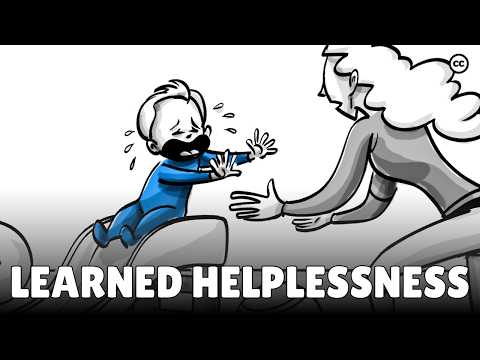
You know that feeling when everything seems to be going wrong, and you just wanna throw your hands up in the air? Yeah, that’s kind of what learned helplessness feels like. It’s like being stuck in a loop, where no matter what you do, it feels pointless.
Picture this: you’re trying your best at a new job, but no matter how hard you work, your efforts go unnoticed. Eventually, it gets exhausting. You might start thinking, “Why bother?” That’s learned helplessness creeping in.
It’s wild how our brains work, right? There are so many factors that contribute to this feeling—environment, past experiences, even how we handle stress. So let’s chat about those things and see why some folks just can’t seem to break free from this mindset.
Understanding the Factors of Learned Helplessness: Key Insights for Mental Health
Learned helplessness is a pretty fascinating (and kind of sad) concept in psychology. It basically refers to a state where someone feels powerless and believes they have no control over their situation, even when circumstances change and they actually do. This idea was first studied by psychologists like Martin Seligman back in the 1960s. He found that if animals were exposed to uncontrollable stressors, they sometimes stopped trying even when the situation improved. This can happen to people too, and it can mess with your mental health.
So, what leads to learned helplessness? There are a few key factors you should know about:
- Repeated failure: If you’ve faced constant setbacks—like failing an exam or getting rejected over and over—it can really knock the wind out of your sails. You start to feel like no matter what you do, nothing changes.
- Lack of support: Imagine going through a tough time without anyone cheering you on. If there’s no one around to help or encourage you, it’s way easier to slip into that helpless mindset.
- Negative beliefs: Sometimes, we get stuck in our heads with negative thoughts about ourselves. Like, “I’m just not good enough” or “I’ll never get better.” These self-defeating beliefs can become a cage that keeps you from seeing any possibility for change.
- Traumatic experiences: Going through trauma—like abuse or loss—can create feelings of helplessness. It’s like your brain gets wired to expect bad things will keep happening, making it hard to see hope for the future.
- Lack of coping strategies: If you haven’t learned ways to deal with stress successfully, each challenge can feel like an insurmountable wall instead of a bump in the road. Not knowing how to cope effectively makes it easy to feel stuck.
Let’s take Jane’s story as an example. Jane was always told by her parents that she wasn’t smart enough for college. After years of hearing this message, she began believing it herself—even when she passed her classes! So she didn’t apply for college because she thought she’d fail anyway. This shows how deeply ingrained beliefs can influence actions and lead straight into that learned helplessness trap.
What’s really tricky is how this cycle continues: feeling helpless often leads to depression and anxiety. Then those feelings can make you withdraw from life more, reinforcing that sense of powerlessness.
Understandably, breaking out of this cycle isn’t easy! But recognizing these factors is key if you want to work toward change or help someone else who feels stuck. It begins with awareness—you have the power not just to react but also shape your responses! Working on building resilience through small successes and seeking support from friends or professionals can help shift those negative thoughts.
So yeah, learned helplessness is serious business—but understanding its roots gives us a fighting chance against it! Catching those sneaky thoughts before they spiral into despair makes all the difference in moving from feeling trapped back towards freedom—literally one step at a time!
Understanding Learned Helplessness: The Three Key Elements Explained
Learned helplessness is one of those psychological concepts that really hits home when you understand it. It’s that feeling when you think, “No matter what I do, things just won’t change.” Like, remember that time you studied for a big test, but still flunked? You might’ve felt like giving up entirely after that. That’s basically the essence of learned helplessness.
So, let’s break it down into three key elements so it makes more sense.
1. Conditioning and Experience: This element is all about how our past experiences shape our beliefs. When someone repeatedly faces bad situations where they can’t control the outcome—like a kid who tries to play sports but keeps failing—they start to believe they have no power over their circumstances. Over time, this conditions them to expect failure in other areas too. So they might stop trying altogether because deep down they think, “What’s the point? It never works out.”
2. Generalization: Now here’s where things get tricky. After experiencing helplessness in one aspect of life, people often generalize that feeling to others. Let’s say you’ve struck out at work multiple times on projects—suddenly you feel helpless not just at your job but in social situations as well! You might start thinking: “I can never make friends,” or “I’m always messing things up.” This broader view of failure creates a cycle that’s hard to break.
3. Attribution: This element relates to how we explain causes behind our failures or successes. If someone labels their lack of success as a personal flaw—like saying “I’m just not smart enough”—they’re likely setting themselves up for learned helplessness. On the flip side, if you see setbacks as temporary or external (“The test was really unfair”), then you’re less likely to feel hopeless over time.
Let me tell you a story here: A friend of mine once struggled with public speaking because he’d bombed his first few presentations in class. He felt so embarrassed and believed he just wasn’t cut out for it; he started avoiding situations where he’d have to talk in front of people like the plague! Over time, this belief morphed into not wanting to join clubs or even chat with new folks at parties because he generalized that initial failure across different parts of his life.
Understanding these three components gives us insight into why people sometimes seem stuck and can’t see the light at the end of the tunnel—even when help is right there waiting for them! It takes effort—and maybe some therapy—to challenge those negative beliefs and recognize that we can influence our outcomes after all.
Understanding the Three P’s of Learned Helplessness: A Guide to Overcoming Mental Barriers
Learned helplessness is a pretty heavy concept, but it’s also super important in psychology. It basically explains why you might feel stuck or powerless in certain situations. It’s like, no matter what you do, nothing seems to change. You’ve probably heard about it in connection with depression or anxiety, right? Well, the thing is, it often comes down to three key factors that psychologists call the “Three P’s”: personalization, pervasiveness, and permanence.
Let’s break those down a bit.
Personalization is all about taking things personally when they go wrong. Imagine this: you fail a test and think, “I’m so dumb; I’ll never succeed at school.” Instead of seeing it as one setback—or maybe even as something you could improve upon—you start believing that every failure is a reflection of your worth. That negative self-talk can make you feel like you have no control over your life. But here’s the kicker. Not all failures mean you’re a failure. So try to catch those thoughts next time they pop up!
Now onto pervasiveness. This refers to how much you let one bad experience influence your view of everything else. If something goes wrong in one part of your life, say at work, you might think it’ll affect every other aspect too—like your relationships or health. It’s like wearing foggy glasses; everything looks bleak even if it’s not that way everywhere else! Recognizing that not everything is connected can help shake off those feelings and open up some fresh perspectives.
Finally, we’ve got permanence. This one’s all about duration—how long you believe negative situations will last. When things get tough, it’s easy to think they’re going to stay that way forever: “I’ve been sad for months; I’ll never be happy again.” But feelings and situations change over time! Just because you’re stuck now doesn’t mean you’ll always be stuck. Embracing this idea can bring about hope and motivate change.
So yeah, understanding these Three P’s is a huge step in overcoming mental barriers linked to learned helplessness. They help explain why we sometimes spiral into negativity but also give us a framework for pushing through it all.
If you find yourself falling into these patterns, it might help to talk things out with someone—maybe a therapist or even just a good friend who gets it! Sometimes just having someone there to challenge those thoughts can really make a difference.
In short, learned helplessness doesn’t have to define your life story; recognizing personalization, pervasiveness, and permanence can empower you—and hey, that’s something worth striving for!
You’ve probably heard of learned helplessness, right? It’s that gut-wrenching feeling when you believe you can’t do anything to change your situation. Like, no matter how hard you try, nothing ever works out—and that sense of defeat just hangs over you. It’s especially heartbreaking because it can come from all sorts of experiences that make us feel powerless.
Let’s take Sarah as an example. She was a bright student, full of dreams and ambitions. But after failing a few key tests in school, she started to feel like no matter what she did, she just couldn’t get it right. Her teachers didn’t seem to notice her struggles, and her friends were busy with their own lives. Eventually, she gave up trying altogether. Instead of studying harder or seeking help, she just accepted failure as her fate. And that’s where the real kicker is—this cycle of feeling powerless can keep repeating itself, like some never-ending loop.
Now, there are definitely some big players in this game of learned helplessness—like external factors and personal experiences. For one thing, if you grow up in an environment where failure is constantly emphasized or when support isn’t available—well, it can really mess with your head. You start to internalize those messages, lose trust in your abilities, and suddenly feel trapped in your own life.
And then there’s the whole issue of personality traits. People who are generally more anxious or perfectionistic might find themselves more likely to experience learned helplessness too. When every little setback feels monumental—like a huge failure—it’s easy to spiral into that sense of hopelessness.
But here’s the thing: It might feel daunting and heavy sometimes; however, acknowledging those feelings is the first step toward change! Therapy can be a great way to work through these struggles and find paths to empowerment again. Just like Sarah eventually did when she decided to reach out for support.
So yeah… learned helplessness can be such a tricky beast—it wraps around us when we least expect it. But recognizing its roots and understanding our experiences can help us break free from those chains!