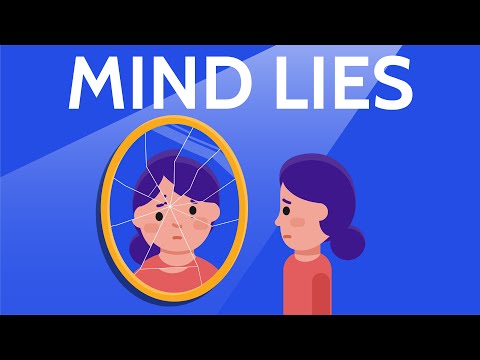
You know those days when your brain just goes haywire? Like, you’re convinced you’ve totally messed everything up, even if it wasn’t a big deal?
Yeah, that’s what we call cognitive distortions. It’s basically when your mind plays tricks on you. And trust me, it happens to everyone.
Sometimes, it feels like looking through a funhouse mirror—totally warped and not even close to reality.
Let’s dig into some of these common thought patterns. It might just help you see things a little clearer, or at least realize you’re not alone in this mental maze!
Understanding the 12 Cognitive Distortions: A Guide to Improving Mental Well-Being
Cognitive distortions are like those pesky filters that can mess with your thoughts. You know, the ones that twist reality and make you feel worse than you should? If you’re dealing with anxiety or depression, these distortions can really play with your mind. Recognizing them is a huge step toward improving your mental well-being.
1. All-or-Nothing Thinking
This is when you see things in black and white. Like if you don’t ace a test, you think you’re a total failure. It’s like thinking you’re either perfect or trash. Seriously skewed perspective!
2. Overgeneralization
You might take one negative experience and then assume it’s going to happen again and again. If you bomb one job interview, suddenly you’re convinced no one will ever hire you.
3. Mental Filter
This distortion has you zooming in on the negatives while ignoring the positives entirely. Think about it: if someone gives feedback that’s mostly positive but throws in one small critique, guess which part you’ll fixate on?
4. Disqualifying the Positive
Here, even when something good happens, it feels like luck or coincidence—not because of anything you did. “Oh, I only got that promotion because they needed someone last minute.”
5. Jumping to Conclusions
This comes in two flavors: fortune telling and mind reading. You might think something bad will happen without any evidence or believe others are judging your every move.
6. Catastrophizing
When something goes wrong, it feels like the end of the world—a small mistake turns into a disaster in your head! Like spilling coffee on your shirt before an important meeting? You think you’ll never recover.
7. Personalization
Ever felt responsible for something totally out of your control? Maybe your friend was upset and you think it’s all about something you did wrong? Nope!
8. Should Statements
Using «should» or «must» can be super harsh on yourself—like saying “I should have worked out today.” This sets up unrealistic expectations that always lead to guilt.
9. Labeling
Instead of seeing yourself as having made a mistake, you label yourself as a loser or a failure—talk about harsh self-criticism!
10. Emotional Reasoning
Feeling anxious makes you believe there’s actually danger around every corner—as if feelings equate factual truths! That’s not how it works.
11. The Fallacy of Change
You may hold onto the hope that someone close will change just for you—thinking “If only my partner would stop drinking…” The truth is we can only change ourselves, not others.
12. Global Labeling
Instead of acknowledging specific behavior as problematic, this distortion leads us to use broad labels against ourselves or others—like calling yourself “a failure” instead of saying “I failed at this one thing.”
Recognizing these cognitive distortions is the first step towards challenging them! It may take time and practice to shift those thought patterns, but it’s so worth it for your peace of mind and emotional health! So start paying attention to how often these sneaky thoughts pop up in your head—you’ll catch them before they spiral out of control!
Unlocking the 3 C’s of Cognitive Reframing: Transform Your Mindset for Positive Change
The 3 C’s of Cognitive Reframing can really help when you want to change how you think about things. They’re all about shifting your perspective in a more positive direction. So let’s break it down.
1. Catch
First off, you need to catch those negative thoughts. It’s like fishing: if you don’t pay attention, you might miss the big one! You have to be aware when your mind starts spiraling into negative territory. Maybe you’re sitting there thinking, “I’ll never get this job,” or “I always mess things up.” Recognizing these patterns is key. Try keeping a thought diary for a few days—write down those sticky thoughts as they pop up. It’s surprising what you’ll find!
2. Challenge
Next, we move on to challenge those thoughts. This is where the real work happens. When a thought comes up, ask yourself some questions: “Is this really true?” or “What evidence do I have?” For instance, maybe you think everyone hates your presentation at work. Challenge that idea! Look for the facts—did anyone actually say that? Did anyone seem bored? Often, you’ll realize it’s just your brain playing tricks on you.
3. Change
Finally, it’s time to change that narrative into something more constructive and uplifting. This doesn’t mean putting on rose-colored glasses and ignoring reality; it means crafting a new perspective based on what you’ve challenged in step two. So instead of thinking, “I’ll never get this job,” try saying, “I may not have gotten this one, but I have learned from the experience and can improve next time.” It allows space for growth instead of defeat.
Cognitive reframing isn’t about denying your feelings; it’s about reshaping how you understand them so they don’t drag you down anymore. Think of it as giving yourself permission to see life with a little more color rather than in black and white.
But hey—this isn’t easy at first! Practicing the 3 C’s takes time and effort, like learning any new skill. You might feel frustrated sometimes or even feel like you’re back at square one after making progress—but that’s perfectly normal! Just remember, persistence is key.
Incorporating these steps can make serious waves in how you approach challenges in life and helps combat common cognitive distortions like catastrophizing or all-or-nothing thinking.
So give it a whirl! With practice—and maybe some patience—you could be amazed at how much better your mindset feels over time!
Understanding and Measuring Cognitive Distortions: A Guide to Identifying Thought Patterns
Cognitive distortions are those sneaky thought patterns that can mess with your mind. You know, like when you get stuck in a loop of negativity and everything feels darker than it really is? Understanding these distortions is super important for your mental health because they affect how you feel and behave.
What are Cognitive Distortions? They’re basically errors in thinking that can lead to an unhelpful view of reality. Think of them as the brain’s little hiccups. Everyone experiences them, but some people have them more frequently, which can lead to anxiety or depression.
Let’s break down some common cognitive distortions:
- All-or-Nothing Thinking: This is where things are either perfect or a complete disaster. If you don’t ace that presentation, you feel like a total failure.
- Overgeneralization: You fail one test and suddenly believe you’ll never succeed at anything again. That’s just not true!
- Mental Filtering: This happens when you focus only on the negatives—like if someone compliments your work but all you remember is the one piece of criticism.
- Diminishing the Positive: When good things happen, you brush them off as luck or say you didn’t deserve it anyway.
- Jumping to Conclusions: It’s like assuming someone is mad at you without any evidence—just because they didn’t text back right away.
Recognizing these patterns is key for improving mental well-being. So how do we measure them?
Sometimes, therapists use specific cognitive assessments. These tools help identify thought patterns by asking you questions about your beliefs and emotions. It’s not just filling out a quiz; it’s about uncovering those hidden thoughts that influence your feelings.
And look, each person tends to have their own unique set of distortions. Identifying yours can be game-changing! You may notice, for example, that whenever you’re stressed about work, a particular distortion pops up. Maybe it’s all-or-nothing thinking where a small setback makes everything feel catastrophic.
Remember Emily? She always struggled with overgeneralization after getting her first job. After one tough week, she internalized failure to mean she’d never fit in anywhere—a total bummer! But once she started identifying this thought pattern and challenged it—she saw it for what it was: a hiccup in her brain’s logic.
When we measure our cognitive distortions through journaling or therapy sessions, we learn to challenge these thoughts actively. Instead of saying “I’m terrible at my job,” try shifting to “I made a mistake today; that doesn’t define my entire career.”
In short, by pinpointing cognitive distortions and measuring their frequency in our lives—you reclaim power over your thoughts. Being aware of these patterns helps clear mental fog and paves the way for healthier emotional responses. So keep an eye out for those tricky thoughts! They don’t stand a chance against awareness and understanding.
You know, sometimes it’s wild how our minds can trick us into believing things that just aren’t true. I mean, take a moment and think about it. Have you ever found yourself spiraling into negative thoughts? Like maybe you bombed a presentation at work and suddenly, you feel like a total failure in life? That’s a classic example of cognitive distortion.
Cognitive distortions are basically those sneaky thoughts that twist your perception of reality. You might not even realize they’re happening. For instance, all-or-nothing thinking can be super common; you either nail it or you totally flop. But life is usually somewhere in between, right?
So, my friend Lisa is a great example of this. She was feeling really down because she didn’t get accepted into a grad program she applied to. Instead of recognizing that there were many factors involved—like the competitiveness or just bad timing—she convinced herself that she was too stupid to ever succeed in academia. It was heartbreaking to watch her spiral like that.
Then there’s overgeneralization—a fancy term for when one bad experience makes you feel like every future situation will end up the same way. It’s like wearing these tinted glasses that only show the bad stuff! Sometimes we do this without even thinking about it.
Recognizing these distortions is key because once you see them for what they are, you can challenge them and change your narrative. Like telling yourself, “Okay, I messed up this time. But I’ve done well before and I’ll do well again.” It’s all about shifting that perspective.
I get it; it isn’t easy to rewire your brain overnight—or let’s be real, even over months! It takes practice and maybe even some help along the way from a therapist or close friends who can point out those distorted thoughts when you’re stuck in an emotional rut.
In a world where our minds can make every tiny issue feel monumental, learning to recognize these patterns could really save us from unnecessary heartache or stress. So next time your inner critic starts chattering away, pause for a sec—check if it’s just distorting your reality!