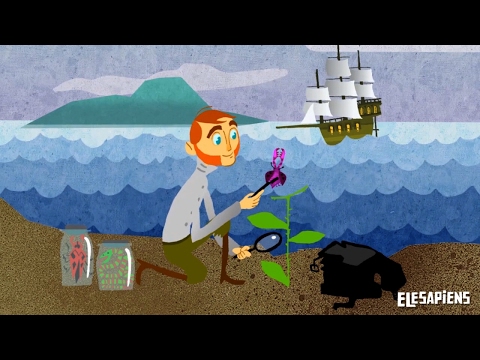
So, let’s talk about Darwin for a sec. You know, that dude with the crazy beard who came up with the whole idea of evolution? Well, turns out his ideas didn’t just shape biology—they’ve also had a wild impact on how we understand ourselves.
Yep, that’s right! Even when it comes to personality types and mental health. If you’ve ever taken one of those Myers-Briggs tests and thought, “What does this even mean?”—you’re not alone! Seriously, those letters can feel like a puzzle sometimes.
But here’s the kicker: there’s a connection between Darwin’s theories and how we view our personalities and emotions today. It’s all about survival of the fittest, right? Our traits help us navigate life and relate to others.
So buckle up! We’re diving into how Darwin’s genius links to MBTI stuff and why it matters for our mental health. It’s gonna be an interesting ride—you in?
Exploring Darwin’s Impact on Psychology: From Evolution to Mental Health Insights
Darwin’s ideas really shook things up, didn’t they? When he introduced the theory of evolution, it had some serious ripple effects, not just in biology but also in psychology. Let’s explore how his work influences our understanding of mental health today and connects to concepts like the MBTI (Myers-Briggs Type Indicator).
Evolution and Behavior
Darwin proposed that all species evolve over time through natural selection. Well, this notion isn’t just about physical traits; it also applies to behaviors and psychological traits. Certain behaviors can help individuals survive and thrive in their environments. So if you think about it, emotions like fear or love may have evolved because they contributed to our ability to connect with others or protect ourselves.
Behavioral Adaptations
The idea here is that some emotional responses are basically adaptations. Imagine you’re walking through the woods and suddenly spot a bear. Your heart races, maybe you freeze or run—those reactions helped our ancestors survive dangerous situations. Even today, anxiety can flare up when faced with stressors—it’s evolution pushing back on us, reminding us of risks.
Impacts on Personality Theories
Now let’s pivot a bit over to the MBTI. This personality framework is built on Jungian psychology, which has roots that trace back to evolutionary ideas. In a way, it’s all about how different personality types have developed adaptive functions over time. So if you’re an extrovert, your social energy might’ve once helped gather more resources from your community.
So when we think about mental health insights from this perspective, we’re looking at what traits might be advantageous for managing mental wellbeing today. You see how things come full circle?
Mental Health Insights
Understanding the evolutionary basis of our emotions or personality types can lead to deeper insights into mental health issues too! For instance, someone with a more anxious temperament may actually be wired to be cautious due to past survival needs. Therapists often build on this knowledge when working with clients—helping them understand their traits as part of their natural makeup rather than flaws.
In therapy sessions, sometimes clients freak out a bit because they feel overwhelmed by their emotions or reactions. But you know what? Recognizing those feelings as part of a bigger picture can help ease that burden. It’s like saying: «Hey! Your instincts are here for a reason.»
In summary—Darwin’s impact has stretched far beyond biology into realms like psychology and mental health too! Understanding this connection helps us appreciate why we act the way we do and how those behaviors shaped by evolution play out today in real-life scenarios, including our emotional experiences and interactions with one another.
So next time you’re feeling something intense or encountering someone who’s wired differently than you are—take a moment to remember where all that comes from! It’s pretty fascinating stuff when you dive into it.
Exploring Charles Darwin’s Personality Theory: Insights into Human Behavior and Evolution
Darwin’s ideas on evolution might not seem directly related to psychology at first, but they actually offer some neat insights into human behavior. The thing is, Darwin didn’t just change how we look at biology; he also opened the door to understanding ourselves better. His theory of evolution by natural selection got people thinking about how our personalities and behaviors are shaped over time.
Now, let’s break this down a bit. Darwin believed that certain traits helped individuals survive and reproduce in their environments. This idea translates into personality theory by suggesting that our traits might have developed for similar survival reasons—like helping us socialize or adapt to different situations.
This is where things get interesting with the Myers-Briggs Type Indicator (MBTI). The MBTI categorizes people into 16 personality types based on preferences for sensing or intuition, thinking or feeling, and so on. You see, these preferences can relate back to evolutionary adaptations. For example, someone who’s more intuitive might be better at spotting changes in their environment, which could have been useful for survival.
But wait—there’s more! When we look at mental health through this lens, we can see how our evolutionary past impacts our current experiences. For instance, if you have a high level of anxiety, it might be tied to a trait that once helped your ancestors stay alert to threats—a survival instinct gone haywire in today’s world.
Let’s consider how this connects with therapy. Understanding a client’s personality type can help therapists tailor their approach. If someone identifies as an introvert (like they prefer solitude over social gatherings), you’d want to avoid overwhelming them with too many group therapy sessions.
Also worth noting is the role of genetics and environment—not only do these shape our behaviors but also influence our mental health outcomes. For example:
- An extroverted person may thrive in social settings but could struggle with isolation.
- A highly sensitive individual may find it challenging to cope with stress.
So yeah, Darwin’s work isn’t just about ancient species; it gives us clues about why we act the way we do today. It sheds light on how our differences matter—shaped by both nature and nurture. And while not everyone vibes with the MBTI framework, it’s one way we attempt to make sense of our complex personalities against that backdrop of evolutionary history.
In a nutshell, Darwin’s influence touches everything from understanding behavioral traits to informing mental health strategies. His legacy reminds us that we’re all products of this long journey through time—and maybe that helps us be a little kinder to ourselves when grappling with issues like anxiety or depression. After all, recognizing where some traits come from can help us make peace with them!
Unlocking the MBTI Personality Type of Charles Darwin: A Deep Dive into His Psychological Profile
Charles Darwin is a fascinating figure, not just for his revolutionary ideas about evolution but also for the way he might fit into personality frameworks, like the MBTI (Myers-Briggs Type Indicator). When you look at Darwin through that lens, you see someone who was likely an INTP—Introverted, Intuitive, Thinking, and Perceiving.
Introverted types often prefer to work alone. They think deeply and reflect before acting. Darwin spent years studying nature and gathering data in isolation. His famous expedition on the HMS Beagle was not just about traveling; it was a time for him to observe and ponder.
Then there’s Intuition. INTPs tend to focus on possibilities rather than immediate realities. Darwin wasn’t just observing animals; he was theorizing about their adaptations and implications over time. He imagined how species evolved without needing to see every detail firsthand.
Next up is Thinking, which is all about logic and objectivity. Darwin approached his research with a scientific mindset, emphasizing evidence over emotion. He famously said that «a mind as active as his» was essential for scientific discovery. This trait helped him challenge existing beliefs.
Finally, we have Perceiving. People with this trait are generally open to new information and experiences rather than sticking rigidly to a plan. Darwin’s work evolved over decades; he constantly updated his theories based on new findings, demonstrating flexibility in thought.
How does this relate to mental health? Understanding your own personality type can be key for figuring out how you respond to stress or make decisions. For instance, if you identify with the INTP type like Darwin might have, maybe you struggle with feeling overwhelmed by too many responsibilities since introverts often need downtime to recharge.
Being aware of these traits allows us to navigate our emotional landscapes better. Just like Darwin’s extensive observations paved the way for evolutionary theory, examining your personality can lead you toward more effective coping strategies in your life.
In sum, viewing Charles Darwin through the MBTI lens offers valuable insights into not only his intellectual processes but also how personality impacts mental health awareness today—because after all, knowing yourself can be one of the best tools for maintaining well-being!
So, thinking about Darwin and his impact on stuff like the MBTI (Myers-Briggs Type Indicator) and mental health can be kinda mind-blowing. You know, it’s like Darwin gave us this idea that we’re all trying to adapt, survive, and thrive based on our unique traits. And that totally connects with how people relate to their personalities and how they handle stress or feelings.
Let’s break it down a bit. Darwin didn’t just sit around thinking about finches; he was digging deep into the idea of variation in species. This notion of adapting can help us understand why we react differently in emotional situations or how we connect with others. Like, think about someone who’s more extroverted versus an introvert. The extrovert thrives on social interaction—they might process emotions by talking things out. But an introvert? They might need quiet time to sort through their feelings before even thinking of sharing them.
Now, when you look at the MBTI framework, it’s fascinating because it classifies people into different personality types based on preferences—like how they think, feel, and interact with the world around them. There’s something magical about realizing that everyone’s approach is shaped by these natural inclinations, much like animals evolving traits over generations to suit their environments.
But here’s where it gets real: mental health is all about understanding these differences and embracing them without judgment. When you know you’re wired a certain way—like being more sensitive or assertive—it helps in recognizing your triggers and finding coping strategies that fit your style best.
I remember a friend who always felt overwhelmed in group settings—totally drained after socializing for too long. She used to beat herself up for not being more outgoing until she learned about her MBTI type. Realizing she was fundamentally an introvert helped her see that needing downtime wasn’t a weakness; it was just part of who she is! It changed everything for her—she stopped forcing herself into situations that weren’t healthy and started focusing on quality over quantity in friendships.
In essence, taking Darwin’s ideas about adaptation together with insights from MBTI gives us this cool perspective on mental health: embracing our unique traits helps us navigate life better! Each person has their evolutionary history—think of it as your own personal survival toolkit—and understanding yours can lead to healthier relationships and improved well-being.
So next time you’re feeling a bit out of sorts or struggling with connections, remember that your quirks are what make you resilient in this crazy world. Just like nature finds its way to keep thriving!