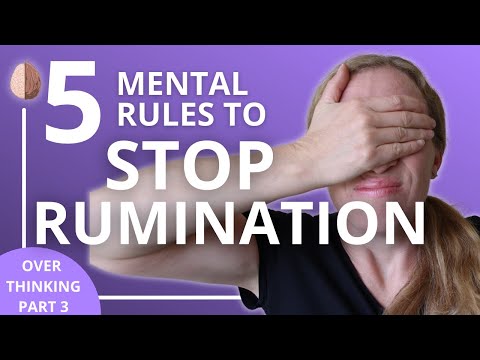
You know that annoying loop in your head? The one where you can’t stop replaying a moment over and over? Yeah, that’s rumination.
It’s like getting stuck in a traffic jam of thoughts. Super frustrating, right? You keep going over what happened or what you should’ve said. And all it does is make you feel crummy.
Trust me, you’re not alone in this! Many of us get caught up in our own spirals. It can sneak into the background and mess with your mood pretty badly.
So let’s chat about it—what rumination really is, how it affects your mental health, and why breaking that cycle can feel like finding an escape route. Sound good?
Effective Strategies to Overcome Mental Rumination and Find Peace
Well, let’s talk about mental rumination. You know, that thing where your mind just won’t shut up? It’s like a hamster wheel on overdrive! You keep going over past mistakes or worries about the future, and it can make you feel pretty crummy. So, let’s explore some effective strategies to overcome that nagging habit and find a bit more peace.
First things first—**acknowledge your thoughts**. When you start to ruminate, recognize what’s happening. Like, okay, I’m doing it again! Just saying that can be powerful. It pulls you out of an automatic reaction and gives you a moment to breathe.
Next up is **set aside time for worry**. Sounds odd, right? But hear me out. If you allocate a specific time each day—maybe 10-15 minutes—to think about whatever’s bothering you, it can help contain those thoughts. Outside of that time? No worries allowed! This way, you’re not trying to fight against those thoughts all day long.
Another strategy is **distraction**. Engaging in something completely different can break the cycle of thinking. Watch a movie, read a book, or even pick up a hobby you love. That little shift in focus can be super refreshing!
Let’s talk about **mindfulness meditation**, too. This isn’t just some buzzword; it really works! Practicing mindfulness helps ground you in the present moment instead of letting your mind drift into the past or future. For example, focus on your breath for just a few minutes—feel how it enters and leaves your body. It’s like hitting the reset button on your brain!
And then there’s **journaling**—it might sound cliché but writing things down can help untangle those messy thoughts in your head. Just grab a notebook and spill out what you’re feeling without worrying about grammar or structure—the whole point is to get it out!
Also worth trying is **physical activity**; seriously! Exercise releases endorphins which boost your mood and ease anxiety. Whether it’s running, dancing in the living room like no one’s watching, or taking long walks—getting your body moving helps shake off those ruminating thoughts.
Lastly, don’t shy away from reaching out for support when needed. Sometimes talking with friends or seeking professional help can make all the difference in navigating through tough emotions.
Remember this: overcoming rumination takes practice—you won’t do it perfectly all at once! Be patient with yourself as you experiment with these strategies.
Finding peace when you’re caught up in that whirlwind of thought isn’t easy but it’s totally achievable with some effort and self-compassion along the way!
Understanding Rumination: The Impact on Your Brain and Mental Health
Rumination, in a nutshell, is like getting stuck in a mental loop. You know, where you keep thinking about the same thing over and over? It can be a specific event, a mistake you made, or even worries about the future. So, what’s really going on in your brain when this happens?
When you ruminate, you’re basically activating certain areas of your brain responsible for memory and emotion—think of the prefrontal cortex and the amygdala. This activity can lead to heightened feelings of anxiety or sadness. So, instead of solving a problem or letting go of something that bothers you, you’re just piling on more stress.
Here’s how rumination can affect your mental health:
- Increased Anxiety: When you’re stuck in those negative thoughts, it can make you feel more anxious. It’s like watching a scary movie on repeat; the fear just doesn’t fade away.
- Depression: For some people, constant ruminating can lead to depression. You might find yourself feeling hopeless or helpless after going down that rabbit hole for too long.
- Trouble Sleeping: If your mind won’t shut up at night, it’s hard to get quality sleep. Lack of sleep then makes everything worse—it’s a vicious cycle.
- Poor Decision Making: When you’re stuck in that thought loop, it’s tough to see things clearly. Your ability to make decisions gets clouded by all that negativity.
Let me share an example. Imagine you’ve had an awkward conversation with someone at work. Instead of brushing it off, you end up replaying every word in your head repeatedly. “What did I say? Did I come off as rude?” The more you think about it, the more anxious and self-critical you become! This scenario shows how easily rumination can spiral out of control.
But there’s some good news! You can actually work on breaking these cycles. Mindfulness techniques—like focusing on your breath or engaging in activities that ground you—can help redirect those wandering thoughts.
So next time you catch yourself turning something small into an emotional marathon, try to pause and breathe. Remember: your thoughts don’t have to dictate how you feel forever!
Understanding Rumination: Is It a Mental Illness or Just a Common Thought Pattern?
Understanding rumination is like opening a window into how our minds sometimes get stuck on certain thoughts. You know those moments when you just can’t shake off a worry or replay a conversation over and over? That’s rumination in action. It’s not exactly a mental illness, but it can spiral into something more serious if it goes unchecked.
So, what exactly is rumination? Well, it’s that repetitive thinking process where your mind fixates on distressing events or feelings. Unlike just having a thought that pops up and then fades away, rumination tends to linger. You might think about mistakes you made or things that upset you, almost like your brain’s stuck on repeat.
You may be wondering if everyone does this. The answer is yes, lots of people ruminate at some point. It’s part of being human. But here’s the catch: while a little reflecting can help us learn and grow, when it becomes a habit, it can mess with your mental health.
But is rumination an official mental illness? Not really. It’s more like a symptom tied to certain mental health conditions such as depression and anxiety. So think of it as one piece of a bigger puzzle rather than the whole picture.
Let me give you an example: imagine you’re gearing up for an important presentation at work. Afterward, instead of moving on and basking in your success, you keep thinking about every little detail—what you said wrong or how people reacted. That constant replay creates stress and anxiety which can drain you emotionally over time.
Here are some key points about rumination:
- Common Occurrence: Most people experience some form of rumination.
- Can Lead to Problems: If persistent, it may contribute to depression or anxiety disorders.
- The Purpose: While intended as a way to solve problems or make sense of emotions, it often has the opposite effect.
- Coping Strategies: Techniques like mindfulness and distraction can help break the cycle.
One thing to keep in mind is that awareness matters. If you notice yourself ruminating often, taking proactive steps can change the game for your mental wellness. Techniques such as journaling or talking things out with friends have been shown to effectively reduce those spiraling thoughts.
So yeah, while it’s not classified as a mental illness per se, rumination isn’t something to take lightly either. Recognizing its grip on your mind can be the first step toward finding relief and returning to calmer waters.
So, let’s talk about rumination. You know, that thing where your mind just keeps looping around the same thought over and over again? It’s like when you’re trying to get a song out of your head but instead, you keep playing it on repeat in your brain. For some folks, this can be kind of a big deal when it comes to mental health.
Imagine sitting in a coffee shop, sipping on a latte, but instead of enjoying the moment, you can’t shake off that nagging feeling about something awkward you said last week. Or maybe you’re stuck replaying a conversation with a friend and wondering if they’re mad at you. It almost feels like your brain is its own worst enemy sometimes.
Rumination often takes root in feelings of anxiety or depression. It can really drag you down and make it hard to focus on anything besides that one negative thought. Honestly, it’s exhausting! Like running an emotional marathon without even leaving your couch.
The crazy part? While we’re ruminating, we think we’re solving problems. But usually, we just end up feeling worse. It’s like trying to fix a flat tire while driving with no spare—you’re not getting anywhere; you’re just stuck!
And let me tell you about my friend Jake. He used to get caught up in these cycles all the time after tough situations at work. One missed deadline turned into weeks of replaying every detail in his head—was it his fault? Could he have done better? He honestly felt so worn out from all that mental gymnastics that he started avoiding work altogether because he just couldn’t deal with the stress anymore.
To make matters worse, rumination can affect how we see ourselves. When you’re trapped in those negative loops, it’s easy to forget all the good stuff about who you are or what you’ve accomplished. It can erode self-esteem like crazy!
But hey, there’s light at the end of this tunnel! Recognizing when you’re slipping into those ruminative thoughts is half the battle won. Mindfulness practices can help too—like grounding yourself in the present moment instead of getting lost in those loops.
So next time your mind starts spiraling down that rabbit hole again, try to catch yourself early on and shift gears if you can. It’s not easy by any means; I totally get that! But taking small steps can lead to big changes over time—and seriously? You deserve a break from those pesky thoughts!