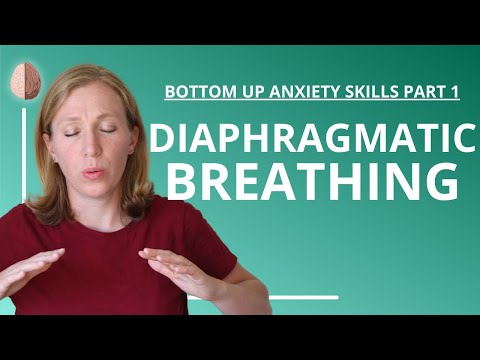
You know that feeling when your chest gets tight and your thoughts start racing? Yeah, it’s the worst. Anxiety can hit out of nowhere, right?
But what if I told you there’s this super simple trick that can help? It’s called diaphragmatic breathing. Sounds fancy, huh?
Honestly, it’s just a way to breathe that taps into some chill vibes. Like, your body can actually relax if you do it right.
I remember a time when I felt totally overwhelmed at work. My heart was pounding like crazy. Then someone mentioned this breathing thing to me. It was a game-changer!
So let’s chat about how this technique works and why it might be the perfect tool for you when anxiety strikes.
Discover How Diaphragmatic Breathing Can Alleviate Anxiety: A Comprehensive Guide
Let’s talk about **diaphragmatic breathing** and how it can help with anxiety. If you’ve ever felt that crazy heart racing or tightness in your chest when anxious, you’re definitely not alone. Many people experience these sensations, and it’s a real challenge. But here’s the thing: diaphragmatic breathing can serve as a powerful tool to help calm those nerves.
Basically, diaphragmatic breathing—sometimes called belly breathing—is all about using your diaphragm effectively while you breathe. Instead of taking shallow breaths from your chest, this technique encourages deeper inhalation through your nose, allowing more air into the lungs and letting your belly rise. It sounds simple, right? But it packs a serious punch when it comes to reducing anxiety.
So how does this work? When you’re anxious, your body goes into «fight or flight» mode. Your breathing gets rapid and shallow. This sends a signal to your brain that you’re stressed out, which only makes things worse! Diaphragmatic breathing flips the script; it signals relaxation.
Here are some key benefits of diaphragmatic breathing:
- Reduces stress hormones: Engaging in this technique can lower cortisol levels—those pesky stress hormones that ramp up anxiety.
- Promotes relaxation: Deep breaths help activate the parasympathetic nervous system, which calms you down.
- Enhances oxygen flow: More oxygen means better brain function and clearer thinking!
- Improves focus: As your body relaxes, you can concentrate better on what’s in front of you instead of spiraling into anxiety.
Now picture this: One evening after a tough day at work filled with deadlines and meetings that left you feeling drained—maybe even a bit overwhelmed—you decide to try diaphragmatic breathing for relief. You sit down somewhere cozy, place one hand on your belly and the other on your chest. As you breathe in deeply through your nose, you feel that hand on your belly rise while the one on your chest stays still. It’s like magic!
You might start off feeling a bit weird doing it at first or even think it’s silly (I get it). But over time, as you practice this for just five minutes daily or whenever anxiety hits hard, you’ll notice those feelings pass more quickly.
To really make this stick, consistency is key! Just like any habit we want to build—like exercising or eating healthier—the more often we practice diaphragmatic breathing, the easier it’ll become to tap into during stressful times.
So next time you’re feeling anxious or before heading into something nerve-wracking—like speaking in front of others or even just during that awkward small talk at parties—give this technique a shot! You might find that just focusing on breath alone is enough to lessen those spikes of anxiety.
In short, if you’ve got anxiety knocking at your door often enough to make you crazy sometimes (trust me; I’ve been there), remember this simple yet effective tool: **diaphragmatic breathing**!
Top Breathing Techniques to Effectively Reduce Anxiety and Promote Calmness
Diaphragmatic breathing, also known as deep breathing, is a super handy tool if anxiety has been creeping into your life. Seriously, it’s like a reset button for your mind and body. So, let’s break down how this works and why it’s effective.
First off, let’s understand the diaphragm. It’s this big, dome-shaped muscle right beneath your lungs. When you breathe in deeply using your diaphragm, it helps fill your lungs with air more effectively than shallow breathing from your chest. This brings more oxygen into your system and can really help calm you down.
Here are some key points about diaphragmatic breathing that can help reduce anxiety:
You might be thinking: «Okay, but how do I actually do this?» Well, let’s break it down simply.
1. **Find a Comfortable Position:** Sit or lie down in a quiet place where you won’t be disturbed.
2. **Place Your Hands:** Put one hand on your chest and the other on your belly.
3. **Inhale Deeply through Your Nose:** Feel that belly rise—you want that hand on your belly to move up while the hand on your chest should stay still.
4. **Exhale Slowly through Your Mouth:** Let the air escape slowly as if you’re blowing out through a straw or gently cooling off hot soup.
5. **Repeat:** Do this for a few minutes or until you start feeling calmer.
Seriously though, even just doing this for five minutes can switch up those anxious feelings into something much more manageable!
Another technique worth mentioning is 4-7-8 breathing—it’s super simple too! Here’s how it goes:
1. Inhale quietly through the nose for a count of 4.
2. Hold that breath for a count of 7.
3. Exhale completely through the mouth for a count of 8.
Repeat this cycle four times—this one might take some practice but totally pays off when you’re feeling anxious!
So remember:
– **Diaphragmatic breathing** is all about using that diaphragm efficiently to bring in air deeply.
– It helps calm both mind and body by slowing things down—a real game changer when anxiety hits hard.
Give these techniques a shot next time you’re feeling overwhelmed! The benefits are huge in terms of not only reducing anxiety but boosting overall well-being too!
Optimize Your Well-Being: The Ideal Frequency for Diaphragmatic Breathing Exercises Daily
Diaphragmatic breathing is like a secret weapon for managing anxiety. It’s that simple, yet powerful technique that helps you regain control when stress starts to take over. By focusing on your breath, you can send signals to your body that it’s time to chill out and relax.
Now, about the ideal frequency for practicing this breathing. You might be surprised to hear it’s not one-size-fits-all. Some people find that doing diapragmatic breathing exercises just a few minutes a day helps them feel more centered and calm. Others might need a little more—like three to four times a day—especially during high-stress moments.
When you’re starting out, even five minutes at a time can make a difference. Just find a quiet space, sit or lie down comfortably, and focus on making your belly rise and fall as you breathe in and out. So yeah, breathing is supposed to be natural, but taking a moment to practice it like this can really help.
Here are some key points about frequency:
- Daily Practice: Try to incorporate diaphragmatic breathing into your daily routine. It could be as simple as right after waking up or just before bed.
- Acknowledge Your Needs: Listen to your body! If you feel anxious during the day, pause for some diaphragmatic breathes.
- Gradual Increase: If you find it helpful, increase duration or frequency gradually until you discover what feels best for you.
Once I talked with my friend Sarah who struggled with anxiety attacks. She started with just 5 minutes each morning and eventually added another session in the afternoon when her stress levels peaked at work. Those little pauses made her feel less overwhelmed; she could tackle her tasks without feeling completely frazzled.
And remember, there’s no wrong way to approach this! Whether you’re doing 5 minutes or 20 doesn’t matter as much as how consistent you can be with it. The goal is to integrate this practice into your life so it becomes second nature.
To sum up: Find a routine that works for you. Whatever fits in naturally—just be sure it’s something you’re actually going to stick with! By optimizing your well-being through diaphragmatic breathing, you’re giving yourself an awesome tool for managing anxiety when life gets hectic.
You know when anxiety hits, and it feels like you can’t catch your breath? It’s like your chest tightens up in this horrible way, and all the calm you had just goes *poof*. Well, that’s where diaphragmatic breathing comes in. It’s a super simple technique that can help ground you when life gets a bit overwhelming.
I remember this one time I was waiting for a big presentation at work. My hands were sweating, my heart was racing, and honestly, I thought I might pass out right there. My buddy told me to try diaphragmatic breathing. At first, I was skeptical—like, really? Just breathe? But I thought, why not give it a shot?
To do it right, you gotta find a comfy spot and place one hand on your belly and the other on your chest. Then you inhale deeply through your nose, letting your belly rise while keeping your chest pretty still. You hold it for a second before exhaling slowly through your mouth. Boom! Just like that.
Honestly? It felt like magic. With each breath in and out, the weight of anxiety began to lift just a little bit. By the end of those few minutes of focused breathing, I was calmer and more centered—even managed to ace that presentation!
Diaphragmatic breathing isn’t some complex therapy or anything; it’s just about tuning into yourself for a moment. It doesn’t solve all your problems or take away the anxiety completely—nothing really does—but it gives you a tool to regain control when everything feels chaotic.
It’s wild how something so simple can create space between those anxious thoughts and feelings. So next time you’re feeling overwhelmed or stressed out, give diaphragmatic breathing a try. You might find it helps more than you thought possible!