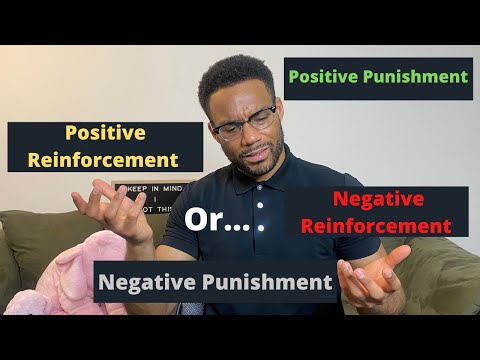
You know, when it comes to behavior, there’s this thing we always hear about—negative reinforcement and punishment. They sound super similar, right? But they’re not the same at all.
It can be kind of confusing. Like, seriously, one of them is all about encouraging behavior while the other is about discouraging it.
Ever have a moment where you’ve done something just to avoid getting in trouble? That’s where these ideas really come into play! You might have felt relief after dodging that consequence.
Let’s break it down together and see how these concepts shape our everyday lives. You’ll definitely want to stick around for this!
Understanding the Key Differences Between Negative Reinforcement and Punishment in Psychology
Understanding the differences between **negative reinforcement** and **punishment** can feel a bit tricky, right? But they’re actually pretty different concepts in psychology. Let’s break it down so it’s easier to grasp.
Negative reinforcement is all about removing something unpleasant to increase a behavior. Basically, you take away a negative stimulus to encourage someone to do more of a certain thing. For example, imagine your friend gets really anxious when they have to give presentations. If you tell them they don’t have to present this time, their anxiety goes away. Because of that relief, your friend might be more likely to engage in similar situations in the future—like sharing their ideas more often.
On the flip side, we have punishment. This is about applying an unpleasant consequence to decrease a behavior. When someone does something you want them to stop doing, punishment aims at making that behavior less likely in the future. Think of it like this: if a kid touches a hot stove and gets burned, they learn not to touch it again because they associate the pain with that action.
Now let’s dig into some key differences:
- Purpose: Negative reinforcement increases behavior by removing something bad; punishment decreases behavior by adding something bad.
- Outcome: With negative reinforcement, you’re getting relief and it’s kind of rewarding; with punishment, it’s an unpleasant experience.
- Example scenarios: Think of an employee who finishes their work early and avoids overtime (negative reinforcement). In contrast, a student who gets detention for skipping class learns not to skip in the future (punishment).
The emotional impact can also vary quite a lot. Negative reinforcement feels good because you’re escaping discomfort—it’s like dodging rain after running from it! Punishment, however, can provoke fear or resentment; nobody likes being on the receiving end of harsh consequences.
You see how they work differently? Understanding these concepts can help you navigate behaviors better—whether you’re dealing with pets or kids or trying to adjust your own habits!
So remember: while both negative reinforcement and punishment aim for behavior change, one does so through relief while the other relies on consequences. It’s important stuff if you’re interested in how actions are shaped over time!
Understanding Negative Reinforcement and Punishment: Key Examples and Their Impact on Behavior
Negative reinforcement and punishment are two concepts that can definitely get a little tangled up in our heads. Both deal with behavior and consequences, but they’re pretty different in how they affect us. So let’s break it down, shall we?
First off, negative reinforcement isn’t about punishing someone for doing something wrong. Instead, it’s more about taking something unpleasant away to encourage a certain behavior. Imagine you have this awful headache, right? And then you take some medicine that makes it go away. That relief from pain is like negative reinforcement. You’re more likely to take medicine again when you have a headache because you want that pain to disappear.
Now, on the flip side, we have punishment. This one’s about discouraging behaviors by adding an unpleasant consequence or taking something positive away. Let’s say your kid keeps leaving their toys all over the floor. If you decide to take away their video game time as a consequence, that’s punishment! The idea is that they’ll think twice before making the same mess again.
But here’s where it gets interesting—while negative reinforcement encourages a behavior by removing something negative, punishment tries to suppress or decrease a behavior by adding or subtracting something unpleasant. You see the difference?
- Negative Reinforcement: Removes an unpleasant stimulus to encourage a behavior.
- Punishment: Adds an unpleasant consequence or removes something pleasant to discourage a behavior.
So why does this matter? Well, understanding these two concepts can really change how we interact with others—especially kids or even coworkers! For instance, if you want your child to do their homework without nagging them all the time (hey, who wouldn’t?), using negative reinforcement could work better than punishment. Maybe if they finish their work early one day, they get extra screen time later as a reward instead of taking away privileges when they don’t do their homework.
But here’s the kicker: overdoing either method can backfire big time! Too much punishment can lead to fear and resentment instead of learning from mistakes. And relying too heavily on negative reinforcement might make someone dependent on rewards to behave properly.
There was once this student who struggled with anxiety during tests. Instead of punishing him for not performing well (which would only increase his stress), his teacher started letting him take breaks during exams if he felt overwhelmed—removing the pressure made him more comfortable and he began to improve his scores over time.
So basically? It’s all about finding balance and knowing when each approach should be used! Understanding these key terms helps us create healthier environments at home or at work where people feel more motivated rather than scared of making mistakes.
Wrap your head around these ideas next time you’re trying to change or understand someone’s behavior; every bit helps in making life just a little easier on everyone involved!
Understanding Negative Reinforcement in Behavioral Theory: Key Concepts and Examples
Understanding negative reinforcement is pretty crucial if you want to grasp behavioral theory. So, let’s break it down in simple terms. Basically, negative reinforcement is all about increasing a behavior by removing something unpleasant. Like, if you take painkillers to get rid of a headache, you’re more likely to use them again when you feel one coming on. You see what I mean?
Key Concepts:
- Behavioral Theory: This is the idea that our behaviors can be shaped by the consequences that follow them. Positive outcomes encourage behaviors; negative ones discourage them.
- Negative Reinforcement: This isn’t about punishment! It’s removing discomfort to promote a specific action. Like wearing a seatbelt to stop that annoying beeping sound in the car.
- Punishment vs. Negative Reinforcement: People often confuse these two. Punishment aims to stop behavior by adding something annoying or unpleasant, while negative reinforcement aims to increase behavior by taking away something bad.
Let me give you another example. Imagine a student who studies hard to avoid getting scolded for poor grades at home. Here, studying more is an action that gets reinforced negatively; the kid does it to escape the dread of their parents’ disappointment.
So, like I said earlier, it’s really about behaviors and their consequences. If someone feels relief from anxiety after talking about their feelings with a friend, they’re likely gonna keep doing it because it helps them feel better when things get tough.
Another aspect worth mentioning is how this concept plays out in daily life. For instance, if your coworker brings donuts into work and you avoid talking with them because of their constant food cravings—it’s kinda like you’re reinforcing your choice not to engage with them simply because they make you uncomfortable.
Now, let’s talk about how this relates back to punishment. While punishment tries to decrease unwanted actions—like getting yelled at for being late—it doesn’t teach you what you should do instead; it just makes you feel bad about what you’ve done wrong.
In summary: Negative reinforcement isn’t evil! It just focuses on making behaviors stronger by helping us avoid unpleasant situations or feelings instead of making us feel worse through punishment. It’s all connected in this intricate web of human behavior and emotion—crazy how those two work together, huh?
You know, when you think about how we learn and change behaviors, it’s easy to get lost in the lingo. But let’s break it down a bit. The whole idea of negative reinforcement and punishment is really about how we respond to our actions, right?
So, picture this: You’re in the car with a friend. They’re driving really fast and you start feeling nervous. Maybe you say something like, “Hey, could you slow down?” If they actually do it, that’s kind of like negative reinforcement. You’re taking away your anxiety by asking them to drive slower. The behavior gets reinforced because now they feel good for making you comfortable.
On the flip side, let’s say your friend runs a red light and gets pulled over by the cops. That ticket is punishment for their action. It doesn’t encourage them to drive faster—in fact, it usually does the opposite! So punishment adds an unpleasant consequence with hopes of reducing bad behavior.
It can get even murkier when you consider both terms are often misunderstood. Lots of folks think negative reinforcement is the same as punishment, but that’s not quite right! Negative reinforcement is more about encouraging a specific behavior by removing something undesirable—while punishment aims to stop an unwanted behavior by adding something unpleasant.
I remember this one time back in school when I kept forgetting my homework. I got detention (that was the punishment), which did not help my memory at all! Instead, my teacher started giving me reminders before class (kind of like negative reinforcement). And guess what? It worked! I started remembering my homework more often because I didn’t want to deal with detention anymore.
So yeah, both strategies have their place in behavioral psychology but work in totally different ways. Understanding them can help us improve motivation not just in ourselves but also when we deal with others—friends or kids or whatever! It’s all about finding that balance between keeping things positive and guiding people away from what doesn’t work—you feel me?