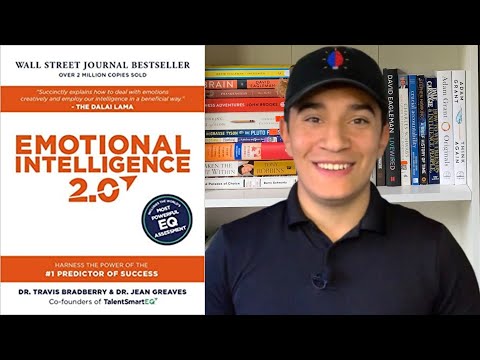
Hey! So, let’s chat about emotional intelligence for a sec. You know that feeling when you just *get* someone? Like, you can sense their vibe without them even saying a word? That’s emotional intelligence at play.
It’s kinda like having a superpower, honestly. And here’s the thing: knowing your own emotional smarts can really help with your mental health. Seriously. You might be wondering how it all works and if you actually have good emotional skills.
That’s where this Emotional Intelligence 2.0 Test comes in—think of it as your little guide to understanding yourself better. It’ll give you some cool insights into how you handle feelings, both yours and others’. Ready to find out what makes you tick? Let’s jump in!
Understanding the EQI 2.0 Assessment: Key Metrics and Insights on Emotional Intelligence
Emotional Intelligence, often called EQ, is all about understanding and managing your own emotions and the emotions of others. It’s a big deal in our daily lives—like, seriously. You might not realize it, but how you react in stressful situations or connect with friends often boils down to your EQ.
One cool tool for measuring this is the **EQ-i 2.0 Assessment**. It’s designed to give you a snapshot of your emotional intelligence across various dimensions. Basically, it breaks down your emotional skills and helps pinpoint areas for growth.
So, what are these key metrics? Let’s break it down.
Self-Perception
This part dives into how you see yourself emotionally. It includes things like self-regard (how much you value yourself), emotional self-awareness (your ability to understand your own emotions), and self-actualization (how well you’re reaching your potential). For example, if you’ve ever felt great after achieving a personal goal, that’s self-actualization shining through.
Self-Expression
Here’s where it gets juicy! This area focuses on how you express your feelings. You want to be balanced—not too expressive or too reserved. It’s all about **assertiveness** (standing up for yourself while respecting others) and **emotional expression** (being open about what you’re feeling). Think about that time when a friend needed a shoulder to cry on, and you really showed up for them.
Interpersonal Skills
This includes how well you interact with people around you. Do you have strong relationships? Are you able to empathize with others? That’s where empathy comes into play—it’s crucial for connecting with people on a deeper level. A common example is when someone shares their struggles and instead of jumping straight into advice-mode, you’re really just there with them in that moment.
Decision Making
Your EQ also impacts how you make choices! This metric shows how well you use emotions in decision-making processes—like weighing the pros and cons based on your gut feelings alongside rational thoughts. Sometimes we need to trust our intuition more than we realize!
Stress Management
Life gets stressful; let’s be real! This dimension covers how well you’re handling stress through emotional regulation techniques—keeping cool under pressure is key here! It could be as simple as taking deep breaths during an intense moment or knowing when to step back from a situation before reacting impulsively.
The **EQ-i 2.0 Assessment** wraps all this up into one neat package. But remember, it’s not just about getting results; it’s about using those insights for personal growth or even better communication within your team at work or in your social life.
So think of this assessment as a mirror reflecting both strengths and weaknesses in emotional intelligence—a tool for growth rather than judgment! And who knows? Maybe by understanding yourself on this level, you’ll find ways to improve connections with people around you too. Isn’t that worth exploring?
Understanding EQ-i 2.0 Scores: What Constitutes a Good Emotional Intelligence Rating?
Emotional intelligence, or EQ, is a big deal these days. You might have heard of the EQ-i 2.0, which is a tool that measures emotional intelligence in a pretty detailed way. So, what’s the deal with those scores? And what exactly makes a “good” score?
Let’s break it down. The EQ-i 2.0 measures various aspects of your emotional intelligence across five key areas:
- Self-Perception: This is all about how well you understand yourself. Are you in tune with your emotions? Do you know your strengths and weaknesses?
- Self-Expression: How do you express those emotions? Can you communicate effectively? A good score here usually means you’re comfortable sharing how you feel.
- Interpersonal: This one focuses on your relationships with others. Do you empathize well? Can you build strong connections?
- Decision Making: Emotional intelligence plays a role in making choices too! It’s about using emotions to guide decision making, not letting them take control.
- Stress Management: Lastly, can you handle stress like a champ? A high score indicates resilience and the ability to cope with pressure.
Now, when it comes to scores, the typical range is anywhere from 60 to 140. Scores around **100** are generally considered average. But what does it mean if you’re above or below that mark?
A score above **100** suggests good emotional awareness and skills—kind of like having an emotional superpower! For instance, if you’re really good at reading others’ moods and adjusting your behavior accordingly, that’s a solid sign that you’re rocking it in this department.
On the other hand, if your score falls below **100**, it doesn’t mean you’re hopeless or anything. Maybe you’ve got room to grow! Think of it as a starting point for improvement. So let’s say someone struggles with self-expression—this might show up as difficulty in sharing feelings during tough conversations.
Emotional intelligence isn’t static either; it’s something we can work on over time. If you’re thinking about improving your EQ score, focus on specific areas where you’re lower rated.
Also, remember that context matters too! A «good» score can vary depending on your environment—like work vs personal life—and what areas are most relevant to those situations.
A little story for context: I remember this friend who always struggled at work with interpersonal relationships because he didn’t realize how his tone affected others’ feelings. Once he got feedback and started working on expressing himself better emotionally, his relationships improved dramatically!
So there you go—a quick rundown on understanding EQ-i 2.0 scores and what they really mean for you! Whether you’re scoring high or low, just know there’s always room for growth and learning when it comes to emotional intelligence.
Exploring the EQ-i 2.0: Can You Take the Emotional Intelligence Assessment Online?
So, you’re curious about the EQ-i 2.0, huh? That’s totally understandable! Emotional intelligence is one of those buzzwords that keeps popping up. But what’s it all about, and can you actually take this assessment online? Let’s break it down.
The EQ-i 2.0 stands for the Emotional Quotient Inventory 2.0. It’s basically a tool designed to measure how well you recognize and manage your own feelings and the feelings of others. Sounds super fancy, right? But really, it’s just a way to understand how emotions work in everyday situations.
Now, one of the cool things about the EQ-i 2.0 is that it’s not just theoretical; it has practical applications in both personal and professional life. You know when you’re in a meeting, and someone throws out an idea that makes everyone uncomfortable? Someone with high emotional intelligence might notice the shift in energy or body language and address it right away.
You can absolutely take the EQ-i 2.0 online! Many organizations offer this assessment through official platforms, which makes it pretty accessible. Just go to a reliable website that offers this test, sign up, and boom! You’ll be answering questions in no time.
What does the assessment involve? The assessment usually consists of several sections where you’ll respond to statements like “I stay calm under pressure” or “I can easily express my emotions.” Your responses help paint a picture of your emotional skills across different areas.
Here are some key points regarding why taking the EQ-i 2.0 online can be beneficial:
- Convenience: You can take it from anywhere—your couch, coffee shop…you name it.
- No pressure: Since you’re in your own space, there’s less stress compared to traditional settings.
- Instant feedback: Many platforms provide quick reporting so you can see your results sooner rather than later.
But keep in mind that while taking it online is super convenient, make sure you’re going through an accredited site! You want your results to be legit.
Now let me tell you a little story: A friend of mine took this test last year during his job application process. He was nervous at first but found that understanding his emotional strengths really helped him ace interviews! Knowing how he reacted under stress made him feel more confident while answering tough questions.
In essence, if you’re looking to get a deeper insight into yourself—your emotional reactions, social skills, or self-regulation—the EQ-i 2.0 could be worth exploring further online! Just remember: it’s not about just passing an assessment; it’s about personal growth too!
So there you have it! If you’re into discovering more about yourself emotionally—and who isn’t these days—it might be time to check out the EQ-i 2.0 for yourself.
You know, emotional intelligence is such a big deal these days. It’s like everyone’s buzzing about it—and for good reason! It’s that skill that helps you understand your emotions and the emotions of others. Seriously, when you get a handle on that stuff, it can change everything.
So, let’s talk about the Emotional Intelligence 2.0 Test. It’s this cool tool that measures different aspects of emotional intelligence, like self-awareness and empathy. I remember when I took it a few years ago; honestly, I was kind of nervous at first. I mean, what if the results were like shining a spotlight on all my flaws? Turns out, it was eye-opening in a good way!
Through the test, I realized certain things about myself—like how I sometimes let my feelings overshadow my rational side during tough situations. You know those moments when you’re totally overwhelmed? Yeah, those were part of my pattern. But seeing that in black and white helped me understand where I could grow.
And here’s the kicker: when you start to see your emotional strengths and weaknesses clearly, it’s like flipping a switch in your brain. You get insights into how to handle stress or connect with others better. If you’re struggling with anxiety or feeling just plain off mentally, this test can offer some real gems about what’s going on inside your head.
Now, don’t get me wrong; this isn’t some magic solution or anything. But it gives you tools—kind of like a map—that can guide you through your feelings and interactions with people around you.
Still processing all this stuff? Totally normal! Emotional intelligence isn’t something you master overnight; it’s more like building muscles at the gym. And who wouldn’t want to be more emotionally fit? So if you’re curious or feeling stuck in any way mentally, checking out that test could be worth your time! Just remember: it’s all about self-discovery and growth at your own pace.