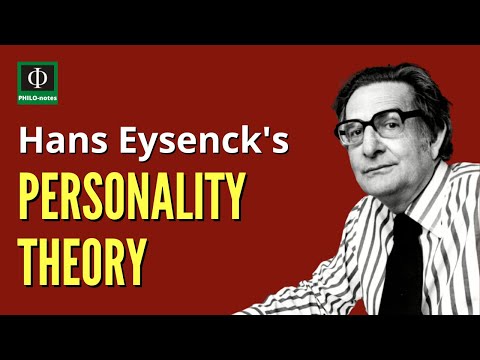
You know how sometimes you just click with someone? Like, it feels like you get each other? That’s kind of what personality is all about.
We all have our quirks and traits that make us who we are. Some of us are super outgoing, while others prefer to hang back and observe the world. So, how do we figure out what makes people tick?
Enter the Eysenck Personality Inventory! It’s a cool tool that helps us get a peek into the complex world of our personalities. You might be wondering why this even matters. Well, understanding ourselves better can improve not only our relationships but also our mental health.
And hey, knowing where you fit on that personality spectrum could even help you in work or daily life! Let’s unpack this together and see what makes the Eysenck Personality Inventory such an interesting piece of the psychology puzzle.
Understanding the EPQ Model in Psychology: A Comprehensive Guide to its Concepts and Applications
The EPQ Model, or Eysenck Personality Questionnaire, is an interesting way to understand personality traits. Basically, it helps you figure out how someone’s personality influences their behavior and emotional responses. So, how does it work?
First off, Hans Eysenck, a British psychologist, came up with this model in the 1950s. He thought that personality could be boiled down to three main dimensions: Extraversion, Neuroticism, and later added Psychoticism. So let’s break these down a little.
Extraversion is all about how outgoing or reserved someone is. If you’re more of a social butterfly, you probably score high on this scale. You love parties, chatting with friends, and being around people. On the flip side, if you prefer quiet nights at home with a book or some Netflix, then you’re likely more introverted.
Neuroticism deals with emotional stability. Those who score high in this area may experience anxiety and mood swings more often than others. Think of that friend who stresses out way too much over little things—that’s a classic example! On the other hand, if you’re chill under pressure and not easily shaken by life’s bumps, you’re probably low on neuroticism.
Now onto Psychoticism, which Eysenck added later on. This dimension looks at traits like aggressiveness and interpersonal hostility. High scores might mean someone has tendencies towards irritability or lack of empathy—think of the person who always seems to be in a bad mood or quick to anger.
So why does all this matter? The EPQ Model can be super useful in various contexts:
- Mental Health Assessments: Understanding someone’s personality can help professionals tailor treatment plans.
- Counseling: Therapists might use these insights to help clients navigate their relationships better.
- Career Guidance: Knowing your personality traits can steer you towards jobs that suit you best.
Let me share a quick story here—imagine Sarah, who’s always been the life of the party but often finds herself overwhelmed by stress at work. She scores high on extraversion but also has some neurotic tendencies. A therapist might point out how her social nature clashes with her stress levels and work demands. Realizing this could lead Sarah toward strategies that help balance her social energy with periods of self-care.
In short, the EPQ Model offers valuable insights into human behavior by categorizing personality traits into manageable areas. It’s all about understanding what makes us tick! By getting to know ourselves through tools like the EPQ, we can make informed choices about our mental well-being and personal growth—all while navigating life’s challenges with a bit more clarity!
Exploring Eysenck’s Impact: Key Contributions to Psychology and Mental Health
Hanse Eysenck was a significant figure in psychology, especially when it comes to personality theory and mental health. His work has had a lasting impact on how we understand people’s behaviors and emotions. One of his standout contributions is the Eysenck Personality Inventory (EPI), which helps measure different personality traits based on his theories.
Eysenck believed that personality could be understood through three major dimensions: extraversion, neuroticism, and later, psychoticism. Each of these dimensions represents a range of behaviors and tendencies that can help explain why people act the way they do. For instance:
Think about it this way: if you’re feeling anxious at a party (high neuroticism), but someone else is dancing on the tables (high extraversion), it gives you insight into their personalities. You see how these traits influence behavior.
The EPI itself is a questionnaire that gives quick insight into where someone falls within these three dimensions. It’s utilized in various settings—from clinical assessments to personal development workshops—helping professionals understand their clients or students better.
One key takeaway from Eysenck’s theories is the idea that personality is not just about being «nice» or «mean.» It’s more about understanding the underlying traits that drive behavior. For instance, knowing someone has high levels of neuroticism could help a therapist tailor their approach during therapy sessions, focusing on building coping strategies for anxiety.
Eysenck also emphasized the role of genetics in shaping personality, arguing that traits are partly inherited. This sparked lots of discussions and research in psychology about nature versus nurture. That debate still influences modern psychology today.
His work has even led to various applications beyond traditional therapy settings. For example, organizations may use personality assessments based on Eysenck’s theories during hiring processes to find candidates who fit well with team dynamics or company culture.
In essence, Eysenck’s impact on psychology stretches far beyond individual tests or theories. He reshaped how we think about personality integration into mental health care practices s improvement strategies were developed around understanding these core traits.
So next time you hear about the Eysenck Personality Inventory or talk with someone working through their mental health journey, remember there’s a rich history behind those questions they might be answering!
Understanding the Eysenck Personality Questionnaire: A Key Tool in AP Psychology
The Eysenck Personality Questionnaire (EPQ) is like this cool map for understanding personality traits. Developed by Hans Eysenck, it’s designed to measure where you land on a couple of big dimensions of personality: extraversion and neuroticism. Simply put, it helps you see how outgoing or reserved you are and how stable or volatile your emotions tend to be.
So, let’s break this down a bit. The EPQ is based on Eysenck’s belief that personality can be boiled down to these main traits. He thought that everyone falls somewhere on a spectrum between being highly extraverted (think party person) and introverted (the quiet observer).
Eysenck added another dimension called psychoticism, which includes traits like aggression and creativity. However, it’s primarily the first two that the EPQ focuses on.
Now, why does this matter in AP Psychology? Well, understanding these traits can give you insight into behavior patterns. For example, if someone is high in neuroticism but low in extraversion, they might struggle with anxiety in social situations. This means they’d prefer staying home over hitting up a crowded party. You follow me?
The questionnaire itself is typically multiple-choice. You answer questions about your feelings and behaviors like “Do you often feel anxious?” or “Do you enjoy meeting new people?” Based on your answers, you’ll get scores for each trait.
It’s not perfect though; no one-size-fits-all tool ever is. One limitation of the EPQ is that it might oversimplify human behavior into just four categories without capturing the complex nature of individual experiences. And sometimes cultural differences can affect how people interpret questions.
But hey, it still has its uses! Many psychologists find it helpful for understanding personality types and predicting how people might react in certain situations.
In summary: The Eysenck Personality Questionnaire provides a structured way to think about personality traits along two main axes: extraversion and neuroticism. It’s super useful when you’re trying to make sense of different behaviors, especially in the context of education and mental health settings!
You know, personality tests are pretty interesting, aren’t they? They can really help you understand yourself and how you tick. One of those tests that comes up a lot in psychology is the Eysenck Personality Inventory, or EPI for short. It’s like a little window into your personality traits, and it’s been around for decades.
So, here’s the thing: Hans Eysenck, the guy behind this inventory, believed that our personalities could be distilled down to a few key dimensions. Basically, he thought that traits like extraversion vs. introversion and neuroticism vs. stability were super important in shaping how we behave and react to the world around us. You answer some questions about how you feel and act in different situations, and then voilà! You get a clearer picture of your personality.
For many people—even those who don’t think of themselves as “test-takers”—this little assessment can spark some pretty deep self-reflection. Like my friend Sarah once took it on a whim just to see what it would say. She ended up discovering she was more introverted than she thought. At first, she was overwhelmed by realizing that her need for alone time wasn’t something to hide; it was just part of who she is! That understanding helped her embrace her true self more fully.
It’s fascinating how knowing where you fall on these traits can influence your mental health too. For instance, if you score high on neuroticism, you might experience anxiety or mood swings more often. But knowing that gives you power! You can take steps to address these feelings—like seeking therapy or practicing mindfulness.
Of course, no test can capture every nuance of your personality or your lived experiences—there’s always a bit more to each person than just what fits into a box. So while the EPI offers some insights, it’s important not to treat it as gospel truth about who you are.
The vibe is all about using tools like this for growth—not labeling yourself in a way that feels limiting. Life is messy and complex; our personalities are too! The Eysenck Personality Inventory might not be everything but could spark that little light bulb moment for someone looking to dive deeper into their own mind—and trust me; that’s worth something!