You know, psychology can feel like this giant puzzle sometimes. You’ve got all these pieces from different people trying to make sense of how we tick. Like, take Freud, for instance. He was all about digging deep into our minds and figuring out the weird stuff we do. Super interesting, right?
Then there’s the MBTI—like, that personality test everyone seems to talk about. It’s got its own vibe and way of categorizing how we think and feel.
But here’s where it gets fun. What if I told you there are some cool connections between Freud’s ideas and the MBTI profiles?
Seriously, it’s like uncovering hidden threads in a tapestry of human experience. So let’s chat about this mashup—a blend of old-school psychoanalysis and modern personality types!
Exploring Sigmund Freud’s Personality Type: What MBTI Reveals About the Father of Psychoanalysis
So, let’s chat about Sigmund Freud and his personality type through the lens of the Myers-Briggs Type Indicator (MBTI). Freud, you know, is often considered the father of psychoanalysis. His work laid down a lot of the groundwork for understanding the human psyche.
Now, if we apply the MBTI to Freud, many suggest he would fit into an **INTJ** personality type. This stands for Introverted, Intuitive, Thinking, and Judging. Let’s break that down a bit.
Introverted: Freud was known to be pretty private. He liked to spend time thinking deeply about concepts rather than being in social situations all the time. He valued solitude as a space for his mind to explore complex ideas.
Intuitive: This aspect means he focused more on big-picture ideas than on immediate realities. Freud was all about theories like the unconscious mind and dream analysis—far-reaching concepts that required a lot of imagination and forward-thinking.
Thinking: Those with a Thinking preference tend to prioritize logic over emotions. Freud approached psychology scientifically; he believed in understanding behavior through rational thought rather than subjective feelings—a hallmark of his method.
Judging: Lastly, being Judging means he likely preferred structure and organization in his work. Freud had a clear vision for psychoanalysis and developed systematic techniques to explore human behavior and emotions.
Now let’s look at some examples that help illustrate this personality profile:
- The Interpretation of Dreams: In this iconic work, Freud delves into how our subconscious reveals itself through dreams—definitely an intuitive leap into how we process our reality.
- Psychoanalytic Theory: His emphasis on structure within mental processes showcases his Judging nature; he wanted order in understanding things like id, ego, and superego.
- Critique of Religion: Exploring religion through a scientific lens indicated his strong Thinking side—he sought logical explanations for beliefs often rooted in emotion.
Freud also had some intense experiences that shaped him emotionally and mentally throughout life—you know? His early exposure to strict upbringing mixed with high expectations likely influenced how he later viewed human behavior as driven by deeper psychological forces.
But here’s where it gets interesting: even though The MBTI isn’t perfect, it can give us insights into how personalities shape theories. By understanding someone like Freud through these lenses, we can see why he might’ve leaned towards complex interpretations over simpler explanations.
In summary, viewing Freud as an INTJ helps us appreciate the unique way he viewed psychology—not just as a science but as an exploration of human depth and complexity. Kind of fascinating when you think about it!
Exploring the Connection: Did Carl Jung Really Found the MBTI?
The connection between Carl Jung and the Myers-Briggs Type Indicator (MBTI) is super interesting. So, let’s break this down a bit! Jung was a Swiss psychiatrist who really dived into the world of personality. He had some wild ideas about how people think, feel, and act. But did he actually create the MBTI? Well, not exactly.
Jung developed a bunch of theories about personality types in the early 20th century. He introduced concepts like **introversion** and **extraversion**, which you probably recognize from the MBTI. He also talked about functions like **thinking**, **feeling**, **sensing**, and **intuiting**. These ideas laid some serious groundwork for later theories.
Now, here’s where it gets a bit murky. The MBTI was created by Katharine Cook Briggs and her daughter Isabel Briggs Myers during World War II. Their goal was to help people find jobs that fit their personalities better, you know? They were fans of Jung’s work but put their own spin on things.
So while Jung definitely influenced the development of MBTI, he didn’t create it outright. Briggs and Myers took his theories and crafted a whole system that splits people into 16 different personality types based on their preferences.
- Introversion vs Extraversion: This is all about where you get your energy—from being alone or hanging out with others.
- Sensing vs Intuiting: This focuses on how you take in information—do you prefer concrete facts or big-picture ideas?
- Thinking vs Feeling: This tells us how you make decisions—are they more logical or based on personal values?
- Judging vs Perceiving: This reveals whether you like structure or prefer to keep things open-ended.
You see what I mean? While Jung’s work gave rise to these concepts, the MBTI really grew from those basics into something new and practical for everyday use.
Now let me throw in an example here. Imagine you’re at a party, right? If you’re an introvert (like me), you’re probably lurking near the snack table while others are all over dancing and chatting away—that’s your energy meter running low! A true extravert would be soaking up all that social energy; they thrive in those moments.
It’s pretty cool how these personality frameworks help us understand ourselves better—and even relate to friends who are totally different from us! So yeah, even though Carl Jung didn’t directly found the MBTI, his influence is undeniable and paved the way for understanding human behavior through a lens that many still find useful today.
In wrapping this up, keep in mind that personality isn’t just black-and-white labels; it’s more like shades of grey. You might identify with certain traits but not fit neatly into one box—and that’s totally okay!
Exploring Freud’s Personality Type: Insights from Psychoanalysis
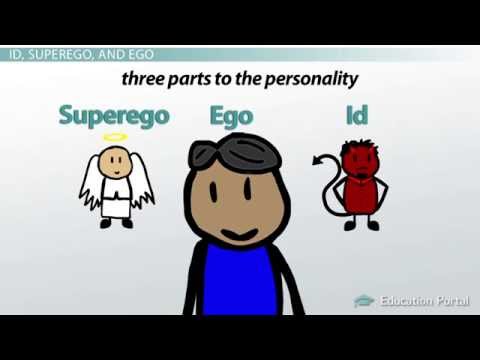
Freud’s ideas on personality are super interesting, right? Basically, he proposed that our personalities are shaped by three key components: the id, the ego, and the superego. These parts of our psyche interact in complex ways, influencing how we think and behave.
The id is like that inner child who wants what it wants—immediately. It’s all about instant gratification. Think of a toddler throwing a tantrum for a cookie. It doesn’t care about rules or consequences; it just wants that cookie, you know?
Then you have the ego. This guy is more like your rational adult self. It negotiates between the wild impulses of the id and the moral standards of the superego. Imagine you’re at a party and you want to dance on tables (that’s your id speaking). The ego tells you to chill out and just enjoy some good music instead.
Now, let’s talk about the superego. This part develops through societal norms and morals—basically, it’s your inner parent or conscience. It reminds you of what’s right and wrong. So with our party example, it might say something like, “Dancing on tables isn’t acceptable behavior.”
So when going deeper into Freud’s view, think about how these three interact in different situations. Are you more impulsive or restrained? Depending on which part is leading your train of thought could give hints about your personality type.
Now, transitioning this into something more modern—like the MBTI (Myers-Briggs Type Indicator)—is pretty fascinating too. While Freud’s model isn’t directly linked to MBTI, both look at how we behave and react based on our internal processes.
In MBTI, for example:
- Introversion vs. Extroversion: This might align with whether your ego takes control over social situations or if your id drives impulsive interaction.
- Sensing vs. Intuition: Some people are very grounded in reality (like an ego-driven approach), while others may be more dreamy or idealistic (tapping into that instinctual id).
- Thinking vs. Feeling: Those who lean towards thinking might prioritize logic (the ego), while feeling types could be more attuned to emotional responses (the superego).
- Judging vs. Perceiving: A judging type might exhibit strong traits from their superego by adhering strictly to plans—whereas a perceiving type could be more spontaneous like their id.
And here’s where things get wild: Just because Freud laid down these theories ages ago doesn’t mean they’re irrelevant today! His ideas can still provide valuable insights into understanding ourselves through modern frameworks like MBTI.
Imagine someone who’s mostly an extrovert but has some introverted traits popping up when they’re stressed—this could be explained using Freud’s concept of balance between the id, ego, and superego.
So yeah, Freud’s approach really digs deep into who we are beneath the surface! Understanding this can help make sense of why we act in certain ways or why we feel conflicted internally sometimes. The interplay between these elements makes us uniquely human—and honestly? That’s pretty cool!
So, let me tell you about this interesting connection between Freud’s theories and the Myers-Briggs Type Indicator (MBTI). It’s kind of wild how these two different approaches can come together to shape our understanding of ourselves. Like, Freud dived deep into the unconscious mind, right? He believed that our early experiences and hidden feelings drive a lot of our behaviors. I mean, it’s a little like peeling an onion; each layer reveals more about what’s going on underneath.
Now, on the flip side, you’ve got MBTI, which focuses on personality types based on preferences in how we perceive the world and make decisions. It’s a more modern take that categorizes people into 16 distinct types based on four pairs of opposing traits. Can you imagine trying to fit Freud’s complex ideas into those neat little boxes? But here’s where it gets cool: there’s this overlap.
Think about it: Freud emphasized the importance of understanding your motivations—like those hidden desires and conflicts that shape who you are. This feels somewhat similar to what MBTI tries to do by helping you identify your traits—like whether you’re introverted or extroverted—and how those traits influence your choices and relationships.
I remember chatting with a friend who was really into personality tests. She took the MBTI and found out she was an INFP—this sensitive dreamer type. After some discussion about her childhood experiences, it became clear why she resonated with that type—it all tied back to things she felt as a kid! Those Freudian concepts of childhood impact were just lurking there beneath the surface.
And here’s another thought: while Freud might’ve focused more on issues like repression or defense mechanisms—which can be pretty heavy stuff—the MBTI helps people celebrate their differences instead of just diving deep into their problems. It’s like seeing yourself in a new light versus digging up old wounds all the time.
So yeah, even if these two ideas come from different eras and philosophies, there’s something valuable in weaving them together. Acknowledging your unconscious motives along with understanding your personality type can offer deeper insight into your life patterns and behaviors. You know? It can be comforting to think about yourself from multiple viewpoints. And honestly? That mix might just lead to some real growth if you’re open to it!