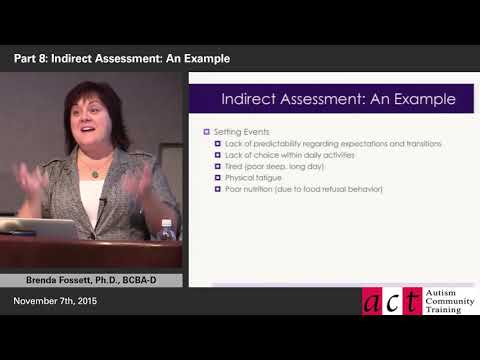
Hey! So, let’s chat about something super interesting today: indirect assessment in ABA, especially when it comes to mental health. I mean, it sounds a bit technical at first, right? But hang on.
You know how sometimes you just want to figure out what’s going on in your head without diving straight into tricky questions? That’s where indirect assessments come in. It’s like getting a feel for things before digging deep.
Think about it this way—sometimes, we need a little warm-up before the main event, and that’s exactly what these methods do for mental health practice. They help professionals understand behavior without putting anyone on the spot. Pretty neat, huh?
Stick around as we explore some real-world examples that show how this stuff works in everyday life!
Understanding Direct and Indirect Assessments in Mental Health: Key Examples and Insights
When it comes to mental health assessments, you’ve got two main types: direct and indirect assessments. Both are super important in figuring out what’s really going on with someone’s mental health. So, let’s break this down a bit.
You know how when you’re feeling off, sometimes you can’t put your finger on why? Direct assessments are like having a heart-to-heart with someone. They involve face-to-face interactions, structured interviews, or standardized tests where a clinician asks questions and observes behavior. It’s very hands-on and provides immediate feedback on your mental state.
On the flip side, we have indirect assessments. These ones are more behind-the-scenes. Think of them like detective work. Instead of asking directly, clinicians might use questionnaires about behaviors or feelings filled out by the patient or their family members. It’s less immediate but can provide insight from different perspectives.
Here’s how they differ:
- Direct Assessments: These involve observations and interactions in real-time. For example, a therapist might observe how you react during therapy sessions.
- Indirect Assessments: These look at data over time rather than in a single moment. They could involve tracking your mood through journals or using rating scales completed by people around you.
Let’s say you’re seeing a therapist because you’re feeling anxious all the time. During direct assessment, your therapist might ask you to describe those feelings and situations that trigger them. This helps them see what you’re dealing with right then and there.
In contrast, an indirect assessment might have you fill out a survey about your anxiety levels over the past month or ask someone close to you to rate how often they notice signs of your anxiety affecting daily life. This way, the therapist gathers broader insights into patterns that might not come up in just one session.
Another cool thing? Direct assessments can often lead to immediate interventions—like using relaxation techniques right on the spot if something triggers your anxiety during an appointment. Indirect assessments may take longer but help map out trends that lead to tailored long-term strategies based on what you’ve shared over time.
Both methods have their strengths, so it really depends on what suits someone’s specific circumstances best. You could think of direct assessments as looking at snapshots of someone’s mental state while indirect ones show you the movie—the complete story playing out over weeks or months.
When combining these two approaches, clinicians get a much clearer picture of what’s going on for a person mentally. It allows them to design better treatment plans based on both real-time observations and context provided by indirect measures.
So next time you find yourself in therapy or talking about mental health evaluations with someone, remember: those two kinds of assessments are like yin and yang—each bringing something unique to help understand the mind better!
Understanding Indirect Measurement in ABA: Key Examples and Insights
So, let’s chat about **indirect measurement in Applied Behavior Analysis (ABA)**. This concept is really important if you want to assess behavior without, you know, direct observation. Basically, it’s a way of gathering information that doesn’t require you to be right there when the behavior happens.
What is Indirect Measurement?
Indirect measurement involves collecting data through things like interviews or surveys rather than just watching someone in action. It’s cooler than it sounds, trust me! You’re getting insights from people who know the individual well—like parents or teachers—about behavior patterns.
Why Use Indirect Measurement?
Well, sometimes it’s not feasible to observe behavior directly. Maybe the setting isn’t right, or the behavior only occurs in specific situations. Also, individuals may feel uncomfortable being observed directly, so indirect methods offer a more comfortable alternative.
Key Examples:
When we talk about indirect assessment methods in ABA for mental health practice, here are some solid examples:
- Interviews: You can chat with caregivers or significant others about the individual’s behaviors. They often have a big picture view that can help identify patterns over time.
- Surveys and Questionnaires: These tools help gather perceptions and experiences regarding behaviors of interest. They can be customized based on what you’re looking to measure.
- Behavior Rating Scales: These are standardized tools that rate frequency or intensity of certain behaviors based on observations from multiple sources. They create a more comprehensive view.
Let me share a quick story to illustrate this. I once worked with a teenage girl named Mia who had severe anxiety attacks but didn’t want anyone watching her while she experienced them. Her parents were super concerned but didn’t really know how to describe what happened during these attacks since they were usually at school or with friends. So we did some interviews and used rating scales filled out by her family and teachers. The results? They helped us understand triggers she faced daily and ultimately led us to effective intervention strategies.
The Strengths of Indirect Measurement
There are definitely perks here! For one, it’s often less invasive than direct observation which can make everyone feel a bit more at ease. Plus, it allows for gathering information across environments—which is crucial for understanding behaviors that might change depending on context.
But let me not give you the wrong idea! It’s not perfect either. You’ve got potential biases coming from those giving you info; you know how emotions can color perceptions? That’s why it’s best used alongside other methods for a fuller understanding.
So as you ponder indirect measurement in ABA, remember—it’s all about collecting pieces of a person’s puzzle without needing to be right there every second! Using multiple strategies will always bring clarity to complex situations and help with tailoring effective interventions in mental health practice.
Understanding Indirect Assessment Methods in Applied Behavior Analysis (ABA)
Understanding indirect assessment methods in applied behavior analysis (ABA) can feel a bit tricky at first, but once you break it down, it’s actually pretty straightforward. Basically, indirect assessments gather information about a person’s behavior without directly observing them in the moment. Instead, these methods rely on input from other people, like caregivers or teachers. Pretty cool, right?
Indirect assessments are all about **gathering context**. You want to understand the setting, triggers, and what happens before and after certain behaviors. This gives you a good picture of what’s going on without having to watch every little interaction.
Some common types of indirect assessment in ABA include:
- Interviews: These involve talking to caregivers or anyone else who knows the individual well. You ask questions about specific behaviors and what seems to set them off.
- Surveys and Questionnaires: You might give out written forms for people to fill out regarding behaviors they notice. These help pinpoint patterns.
- Checklists: These are handy for tracking certain behaviors over time, which can help identify when they happen most frequently.
Imagine a teacher who’s noticed that Jamie has meltdowns during math class but not during art class. By interviewing Jamie’s parents and looking at a checklist of events leading up to those meltdowns—like noise levels or classroom activities—the teacher might discover that Jamie struggles with math concepts but thrives during creative tasks. This information is vital for creating strategies that help Jamie succeed.
But here’s the thing: while indirect assessments are super useful—they’re not perfect. They rely on other people’s perceptions and memories, which can be flawed or biased. Sometimes someone might miss details that seem minor but are actually crucial.
That’s why combining indirect assessments with direct observations is often best practice in ABA! By seeing behaviors firsthand as well as gathering context from others, you get a more rounded view of what’s happening.
So if you ever hear someone chatting about indirect assessment methods in ABA for mental health practices, just remember—they’re all about piecing together stories from different sources to better understand behaviors without needing to be there in person all the time. It’s like solving a mystery where every clue counts!
So, when you think about how we figure out what someone’s struggling with, it can be a bit of a maze. Indirect assessments in Applied Behavior Analysis (ABA) are like those maps you get at amusement parks. They don’t show you the rides, but they help you understand where to go and what to look for. You know, they’re more about gathering info from conversations and observation than anything else.
Let’s say you’re working with someone who struggles with anxiety or mood swings. Instead of jumping into a direct observation right away, you might chat with their family or teachers. Those people see them in different settings and can give insights that the person themselves might miss or not be comfortable sharing. It’s like having different cameras capturing the same scene—you get a fuller picture.
For example, I remember talking to a friend who was feeling really overwhelmed at work. She mentioned how her boss often interrupted her during meetings and it made her super anxious. But when we spoke to some of her colleagues, they pointed out that she often wouldn’t speak up even when given the chance! That indirect feedback helped paint a clearer picture of what was happening and pointed toward her needing some skills in advocating for herself.
And look, there are different ways to gather this information too—like using questionnaires or rating scales. These tools might seem kind of boring, but they help add weight to the data collected through conversations. It’s like statistics for feelings; not always precise but pretty telling when pieced together.
So yeah, indirect assessments are super valuable because they take away some pressure from the person who’s dealing with whatever it is they’re going through. It gives them space while also getting us closer to understanding their needs without throwing them into deep end right away.
Ultimately, these assessments can shape therapy plans better suited for individuals’ lives by highlighting patterns that wouldn’t be obvious otherwise. So it’s less about just treating symptoms and more about really seeing this whole human experience—flaws and all!