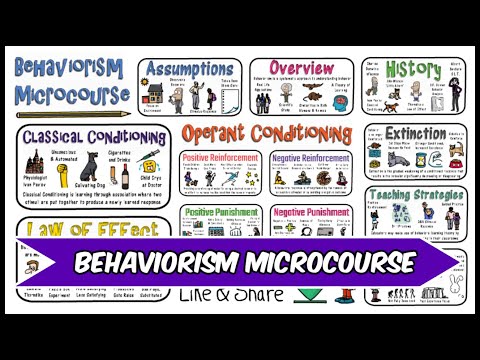
You know that thing where your dog starts drooling at the sound of a bell? Yeah, that’s Pavlov for you. Crazy, right?
So, what’s the deal with this guy? He basically showed us how our behaviors can be shaped by what we experience. It’s like, if you hear that bell often enough, your brain associates it with food. Simple but kinda profound.
Pavlov’s work didn’t just stop at dogs and their bells. It laid the groundwork for behaviorism in mental health. We’re talking about understanding why we do what we do based on our experiences.
Imagine how this idea has grown and touched everything from therapy to how we cope with stress! Pretty wild stuff when you think about it, huh? Let’s take a closer look at this journey from barking dogs to human minds.
Understanding Pavlov’s Theory of Behaviorism: Key Concepts and Applications in Psychology
Pavlov’s theory of behaviorism really threw a spotlight on how we learn through our experiences. I mean, think about it: have you ever noticed how your stomach growls when you smell fresh pizza? That’s totally Pavlov’s jam! He showed us that we can develop automatic responses to stimuli, which is pretty cool and seriously relevant in mental health.
Classical Conditioning is the big idea here. Pavlov discovered this while working with dogs. He rang a bell before feeding them. Over time, the dogs started salivating just at the sound of the bell, even without food in sight. This shows us how an environmental cue (the bell) can trigger a biological response (salivation). So, when you hear your favorite song and feel all nostalgic or happy? That’s classical conditioning at work!
Let’s break down a few key concepts:
- Unconditioned Stimulus (US): This is something that naturally triggers a response. Like food makes dogs salivate.
- Conditioned Stimulus (CS): This starts as neutral but becomes linked with the unconditioned stimulus. Think of the bell in Pavlov’s experiment.
- Unconditioned Response (UR): The natural reaction to an unconditioned stimulus—like salivating when food is presented.
- Conditioned Response (CR): The learned response to the conditioned stimulus, like salivating just from hearing the bell.
Now, let’s talk about generalization. This happens when a response spreads to different but similar stimuli. Imagine if every time you heard a doorbell ring at your house, you expected pizza. You get that excited feeling even if it was just someone dropping off mail!
But there’s more! There’s also something called extinction. If Pavlov stopped ringing the bell along with the dog food for a while, eventually, those pups would stop drooling at the sound alone. They learn that the connection isn’t there anymore.
These principles can apply to real-life scenarios too. For example, consider someone who had a scary experience during a thunderstorm. If they hear thunder again later on, they might feel anxious or afraid because their brain has linked that sound with fear—it’s basically their version of Pavlov’s dog moment!
In mental health treatment, understanding these concepts helps professionals design behaviors therapies for various conditions like phobias or anxiety disorders. Exposure therapy often utilizes these principles by gradually introducing clients to their fears in controlled settings—so they can learn their responses can change.
So basically, Pavlov’s work laid some foundational stones for behaviorism in psychology. It helped us see that our environment plays such an enormous role in shaping our behaviors and feelings over time. By grasping these concepts better, we can understand ourselves and others more deeply; it all connects back to how we respond to those little stimuli in our lives!
Understanding Pavlov’s Theory: A Simple Explanation of Classical Conditioning
Pavlov’s theory, also known as classical conditioning, is like a fascinating story! It all started with this guy named Ivan Pavlov. He was a Russian physiologist who had a bit of an obsession with dogs. Seriously! He was studying their digestive systems, but then something unexpected happened. He noticed that his dogs would start to salivate not just when they saw food, but also when they heard the sound of a bell that he rang every time he fed them. Crazy, right?
So what does this mean? In simple terms, classical conditioning is when you learn to associate one thing with another. Let’s break it down:
Unconditioned Stimulus (US): This is something that naturally triggers a response. For the dogs, it was food. Food makes them salivate without any previous training.
Unconditioned Response (UR): This is the natural reaction to the unconditioned stimulus. So, in our doggie example, salivating when they see food.
Conditioned Stimulus (CS): That’s where the bell comes in. Before Pavlov started ringing it during feeding time, it meant nothing to the dogs.
Conditioned Response (CR): After making that connection between the bell and food through repetition, the dogs began to salivate just by hearing the bell! They learned to associate that noise with getting fed.
Now let’s apply this idea a bit more broadly! This concept is super important in mental health too. It can explain why certain smells or sounds can trigger memories or feelings from your past. Like maybe you hear a specific song and suddenly feel nostalgic about your high school days—well, that could be classical conditioning at work!
Here are some examples of how classical conditioning pops up in everyday life:
- Phobias: If you got bitten by a dog as a kid and now freak out when you see any dog? Your brain linked that experience with fear.
- Addiction: For someone trying to quit smoking, just seeing someone else smoke might trigger cravings because their brain associates it with pleasure.
- Advertising: Ever see ads where cute puppies or beautiful sunsets are paired with products? They’re trying to create good feelings so you’ll think positively about what they’re selling.
Classical conditioning really lays some groundwork for behaviorism. Behaviorism focuses on observable behaviors rather than internal thoughts or feelings since these reactions can be measured and studied directly.
Understanding Pavlov’s theory helps psychologists better grasp how behaviors are learned and sometimes unlearned over time. It’s pretty cool how something as straightforward as ringing a bell can lead us into deeper insights about our minds!
So next time you hear an unfamiliar sound or smell something interesting, think about what memories or feelings might pop up because of some past experience—thanks to good old Pavlov!
Exploring Pavlov’s Contributions to Psychology: Understanding Classical Conditioning
You know, when we talk about psychology and how our minds work, we can’t skip over Ivan Pavlov. He was this Russian dude who laid down some major groundwork for what we now call *classical conditioning*. Basically, it’s all about how we learn through association.
Pavlov’s most famous experiment involved dogs. He noticed that dogs would start to salivate not only when food was presented but also when they heard the sound of a bell ringing. Like, what? How does that even happen? So, he decided to dig deeper into this strange behavior!
In his experiment, he paired the sound of a bell with the presentation of food. Over time—surprise, surprise—the dogs learned to associate the bell with getting fed. They would salivate just at the sound—even when no food was around. This is classical conditioning in action.
- The first part is called an “unconditioned stimulus,” which is something that automatically causes a response (like food making dogs drool).
- Then there’s the “conditioned stimulus” (the bell), which becomes associated with that response after being linked to the unconditioned stimulus.
- Finally, we have the “conditioned response,» which is basically what happens after learning—the dog drooling at just the sound of the bell.
This kind of learning isn’t just for puppies! It plays a huge role in human behavior too. Let me tell you about my buddy Sam. He had a rough experience with public speaking in school—he bombed a presentation and felt super embarrassed. Now, every time he stands up to speak in front of people, his heart races like he’s running a marathon! His body learned to associate public speaking with fear and anxiety.
Pavlov’s work came during a time when psychology was shifting towards more empirical methods—basically wanting proof based on observable events rather than just theories floating around. This laid some serious groundwork for behaviorism, where psychologists focus on observable behaviors rather than introspective methods.
So how does all this tie into mental health? Well, classical conditioning helps us understand things like phobias and triggers in therapy settings. If you’ve got an irrational fear—like spiders or heights—that might have developed through something you experienced once or repeatedly experienced over time, it can help explain why you feel that way without even thinking about it.
Pavlov’s insights paved the way for therapies like exposure therapy, where people gradually face their fears in controlled ways to rewire those associations—like taking baby steps towards stopping your heart from racing at just seeing a spider picture.
In short, understanding classical conditioning gives us tools to dissect and deal with our reactions and behaviors better. It’s kind of mind-blowing how much Pavlov contributed! His research continues influencing modern psychology and mental health practices today.
So, Pavlov, right? The guy with the dogs and the bells. You’ve probably heard of him in some psych class. But there’s a lot more to him than just that one experiment. Let’s break it down for a minute.
Pavlov was all about conditioning, which is kind of like teaching someone to associate one thing with another. You know how sometimes you hear a song and it instantly reminds you of that summer when everything felt perfect? That’s your brain making connections, and Pavlov laid the groundwork for understanding how those connections influence behavior.
His research got people thinking critically about behaviors—how they can be learned and unlearned. It was a bit revolutionary back then! Instead of just looking at thoughts or feelings, behaviorism said, “Hey! Let’s focus on observable actions.» It’s like if you were talking to a friend who nervously taps their foot when they’re anxious; instead of worrying about what they’re feeling inside, you’d notice that foot tapping and try to figure out why.
When it comes to mental health, this approach can be super helpful. Think about someone who might struggle with anxiety. Through behavioral therapy techniques—like exposure therapy—therapists help them face their fears gradually. It’s kind of like turning down the volume on their anxiety by training their brains to react differently over time.
I remember my buddy Lisa who had an intense fear of flying. For years, she’d rather drive cross-country than get on a plane. But after some therapy focused on gradual exposure—like visiting an airport without flying at first—she started feeling more comfortable. Eventually, she took her first flight in over a decade! It’s like Pavlov’s principle applied right there in real life: she learned a new response to something that once triggered panic.
So yeah, Pavlov’s experiments might seem simple or even quirky by today’s standards, but they paved the way for behaviorism in mental health. Instead of getting caught up in why we feel the way we do or what past experiences shaped us, this approach is all about changing those behaviors—you know? It makes sense because sometimes just acting differently can lead to feeling differently too.
In the end, it reminds us that our responses aren’t set in stone; they can evolve if we give them the right conditions to do so—bells not included!