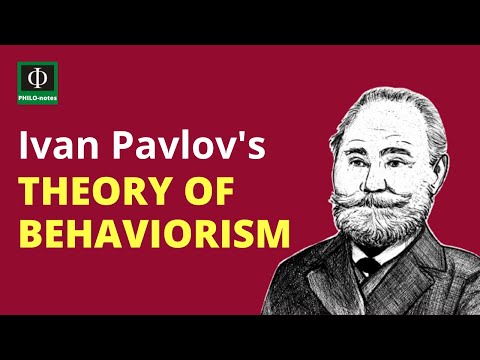
Okay, so let’s talk about Pavlov for a second. You know, the guy with the dogs?
He wasn’t just some random scientist; he kinda changed how we think about behavior. Seriously, it’s like his experiments opened this big door to understanding how our minds work.
Ever wonder how habits are formed? Or why certain things just trigger you? Well, Pavlov’s work is at the heart of that. It’s wild how something so simple can impact our mental health today.
So, grab a snack or something. Let’s unpack this whole Pavlov thing and see why it matters to you!
Exploring Ivan Pavlov’s Impact on Behavioral Psychology: Key Contributions and Insights
Ivan Pavlov, a Russian physiologist, is like that rockstar of psychology whose tunes are still played today, especially in the realm of behavioral psychology. You know, he really didn’t set out to be a psychologist at all. He was actually studying digestion when he stumbled upon something that would change the way we think about behavior and learning forever.
So here’s the deal: Pavlov discovered classical conditioning. This is when a natural reflex responds to a stimulus after it has been paired with a different stimulus. It sounds complicated, but it’s really not! Think of it this way: if you’ve ever heard your favorite song and immediately felt happy or nostalgic, that’s kind of like classical conditioning at work.
You’re probably familiar with his famous experiment with dogs. Pavlov noticed that his dogs would salivate not just when food was presented to them but also when they heard the sound of footsteps or saw the lab tech who fed them. That means they learned to associate those sounds or sights with food. Pretty wild, right?
Here are some key takeaways about Pavlov’s contributions:
- Classical Conditioning: This is the fundamental idea that behavior can be learned through associations between stimuli.
- Learning Processes: Pavlov’s work opened doors for understanding how behaviors could be modified through repeated experiences.
- Applications in Therapy: Therapists use principles from classical conditioning to help treat phobias and anxiety disorders, often through exposure therapy.
- Foundation for Behaviorism: His ideas laid groundwork for future psychologists like B.F. Skinner, who built on these concepts with operant conditioning.
So how does this all tie into mental health? Well, his findings have been influential in how therapists approach treatment today. Take exposure therapy as an example—patients learn to confront their fears by gradually exposing themselves to what they fear while reassuring their brain that there’s no real danger anymore.
Imagine someone afraid of dogs. Through systematic exposure paired with positive experiences (maybe petting a calm dog), their fear can fade over time thanks to principles from Pavlov’s research.
Moreover, understanding these behaviors helps shed light on more complex conditions too. If you think about it, many emotional responses can be traced back to previous experiences—like how an unpleasant event might cause someone to feel anxious in similar situations later on.
Pavlov’s work doesn’t just stay locked away in textbooks; it’s essentially woven into therapy practices and mental health approaches today. So next time you hear about classical conditioning or see someone overcoming a fear with therapy techniques rooted in these principles, you’ll know where it all started!
Understanding Pavlov’s Behaviorist Theory: Key Concepts and Insights
Pavlov’s Behaviorist Theory is one of those concepts that’s super foundational in psychology. If you’ve ever heard of “classical conditioning,” that’s the brainchild of Ivan Pavlov, a Russian physiologist. His research essentially changed the way we think about learning and behavior. So, let’s break down some key ideas and insights that come from his work.
What is Classical Conditioning?
At its core, classical conditioning is about how we learn through association. Pavlov did his famous dog experiments where he rang a bell before giving food to dogs. After a while, just ringing the bell made the dogs salivate. They’d learned to associate the bell with food. It’s like when you hear a song that reminds you of a past relationship, and suddenly all those feelings just come rushing back!
- Unconditioned Stimulus (UCS): This is something that naturally triggers a response without any prior learning — like food for Pavlov’s dogs.
- Unconditioned Response (UCR): That’s the natural reaction to the UCS; for example, salivating when you see or smell food.
- Conditioned Stimulus (CS): This is what Pavlov introduced through repeated pairing, like the bell.
- Conditioned Response (CR): This is learned behavior; in this case, the dog salivating at just the sound of the bell.
The Influence on Behavioral Psychology
Pavlov’s ideas laid groundwork for behaviorism, which focuses solely on observable behaviors rather than internal thoughts or feelings. Psychologists like B.F. Skinner built upon this by exploring reinforcement and punishment as ways to shape behavior. Think of it this way: if you get a reward for doing something good, it makes you more likely to do it again because you’re conditioned to expect positive outcomes.
In mental health contexts, understanding these principles can be pretty powerful! For instance, exposure therapy for phobias often relies on classical conditioning principles. If someone is afraid of spiders but gradually exposed to them in safe conditions while learning they’re harmless, they can eventually unlearn their fear.
Critical Insights from Pavlov’s Work
One thing that’s really worth noting is how Pavlov’s work illustrates that not all responses are innate; many are learned through experiences in our environments. This has huge implications for therapy and education alike!
The cool thing about behaviorism is that it doesn’t ignore emotions entirely; instead, it sees them as responses shaped by our interactions with the world around us over time.
So basically, Pavlov helped us understand how behaviors can be conditioned and unconditioned over time—something that plays out daily in our lives without us even realizing it! You might not think much about why certain smells make you feel nostalgic or why hearing your favorite song lifts your spirits — but hey, it’s classic conditioning in action!
To sum up: Pavlov’s findings provide insight into human behavior and psychological processes by focusing on external stimuli rather than internal states. And while some may argue this view overlooks deep emotional complexities, it’s hard to deny how powerful these associations can be in shaping our everyday experiences and reactions!
Understanding Pavlov’s Approach to Psychology: Key Concepts and Insights
So, let’s chat about Pavlov and his approach to psychology. You might have heard his name in the context of “Pavlov’s dogs,” right? But there’s way more to him than just that. His work laid down some serious groundwork for behavioral psychology.
Classical Conditioning is the heart of Pavlov’s approach. What he did was pretty fascinating: he taught dogs to salivate at the sound of a bell. Sounds kind of silly, huh? But it’s actually quite profound. Before this experiment, dogs would salivate when they saw food. Pavlov paired food with a bell sound repeatedly. Eventually, just ringing that bell made them drool like crazy! This shows how we can learn to associate different stimuli.
Now, think about it this way: you might feel happy when you smell cookies baking because it reminds you of your grandma’s house. That’s basically classical conditioning at work! Your brain links one thing (the smell) with a strong memory (home and grandma), which triggers an emotional response.
Another key insight from Pavlov is the concept of neutral stimuli. Initially, the bell didn’t mean anything to the dogs—it was neutral. It only became meaningful after being paired with the food. This idea applies to us too; sometimes we develop feelings or reactions based on experiences linked to seemingly random things.
Then comes extinction. If you stop pairing that bell with food, eventually the dogs will stop drooling when they hear it. It’s like losing interest in an old song you used to love if you hear it too many times without any good memories attached anymore.
But wait! There’s also spontaneous recovery. Let’s say some time passes after extinction—suddenly ringing that bell again might cause a brief resurgence in drooling! It shows how learning can be weirdly persistent and tricky.
Pavlov’s influence stretches beyond just training dogs; his ideas helped shape therapies in mental health too! For instance, if someone has a phobia—a really intense fear—they might have developed it through classical conditioning linking a neutral stimulus (like a spider) with fear-inducing experiences (getting bitten). Understanding this helps therapists create treatment plans involving exposure therapy where individuals gradually face their fears under safer conditions.
In essence, Pavlov opened up a whole new way to look at behavior and learning—how our experiences shape responses-and how those responses can be unlearned or changed over time. So next time you smell something that takes you back or feel anxious because of an old memory, remember Pavlov and his insights into how we connect our emotions and reactions with different aspects of life. Pretty cool stuff, right?
Pavlov, man, he really shook things up back in the day. You know, like when he discovered classical conditioning? It was such a big deal – he was just studying dogs and their saliva. I mean, who would’ve thought? But seriously, his work laid the groundwork for understanding how behavior can be shaped by our environment.
So picture this: you’ve got Pavlov in his lab, ringing a bell every time he feeds these dogs. At first, they’ll just drool over the food. But then, after a while, they start to salivate just hearing that bell! It’s like their brains connected the dot between the sound and food without even realizing it. That’s classical conditioning in action.
Now think about how this applies to us in real life. Basically, we’re all walking around with our own little bells ringing—situations or sounds that trigger emotional responses based on past experiences. Maybe you hear your favorite song from high school and suddenly you’re flooded with memories of your first crush or graduation day. It’s wild how this stuff plays out every day.
Behavioral psychology took a cue from Pavlov’s discoveries. This approach focuses on observable behaviors rather than diving deep into thoughts and feelings like some other psychological theories do. It kinda changed the game for therapy too! With techniques like exposure therapy for phobias, therapists can help clients recondition their responses to fear by gradually exposing them to what they’re afraid of—instead of just talking through it forever.
And when it comes to mental health? Well, understanding conditioned responses helps people break free from harmful habits or reactions. For instance, if someone has anxiety that triggers panic attacks in certain situations – let’s say being in crowded places – therapists might work on helping them associate those places with calmness instead of fear through gradual exposures or relaxation techniques.
It’s kind of amazing when you think about it: something as simple as a bell could change how we understand behavior and even help people feel better mentally. I remember a friend who struggled with social anxiety; she’d get so nervous at parties that she’d avoid them altogether. After working with her therapist using exposure techniques based on Pavlov’s principles, she slowly started feeling less anxious around groups over time. Now she actually enjoys hanging out with friends again!
So yeah, Pavlov wasn’t just playing around with dogs; his work opened doors for so many advancements in behavioral psychology and mental health care that still resonate today. It’s all connected—our environments shape us in ways we might not even realize until someone points it out! Isn’t life fascinating like that?