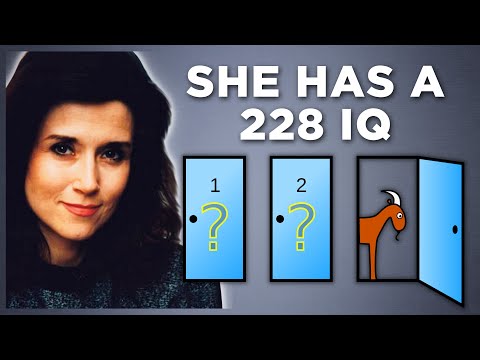
You ever hear about Marilyn Vos Savant?
She’s the lady with the super high IQ—like, off the charts.
But it’s not just her brainpower that’s interesting.
Her views on intelligence tests? Wow, they stir up some real debates!
People have strong opinions about IQ tests and what they really mean.
Are they a true measure of intelligence, or just some numbers on a page?
Let me tell you, diving into her story is a wild ride through the world of genius and psychology.
Stick around; it’s gonna be a fun chat!
Discovering the IQ Test Taken by Marilyn vos Savant: Insights into Genius and Intelligence
Marilyn vos Savant, known for having one of the highest recorded IQs, took a standard IQ test around 1985. Her results? A jaw-dropping score of 228. That’s seriously impressive, right? But what does that number actually mean in the grand scheme of intelligence and genius? Let’s break it down.
First off, IQ tests measure a certain type of intelligence, often referred to as analytical or logical reasoning. They consist of problem-solving tasks, pattern recognition, and verbal and mathematical skills. These tests can tell you how well someone performs in specific cognitive tasks but don’t capture every dimension of human smarts. For instance, creativity or emotional intelligence isn’t typically counted in this number.
Now, when Marilyn became famous for her IQ score, she didn’t just sit on that fact. She began to write columns answering complex questions on various topics, showing how raw intelligence can translate into practical knowledge. It wasn’t just about being the smartest person in the room; it was about sharing insights with others.
However, here’s where it gets tricky: high IQ doesn’t guarantee success or happiness. You might be thinking about some super-smart folks who struggle with social situations or emotional issues. Marilyn herself said that being labeled a genius comes with its own set of challenges—people have high expectations!
And let’s talk about the tests themselves. Many psychologists believe they have limitations. For example:
- Culture bias: Some IQ tests may favor people from certain backgrounds over others.
- Narrow focus: As mentioned before, they often ignore other forms of intelligence.
- Evolving concept: The understanding of intelligence is always shifting; what defined genius decades ago might not apply today.
So while Marilyn vos Savant’s IQ score puts her at the top tier on paper, remember it reflects only part of her capabilities. Intelligence is complex and multifaceted, and sometimes life skills matter more than a number on a test.
Let’s also consider an anecdote: there’s this story about someone attending a high-IQ society meeting where members mostly discussed math puzzles and logic games rather than real-world issues like relationships or emotions. It’s kind of wild how that world can get so focused on numbers while overlooking important aspects like empathy or creativity.
In summary, Marilyn’s incredible IQ sheds light on something valuable: intelligence comes in many forms. We should celebrate diverse talents—not just those measured by traditional tests—because every person has their unique strengths to offer the world!
Exploring Intelligence: Is Marilyn vos Savant Smarter than Albert Einstein?
Intelligence is a tricky thing. We often think of it as something you can measure with tests or compare through IQ scores, but it’s more complex than that. You’ve probably heard about Marilyn vos Savant, who famously has one of the highest recorded IQs. But is she really smarter than someone like Albert Einstein? Let’s break things down a bit.
First off, you need to know what IQ tests actually measure. They usually assess logical reasoning, problem-solving abilities, and language skills. Marilyn vos Savant scored an IQ of 228 on the Stanford-Binet test. That’s off-the-charts! But Einstein’s IQ is estimated around 160. So in terms of numbers, sure, she has the edge.
However, here’s where it gets interesting. IQ isn’t the only way to measure intelligence. Just because Marilyn might score higher doesn’t mean she could do what Einstein did—revolutionize physics with theories like relativity. Einstein had a unique ability to think creatively and abstractly about complex scientific concepts.
Li:
Real-world application matters.
Einstein used his intelligence to challenge existing theories and come up with groundbreaking ideas.
Types of intelligence vary.
Marilyn might excel in verbal-linguistic intelligence but may not necessarily have the same spatial or mathematical skills that Einstein possessed.
Savant syndrome can skew our understanding.
While Marilyn excels in specific types of problem-solving tasks, her talents don’t directly translate into every field, much like how different athletes excel in various sports.
Let me tell you a quick story: A friend once told me about his sister who aced every math test but couldn’t put together an IKEA table without losing her mind. Super smart in some areas but struggling with practical stuff—sounds familiar? Intelligence is about more than just numbers on a test; it’s how one applies knowledge in real life.
So back to our question: Is vos Savant smarter than Einstein? It really depends on how you define “smarter.” In strict numerical terms based on IQ tests, yes. But when we consider creativity and real-world accomplishments? Well, that paints a different picture entirely.
In summary:
When discussing intelligence personalities like Marilyn vos Savant and Albert Einstein offer fascinating perspectives on the human mind’s capabilities—but it’s essential to remember that being smart means many things beyond just high scores!
The Myth of 400 IQ: Exploring the Limits of Human Intelligence
The whole idea of having a 400 IQ? Sounds pretty mindblowing, right? But here’s the deal: **IQ tests** measure a certain type of intelligence, and they can’t really capture the full range of human potential. Let’s break this down.
First off, IQ tests are designed to assess logical reasoning, math skills, and verbal ability. So when we talk about Marilyn Vos Savant and her legendary IQ score of 228, it raises eyebrows. It’s like having a superpower in one area but being clueless about everything else. People often mistake a high score for an all-encompassing genius.
But here lies the problem: There isn’t a universal standard for measuring intelligence. Different tests have different scales. For instance, most conventional IQ tests cap out around 160 to 180. A score over that? Well, it gets tricky because it’s hard to quantify how much smarter someone is beyond those limits.
Think about it—someone with a brilliant IQ might struggle in social situations or lack creativity. That’s where the concept of **multiple intelligences** comes in. Howard Gardner proposed that there are many types of intelligence: musical, spatial, kinesthetic—you name it!
Now back to Marilyn for a second. She became famous because she answered puzzles in Parade Magazine that made people go “wow.” But that doesn’t mean every high-IQ person can solve problems like she does or even understand them fully!
And let’s chat about **real-world application** for a second. You could have an incredible IQ but still fail at practical decisions in everyday life—a nice contrast to someone who might not score as high yet makes wise choices consistently.
Here’s something personal: I once met this guy who could whip up solutions to math problems faster than you could blink! But put him in charge of planning his own finances? Total disaster! It was as if his brain had prioritized one skill set over another.
In essence, while having a high IQ can open doors and may correlate with some achievements, it doesn’t encapsulate all human experiences or capabilities. The myth surrounding numbers like 400 IQ leads us astray from understanding what true intelligence means—a mix of skills including emotions and adaptability.
So next time you hear someone bragging about their IQ or chasing those elusive numbers, remember: Intelligence is way more than just a number on paper!
Marilyn Vos Savant is one of those names that still makes people raise their eyebrows, right? I mean, she’s known for having one of the highest recorded IQs ever. But here’s the thing: her story isn’t just about numbers and tests; it dives deep into this whole conversation about what intelligence really means.
So, high IQ tests are kinda fascinating but also a bit tricky. They’re designed to measure specific cognitive abilities, like logical reasoning and problem-solving. But here’s where it gets murky: intelligence is so much more than just raw scores on a test. Think about it—Emotional intelligence? Creativity? Social skills? None of that gets accounted for in a standard IQ test.
I remember reading an interview with Marilyn once where she spoke about how people often expect her to know everything because of her score. She talked about feeling pigeonholed, like her entire identity was wrapped up in that number. Can you imagine? It’s like being put in a box and labeled “genius” as if that tells the whole story of who you are.
There’s also this pressure around high IQ scores that can freak people out. If you score high, there’s this expectation to always be brilliant or to achieve great things. But honestly, everyone has their own unique talents and skills that don’t necessarily show up on a test, right? It’s all about finding what works for you and not letting numbers define your worth.
And let’s not forget the idea of “intelligence” itself being fluid. What Marilyn has done is spark conversations about how we think about smarts—and how we should probably rethink it! Intelligence isn’t just something you’re born with; it can expand based on experiences, learning, and even failures.
So yeah, while Marilyn Vos Savant may have dazzled us with her sharp mind and astonishing tests scores—what really stands out is her ability to inspire us to see beyond those numbers into the rich tapestry of human intellect. In the end, we all have our own unique quirks and abilities that make us who we are—and isn’t that what really matters?