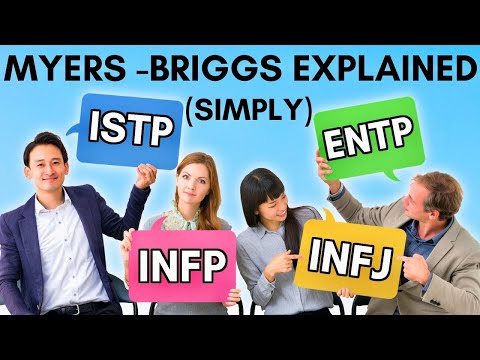
Hey! You ever thought about what makes you, well, *you*? Like, why do you react a certain way in social situations or what drives your decisions?
The MBTI exam is this cool tool that can help you figure out your personality type. I mean, it’s not a magic answer to life’s big questions, but it can shed some light on why you think and act the way you do.
You know, I’ve taken it a couple of times. Each time I learn something new about myself. It’s kinda mind-blowing when you see how your traits play out in real life.
So, what do ya say? Let’s dig into the MBTI together and see how it connects to who you really are!
Discover Your Personality: Take the Free Myers-Briggs Personality Test Today!
The Myers-Briggs Type Indicator, or MBTI for short, is, you know, a pretty popular tool for figuring out different personality types. It’s like taking a fun quiz that gives you insights about who you are. Basically, it breaks down personalities into 16 distinct types based on preferences in four key areas:
- Introversion (I) or Extraversion (E): This measures where you get your energy from. Introverts recharge alone and often prefer deep conversations with a few people. Extraverts thrive in social settings and love being around others.
- Sensing (S) or Intuition (N): This one’s all about how you take in information. Sensing folks rely on concrete facts and practicality, while intuitive ones focus on patterns and possibilities.
- Thinking (T) or Feeling (F): Here’s where it gets personal. Thinkers make decisions based on logic and objective analysis, while feelers prioritize emotions and values.
- Judging (J) or Perceiving (P): This preference indicates how you deal with the outside world. Judgers like structure and schedules, while perceivers are more flexible and open to spontaneity.
So when you put it all together, you can end up with types like INFP or ESTJ. Each combination paints a picture of your natural inclinations.
You might be wondering why you’d want to take this test in the first place? Well, the MBTI can help shine a light on your strengths and weaknesses. Say you’re an ENFP—this means you’re enthusiastic but may struggle with details at times. Recognizing this can help you work on it.
It’s also worth mentioning that the MBTI isn’t about boxing people in; it’s more like providing a map of sorts—you know? It helps with personal growth and understanding how to interact with various personality types. So if you’ve ever found yourself perplexed by someone who just doesn’t get your vibe, knowing their type could give you valuable insight.
And what if you’re feeling skeptical? That’s totally cool too! People have mixed feelings about personality typing systems as they don’t capture every nuance of human behavior. But hey, even if it’s not perfect, many find it reflects certain truths about themselves.
If you’ve decided to take the plunge, there are loads of free resources online where you can complete the test without jumping through hoops. Just keep in mind there are different versions out there—some more legit than others.
In a nutshell, the Myers-Briggs Personality Test is less about putting labels on yourself and more about opening doors to self-discovery! So taking some time to explore your personality type might just lead to some unexpected insights that could improve how you relate to others—and even understand yourself better!
Understanding the Myers-Briggs Results Chart: A Comprehensive Guide to Your Personality Type
Sure thing! Let’s break down the Myers-Briggs Type Indicator (MBTI) without getting too caught up in jargon. Basically, the MBTI is all about understanding yourself through your personality type. It categorizes you into 16 different types based on how you perceive the world and make decisions.
So, when you take the MBTI exam, you’ll get a chart with four key dimensions that represent your personality traits. Each dimension has two opposite preferences, which you can think of as choices you lean towards:
- Extraversion (E) vs. Introversion (I): Do you recharge by being around people or do you prefer time alone?
- Sensing (S) vs. Intuition (N): Do you focus on concrete facts and details or are you more about patterns and possibilities?
- Thinking (T) vs. Feeling (F): When making decisions, do you rely more on logic or personal values and emotions?
- Judging (J) vs. Perceiving (P): Do you like structure and planning, or are you more spontaneous and open to new things?
Once you’ve answered the questions, you’ll get a four-letter code representing your personality type, like INFP or ESTJ. Each letter gives insight into how your mind works.
For example, if you’re an **INFP**, you’re likely introspective and value deep connections with others but also enjoy spending time alone to reflect. You probably dislike conflict and prefer to make decisions based on feelings rather than just cold hard logic.
Hey, let me tell ya about a friend of mine who’s an **ESTJ** type. She’s super organized and loves planning every detail of our outings—she’s always got a checklist ready! For her, having structure is essential; she thrives on it.
Now, understanding these traits can help improve your life in various ways—like knowing how to handle stress better or even choosing a career that fits your personality style well.
Take **Sensing** versus **Intuition** for example: If you’re an S type, maybe you’re great at following step-by-step processes—like being an accountant where precision matters! An N type might find joy as a creative writer because they love exploring new ideas!
Let’s not forget that no type is better than another; each has its strengths and weaknesses so it’s about recognizing what makes *you* tick.
Understanding this chart can also shed light on why some people click while others clash in relationships. Like my friend with her ESTJ tendencies—you could say she clashes sometimes with my INFP nature during group projects because I want flexibility while she’s all for being concrete.
In summary, diving into the Myers-Briggs results chart isn’t just about labels—it’s a tool for greater self-acquaintance! Once you’ve figured out your personality type from those results, it opens up avenues for growth, relationships, work choices—you name it!
Overall? It’s kinda fascinating how much depth lies behind those four letters!
Unlock Your Personality: Take the Official Myers-Briggs Test for Insightful Self-Discovery
The Myers-Briggs Type Indicator (MBTI) is a popular tool that helps you understand your personality type. Using 16 different types, the MBTI gives insights into how you think, feel, and interact with others. It’s like holding up a mirror to your inner self – pretty cool, right?
When you take the test, you answer a series of questions about your preferences. Are you more energized by being around people or by spending time alone? Do you prefer sticking to a plan or being spontaneous? These questions help categorize your personality into four main dimensions:
- Introversion (I) vs. Extraversion (E): This dimension shows where you get your energy from.
- Sensing (S) vs. Intuition (N): This one reveals how you take in information.
- Thinking (T) vs. Feeling (F): Here, it’s about how you make decisions.
- Judging (J) vs. Perceiving (P): This shows how you approach the world around you.
The outcome is a four-letter code representing your type. For example, if you’re an INFP, it means you’re an introverted person who relies on intuition, makes decisions based on feelings, and prefers flexibility over planning.
Taking the MBTI can be both enlightening and fun! I remember when my friend took it—she discovered she was an ENFJ, which made so much sense because she’s always organizing events and bringing people together. This realization helped her embrace those leadership qualities even more!
People often use their MBTI results for personal development and career choices. Knowing your type can guide you in relationships too; like understanding why some people buzz with energy while others prefer mellow chats at coffee shops.
But don’t forget that while the MBTI offers valuable insights, it’s just one way to explore yourself. It doesn’t define who you are; it’s more of a starting point for self-discovery.
So if you’re curious about what makes you tick or want some guidance on improving yourself or teamwork skills, taking the official Myers-Briggs test might be worth considering!
So, let’s chat about this thing called the MBTI, or Myers-Briggs Type Indicator. You might have heard of it—it’s that personality test where you answer a bunch of questions about yourself, and then it spits out a four-letter type. Like, are you an INTJ or an ESFP? It can feel a bit like some kind of cosmic game of categorizing who you are, but hear me out: there’s something kinda cool about it.
I remember when I first took the MBTI test. I was in college, feeling super lost about my major and future plans. Then, boom! This little test told me I was an ENFP: the “campaigner.” At first, I was like, «What even is that?» But as I read through the traits—enthusiastic, creative, and spontaneous—it felt like someone had written a description of my quirks and daydreams.
You see, at its core, the MBTI is about understanding how you view the world and interact with people. It breaks down preferences into four categories: where you get your energy from (extraversion vs. introversion), how you take in information (sensing vs. intuition), how you make decisions (thinking vs. feeling), and your approach to life (judging vs. perceiving).
Now, maybe you’re skeptical because these types can sometimes feel a bit boxed in—like if I’m an INTP today, does that mean I’ll be one forever? But honestly? It’s more like a snapshot than a prison sentence. People change! Life happens! The joy of knowing your type is that it gives you language to talk about your behavior and feelings.
Picture this: You’re at a party with friends who thrive on small talk while you’re over in the corner chatting deeply with one person about their feelings on quantum physics or whatever! That’s basically what being an introverted thinker feels like sometimes—you just want to dive into something meaningful instead of skimming the surface.
But knowing these things helps us interact better with others too. If you’re aware that one buddy needs quiet time before chatting about deep stuff while another thrives on high-energy convos right away? Well, you’re just way better at navigating those relationships.
Sure, it’s not perfect—there’s criticism out there too—and it’s not meant to pigeonhole anyone completely but more to help us understand our tendencies and maybe even give us insight into why we clash sometimes!
So yeah, diving into your MBTI can be enlightening and fun—it might even help clear some fog around who you really are! Just don’t take it too seriously; use it as another tool in your self-discovery toolbox. After all, we’re all works in progress in this wild ride called life!