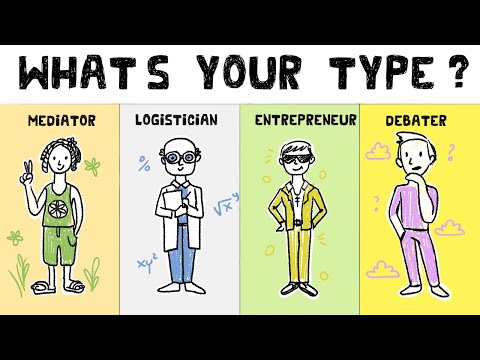
Ever wondered why you click with some people and not with others? It’s like there’s a secret code, right?
Well, that’s where the MBTI steps in. It’s this personality test that sort of maps out how we think and interact. Sounds cool, huh?
You might have heard folks chatting about being an INTJ or an ESFP. These aren’t just random letters; they represent different ways we see the world.
You see, understanding your personality type can actually give you some insights into yourself and your relationships. It’s like holding up a mirror to your brain—seriously!
So, grab a cup of whatever makes you happy, and let’s dig into what the MBTI is all about. You might just learn something new about yourself or someone close to you!
Unlocking Your Mind: A Free Guide to the MBTI Personality Test in Psychology and Mental Health
The MBTI personality test is a tool that a lot of people use to understand themselves and their relationships better. It stands for Myers-Briggs Type Indicator, and it’s based on the ideas of Carl Jung. Basically, it classifies people into 16 distinct personality types based on four pairs of opposing traits.
Here’s how it works:
- Introversion (I) vs. Extraversion (E): This pair looks at where you get your energy from. Do you recharge by being alone or by hanging out with others? Like, some folks feel drained after a big party, while others thrive on that energy.
- Sensing (S) vs. Intuition (N): This is about how you take in information. Sensors focus on the present and what they can see or hear, while Intuitives look at the bigger picture, imagining possibilities.
- Thinking (T) vs. Feeling (F): This one dives into how you make decisions. Thinkers rely on logic and facts; Feelers prioritize emotions and values. It’s that classic debate: head versus heart.
- Judging (J) vs. Perceiving (P): This reflects your approach to life and work. Judgers like structure and planning; Perceivers are more flexible, preferring to keep their options open.
So when you take the test, your answers will point to one letter from each of those pairs—like INFP or ESTJ—giving you your unique personality type.
Why should this matter? Well, understanding your MBTI type can significantly influence how you handle challenges in life and interact with others. Imagine you’re an INTP—logical but maybe not so keen on socializing in big crowds. Knowing this can help you navigate situations more effectively, maybe avoiding overwhelming parties that leave you feeling drained.
But wait! Is this just for fun?
Not exactly! While some people may treat it like a party game, many mental health professionals find value in the MBTI for personal insight and team dynamics at work. It helps folks build empathy towards each other’s differences—like realizing your colleague who constantly overanalyzes things might just be wired that way.
Of course, it’s also essential to remember that no personality test can capture every nuance of who we are as individuals. People are complex! Life experiences shape us just as much as these types do.
For instance, let’s say a friend of yours is an ISFJ—a caretaker type known for being dependable but sometimes overly cautious. If they suddenly make a big career leap toward something risky like starting their own business, that’s pretty atypical for their type! So what’s going on there? Well, maybe they’ve had some significant life changes or gained new perspectives that pushed them out of their comfort zone.
In short, the MBTI personality test can give you useful insights into yourself and others around you—but use it wisely! Embrace it as one tool among many in understanding mental health rather than an absolute definition of who someone is.
Curious about trying it out? There are plenty of free versions online that’ll get you started on this journey toward self-discovery! Happy exploring!
Unlocking Self-Discovery: The Impact of MBTI Personality Test on Mental Health and Psychology
The MBTI, or Myers-Briggs Type Indicator, is one of those personality tests that really gets people talking. It’s designed to help you understand your preferences in how you think, feel, and interact with the world. The whole thing can feel a bit like a fun quiz, but there’s some serious stuff behind it too.
Basically, the MBTI sorts you into 16 different personality types based on four pairs of opposing traits:
So why does this matter for mental health? Well, the way we see ourselves can deeply affect our mental well-being. When people take the MBTI, they often find they relate to their type in ways that are eye-opening or validating. For example, if you’re consistently labeled as a «Feeling» type, you might realize why emotional situations hit you differently than your «Thinking» friends.
Understanding your MBTI type can actually lead to some lightbulb moments about your relationships too! Like maybe you’ve always felt overwhelmed in large groups because you’re an introvert—this realization can help you set boundaries that protect your energy.
People often use MBTI insights for personal growth. Let’s say you’re naturally a Judger but are stuck in life feeling rigid or anxious about uncertainty; recognizing this trait can help you actively work toward embracing spontaneity.
However—and this is super important—even though these insights can be helpful, it’s good to remember that no personality test is foolproof or absolute—after all, people are pretty complex! Relying too heavily on MBTI might lead some folks to pigeonhole themselves or others into boxes that don’t capture their full essence.
It’s also worth noting that many therapists incorporate personality frameworks like the MBTI into their practice to facilitate discussions with clients about self-awareness and relationships.
At its core, using the MBTI for self-discovery can be a stepping stone towards better understanding your emotions and interactions with others. But always keep an open mind! Embracing your quirks—whatever they may be—is what really leads to personal growth.
So think of it this way: taking the MBTI isn’t just about finding out whether you’re an INFP or ESFJ—it’s really more about understanding yourself and figuring out what kind of support will help enhance your mental health journey.
Explore the Myers-Briggs Type Indicator: Detailed Examples and Insights
The Myers-Briggs Type Indicator, or MBTI, is one of those personality tests that people love to talk about. You know, the kind that makes you think about who you are and why you act the way you do. It sorts you into 16 different personality types based on four main dimensions. Each dimension has two opposite preferences.
The first dimension is Extraversion (E) vs. Introversion (I). If you’re an E, you might love being around people and gain energy from social settings. If you’re an I, though, spending time alone or in smaller groups helps recharge your batteries. Picture a social butterfly at a party vs. someone who prefers a cozy night in with a good book.
Next up is Sensing (S) vs. Intuition (N). People with S tend to focus on the present and rely on concrete information from their senses—facts and details matter to them. On the flip side, N types often look at the big picture and think about future possibilities. Like, an S might analyze a recipe step by step while an N imagines how they could add a twist to it.
The third pair is Thinking (T) vs. Feeling (F). Thinkers make decisions based on logic and objective criteria; they’re like calculators when it comes down to choices! Feelers prioritize emotions and personal values instead; they care deeply about how decisions affect others’ feelings. Imagine making a tough choice; T would weigh pros and cons while F would consider everybody’s happiness.
The last dimension is Judging (J) vs. Perceiving (P). J types prefer structure and organization—they like having their plans set in stone. Meanwhile, P types are more flexible and spontaneous; they’re cool with things changing last minute! Think of planners versus free spirits—both have their charm.
So once you’ve figured out where you land on these four dimensions, you get your personality type—like ISTJ or ENFP—which can give insights into your behavior, relationships, work style, and communication habits.
But here’s where it gets interesting: MBTI can be super useful for personal growth. Knowing your type helps you understand yourself better but also how to relate to others more effectively! For example, if you’re an INFP dealing with an ENTJ boss at work, recognizing those different styles can help ease misunderstandings.
You know that feeling when someone just «gets» why you’re struggling? That’s what MBTI tries to build upon—it promotes better communication by acknowledging our differences in perspective.
And hey, while this tool isn’t perfect or all-encompassing—it doesn’t account for everything about who we are—it gives a neat snapshot of personality preferences that can spark deeper conversations about yourself and others.
So next time someone asks for your MBTI type at dinner party or during awkward small talk—don’t just roll your eyes! Use it as a jumping-off point for some genuine connection—you never know where that could lead!
You know, personality tests are kinda everywhere these days, right? One that’s been around for a while and is super popular is the MBTI, or Myers-Briggs Type Indicator. Basically, it’s a tool that sorts us into 16 different personality types based on how we perceive the world and make decisions. I remember taking it back in college. I got an ENFP—labeled as the “Champion.” At first, I thought it was cool; I mean, who wouldn’t want to be a champion? But later, it made me think about how I interact with people.
The thing is, the MBTI is built on Carl Jung’s theories about psychological types. It looks at four main pairs of preferences: Introversion vs. Extraversion, Sensing vs. Intuition, Thinking vs. Feeling, and Judging vs. Perceiving. So when you take the test, you answer questions that help figure out which side of each pair resonates with you more.
Some folks swear by it and find comfort in knowing their type—like having a little guidebook for their personality quirks or how they handle stress in relationships or at work. Others? They roll their eyes and say it’s just fancy astrology or something. But honestly, I think there’s some merit to recognizing patterns in our behavior.
For example, those who lean more towards Feeling might find emotional connections really important in therapy settings—understanding your emotions can be so crucial for mental health! Meanwhile, the Thinking types might tackle problems more analytically. It’s interesting to see how we all approach challenges differently.
But here’s where things get tricky: some people can get too caught up in their type—almost like they’re pigeonholing themselves into a box labeled “ENFP” or “ISTJ.” You don’t wanna limit yourself based on a result from one test you took on a whim! We’re complex beings shaped by experiences that can shift our personality traits over time.
I had a friend who was an INTJ—known for being strategic thinkers—and he swore he couldn’t relate to any emotion during tough times. But after some personal growth and therapy sessions? He realized tapping into his feelings wasn’t just okay; it was necessary for his well-being! So yeah, labels can help but also confuse us if we rely too heavily on them.
In mental health conversations today, understanding these personality differences can really shape how we support ourselves and others through struggles. Whether you’re exploring your MBTI type out of curiosity or using it as a tool during therapy sessions—it’s all about finding what works best for you without letting it define your whole existence.
So next time someone asks you about your personality type? Maybe use it as a springboard to dive deeper into how you relate to the world around you rather than letting it become your entire narrative. Because really? We’re all just figuring things out as we go along!