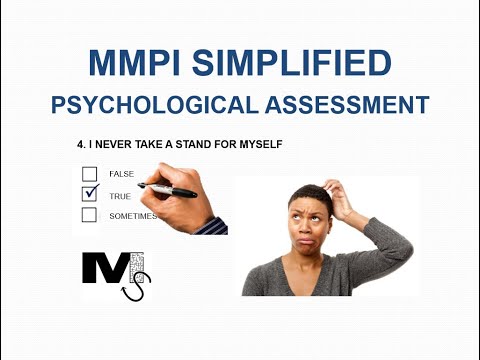
Hey! So, let’s talk about the MMPI test. You ever heard of it?
It’s this cool psychological tool that helps folks understand themselves a bit better.
You know how sometimes life feels like a rollercoaster? Well, the MMPI is kinda like a map to help you figure out where you are on that ride.
It digs into emotions, thoughts, and behaviors—like your personal mental health detective.
Seriously, it’s been around forever and still holds weight today.
Ready to unravel some mysteries about yourself or someone you know? Let’s get into it!
Understanding the MMPI Test: A Comprehensive Guide to Its Role in Psychology
The MMPI, or Minnesota Multiphasic Personality Inventory, is a big deal in the world of psychology. This test helps mental health professionals get a clearer picture of someone’s personality and emotional functioning. Basically, it’s like a detailed map of a person’s psychological landscape.
But how does it work? The MMPI consists of hundreds of true or false questions. You’re asked to respond honestly, and your answers help to paint a picture of who you are. For example, you might see questions about your feelings, your behaviors, and how you see the world around you.
One really interesting thing about the MMPI is that it has several scales built into it. These scales measure different aspects of personality and mental health issues. Some well-known scales include:
- Validity Scales: These help check if you’re being honest or if maybe you’re not understanding the questions well.
- Clinical Scales: These assess various psychological conditions like depression, anxiety, or schizophrenia.
- Content Scales: These dive deeper into specific areas like anger or self-esteem.
So what’s the point? Well, let’s say you’re feeling really down but don’t know why. After taking the MMPI, a psychologist might find that you’re not just sad; there could be underlying issues like anxiety or trauma that need addressing.
There’s this story I heard about someone named Jake. He thought he was just stressed from work but was finding it hard to sleep and enjoy things he used to love. After taking the MMPI as part of his therapy process, he discovered that his scores suggested high anxiety levels and even some traits linked to obsessive thinking. This helped him understand himself better and led to treatment options that actually worked for him.
Another thing worth mentioning is that the MMPI isn’t just for diagnosing problems; it can also be used for other purposes like employment evaluations, forensic assessments in court cases, or even research studies on personality traits across populations.
In terms of reliability and validity—two fancy words meaning “does this test give consistent results” and “is this test actually measuring what it’s supposed to measure”—the MMPI has been put through the wringer over decades and shown to stand up pretty well.
That said, taking an MMPI isn’t always fun. Some people feel overwhelmed by all those questions! But remember: they’re there for a reason—to help create a clearer understanding of your mental health needs.
If you’re ever faced with taking an MMPI—don’t sweat it too much! Just answer as honestly as possible without overthinking too much about each question.
To wrap things up: The MMPI is an essential tool, giving everyone from clinicians to researchers insights into psychological conditions and personality characteristics. It opens doors for conversations around mental health that might have otherwise stayed closed due to stigma or lack of knowledge.
That’s pretty much the lowdown on the MMPI!
Understanding the MMPI: Is It a Reliable Diagnostic Tool for Mental Health Assessments?
The MMPI, or Minnesota Multiphasic Personality Inventory, is kind of like the Swiss Army knife in the psychology toolbox. It’s been around since the late 1930s and is still widely used today for mental health assessments. But, you might be wondering, is it really reliable? Let’s break it down.
First off, the MMPI is a long questionnaire with over 500 true-or-false statements. You answer questions like “I feel sad,” or “I often feel that I’m being watched.” The idea is to measure not just your personality traits but also any potential psychological issues you might have. The outcomes help clinicians understand what’s going on under the surface.
Now, when we talk about reliability, it’s all about how consistent and trustworthy the results are. And research shows that the MMPI has got some solid reliability scores. This means if you took the test today and then again next week under similar circumstances, your scores would be pretty much in line.
Here are some key points about its reliability:
- Validity Scales: The MMPI includes built-in checks to see if someone is being honest or trying to game the system. For instance, if someone answers «true» to an unusual number of items that suggest extreme dysfunction—like claiming they never feel sad—they might raise a red flag.
- Standardization: It was developed using a diverse group of people from different backgrounds. This helps in making sure that it can be applied effectively across various populations.
- Longitudinal Studies: Many studies have been done over decades showing that results tend to remain stable over time for individuals who aren’t experiencing major life changes.
But let’s not get too ahead of ourselves here. Reliability doesn’t mean perfection. Like any tool, it’s important how you use it. For example, cultural differences can affect how people interpret and respond to certain statements.
Also, remember that while the MMPI offers valuable insights, it’s just one piece of the puzzle when diagnosing mental health conditions. A therapist will typically combine these results with interviews and other assessments to make more comprehensive evaluations.
To illustrate this point: imagine a friend who’s been feeling really down lately but aces through life without missing a beat on paper with the MMPI—maybe they’ve picked up some coping strategies along the way or are masking their feelings well. This tells us that even great tools can’t capture everything about someone’s mental state.
In summary, yes—the MMPI is generally considered a reliable diagnostic tool when used correctly alongside other methods not as a standalone solution! Just remember—it’s all about context and understanding each person as an individual on their own unique journey through life.
Understanding the MMPI: Key Psychological Conditions Psychologists Assess
The MMPI, or Minnesota Multiphasic Personality Inventory, is a big deal in the world of psychology. It’s like this comprehensive tool that helps psychologists understand different psychological conditions. It’s widely used because it digs deep into personality traits and various mental health issues.
So, what exactly does the MMPI assess? Here’s a breakdown for you:
- Depression: This part of the test looks for signs that someone might be feeling hopeless or really down—like they’re stuck in a pit and can’t climb out.
- Anxiety: It checks for anxious feelings. You know, that constant worry that makes it hard to relax. Almost everyone feels anxious sometimes, but this digs deeper to see if there’s something more serious.
- Paranoia: The MMPI assesses how much someone might be feeling suspicious of others’ intentions. Think about when you feel someone is always judging you—it’s like that but magnified.
- Psychopathic Deviance: This scales how well someone follows societal rules and norms. If you’ve ever known someone who just seems to break all the rules without a care, this can help pinpoint that kind of behavior.
- Social Introversion: This one gauges how comfortable someone is in social situations. Some folks are more at ease being alone than having to mingle with crowds, right?
Each of these areas is crucial because they represent common struggles many people face. Imagine a friend who seems off lately—they might not want to talk about what’s going on inside their head, but the MMPI could highlight issues they’re dealing with while offering some clarity.
Now, here’s something cool: the MMPI isn’t just a simple yes/no test. It’s got over **500** questions! That’s a lot! These questions help create an incredibly detailed picture of someone’s mental state.
Here’s where things get interesting— psychologists look at patterns in results rather than focusing on individual answers alone. This means they can see how traits connect or contrast with each other. For instance, if someone shows high levels of anxiety alongside strong introversion, it might indicate they experience discomfort in social situations due to their anxious thoughts.
Plus, there’s this special version called the **MMPI-2-RF**, which is more streamlined and focuses on specific areas but keeps most of the important stuff intact.
These tools help psychologists create tailored treatment plans based on findings from assessments— basically setting up strategies that fit the person rather than throwing random techniques at them.
So yeah, if you ever hear about someone going through an assessment with an MMPI, it’s not as scary as it sounds; it’s more like peeling back layers to understand what’s really happening underneath their surface emotions and behaviors. Understanding these profiles gives both clients and therapists valuable insights—and that’s pretty incredible when you think about it!
The MMPI, or Minnesota Multiphasic Personality Inventory, is like this old-school but super reliable tool in the psychology world. You know what I mean? It’s been around since the late 1930s, and it’s still one of the go-to assessments for figuring out someone’s mental health and personality traits. Sounds pretty cool, right?
So basically, the MMPI is a questionnaire, and it dives into a person’s thoughts, feelings, and behaviors. You answer a bunch of true or false questions—like over 500 of them! And while that sounds tedious (and believe me, it can be), there’s a method to the madness. The results help clinicians identify potential mental health issues or personality disorders.
I remember when my friend Sarah took the test as part of her therapy process. She was feeling really overwhelmed with anxiety and depression. At first, she thought the whole thing was just a bunch of mumbo jumbo. But as she went through it, she started to see patterns in her answers that reflected what she was going through—like her struggles with self-esteem and how that played into her anxiety.
That’s where the beauty of the MMPI comes in! It not only helps pinpoint specific problems but also offers a glimpse into how someone’s personality might influence their mental health. It helps therapists understand their clients better—like getting a sneak peek into someone’s emotional world without them having to spill every detail.
Of course, no single test can capture every nuance of who you are—that’d be impossible! But with its extensive research backing and ability to cover diverse areas such as depression, paranoia, and social introversion (yes, they’re all on there), it’s kind of like having a map for navigating complex emotions.
So while taking this test might feel like diving deep into your psyche—and yeah, it can be uncomfortable—it also opens up this space for meaningful conversation between you and your therapist. And hey, if you’re struggling to make sense of your feelings or experiences? That’s valuable stuff right there!
At the end of the day, tools like the MMPI remind us that seeking help isn’t just okay—it’s totally brave. Embracing these insights can pave the way for better understanding ourselves—and who doesn’t want that?