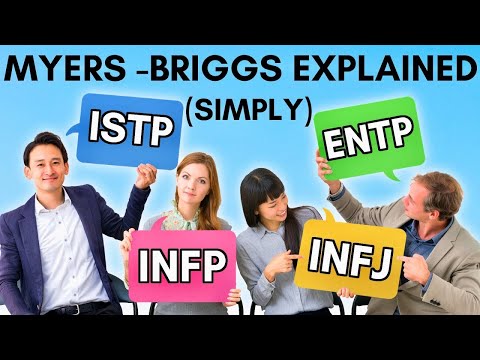
Okay, so have you ever taken one of those personality tests? You know, the ones where you find out if you’re an introvert or extrovert?
One popular one is the Myers-Briggs Type Indicator. Seriously, it’s everywhere! Think of it as a fun way to peek into your own mind and how you tick.
But here’s the cool part: it’s not just about knowing if you’re a thinker or a feeler. It can really help with personal growth and even in your relationships!
Imagine figuring out why you clash with some folks while vibing with others. Pretty neat, huh? So let’s dig into how this whole Myers-Briggs thing can actually make life a little brighter and more understandable. Sound good?
Unlocking Personal Growth and Relationship Dynamics: The Impact of Myers-Briggs Personality Types
The Myers-Briggs Type Indicator, or MBTI for short, is this popular tool that helps people understand their personality types. It’s based on four key dichotomies: introversion (I) vs. extraversion (E), sensing (S) vs. intuition (N), thinking (T) vs. feeling (F), and judging (J) vs. perceiving (P). The thing is, knowing your type can seriously impact your personal growth and how you relate to others.
When you figure out your type, you get insights into your strengths and weaknesses. For instance, if you identify as an “INFP,” you’re probably creative and value deep connections with people. But it might also mean you can be a bit sensitive to criticism. Recognizing this can help you work on those areas where you struggle, enabling personal growth.
In relationships, understanding personality types can be a total game-changer. You find out how different types interact with each other, which is super useful whether you’re making new friends or navigating a romantic partnership. Like, let’s say you’re an “ENTJ” who thrives on structure and decisiveness, while your partner is an “ISFP” who prefers spontaneity and flexibility. Knowing this means both of you can find common ground instead of clashing over plans.
Here are a few points about how MBTI affects personal growth and relationships:
- Self-awareness: Understanding your own type gives you clarity about why you react to situations the way you do.
- Communication styles: Different types communicate differently—knowing this helps prevent misunderstandings.
- Conflict resolution: Some types tackle conflicts head-on while others avoid them; knowing this helps in handling disagreements better.
- Personal development: You learn about areas where you can grow—like an “ESTJ” might need to work on being more empathetic in social situations.
Let’s not forget that MBTI isn’t just some label thrown around casually; it’s a framework that gives context to behavior! I remember a friend who realized she was “INFJ” after taking the test. It made so much sense! She often felt overwhelmed by social situations but craved meaningful connections. Knowing her type helped her embrace her introverted nature while also finding ways to engage deeply with others without exhausting herself.
Sometimes people get stuck thinking their type totally defines them—but it’s just part of the picture! Life experiences shape us too. MBTI is not set in stone; rather it’s like a roadmap that guides us toward better understanding ourselves and each other.
So yeah—whether you’re looking to grow personally or improve your relationships, checking out the Myers-Briggs framework can be super enlightening! It’s like holding up a mirror that reflects parts of yourself you’ve maybe never thought about before—and isn’t that kind of awesome?
Understanding the 4 Key Personality Types in Relationships: Insights for Healthier Connections
Alright, let’s break this down into something relatable and easy to digest. Understanding personality types can really shed light on how we connect with others. Think of it like a map: it helps you navigate relationships better. The Myers-Briggs Type Indicator (MBTI) is one popular way to look at this, and it categorizes folks into different personality types based on four key dimensions. So here’s the lowdown on that.
The Four Key Dimensions
The MBTI framework uses four scales, each with two contrasting preferences. You’ve got:
- Introversion (I) vs. Extraversion (E): This is about where you get your energy from. Introverts recharge by spending time alone, while extroverts thrive in social settings.
- Sensing (S) vs. Intuition (N): This deals with how you take in information. Sensors focus on the concrete details, while intuitives look at the big picture and possibilities.
- Thinking (T) vs. Feeling (F): Here’s where decision-making comes in. Thinkers prioritize logic and objectivity, whereas feelers consider emotions and values.
- Judging (J) vs. Perceiving (P): This dimension describes how you approach the world. Judgers like structure and plans; perceivers prefer flexibility and spontaneity.
From these dimensions, you end up with 16 unique personality types! But let’s key in on some of the main archetypes that often come up in relationships.
The Four Main Personality Types
In a simplified sense, we can group these 16 types into four main categories:
- The Leader: Often an ESTJ or ENTJ type, leaders are decisive and love structure. They can be great at guiding relationships but might come off as bossy sometimes.
- The Nurturer: Typically ISFJs or ENFJs, nurturers are caring and focus heavily on emotional connections. They make people feel valued but might sacrifice their needs for peace.
- The Innovator: Types like INTP or ENTP fit this mold; they’re creative problem solvers who think outside the box but may struggle with routine or conformity in relationships.
- The Explorer: Usually ESFPs or ISFPs, explorers are adventurous souls who love spontaneity! They bring excitement to connections but could find stability challenging.
Building Healthier Connections
So, how does knowing these personality types help you? Let’s say you’re dating someone who’s more of an introvert when you’re an extrovert; understanding that difference can help avoid misunderstandings.
Imagine this scenario: You’re an extrovert who loves throwing parties every weekend while your partner prefers cozy nights in with a book. Recognizing this dynamic allows both of you to adjust expectations—maybe once a month you throw a big bash while keeping those quiet evenings special too!
It’s all about communication. When you know your own type and your partner’s type, it becomes easier to talk about needs without judgment.
Embracing Differences
Let’s not forget—these aren’t rigid boxes; they’re guides! Every person is unique, even within their type. So staying flexible is key because life happens!
Also worth noting is that self-awareness plays a huge role here too—you get to understand your reactions better when something feels off in a relationship.
So yeah, whether it’s learning why your partner gets frazzled during group events or why another prefers detailed planning over spontaneous road trips—it all connects back to understanding those core personality traits.
Next time you’re feeling lost in a relationship’s dynamics or just wanna deepen that connection—remember those personality types can be seriously insightful!
The Rise and Fall of Myers-Briggs: Debunking the Popular Personality Test
The Myers-Briggs Type Indicator (MBTI) has been riding the waves of popularity for decades. You’ve probably seen it everywhere—from job applications to social media quizzes. But what’s the deal with this personality test? Why do so many people swear by it, and why are others waving red flags?
First off, the MBTI categorizes people into 16 different personality types based on four dimensions: introversion vs. extraversion, sensing vs. intuition, thinking vs. feeling, and judging vs. perceiving. Basically, it’s like putting your personality into a box—tightly wrapped in a unique little package that’s supposed to tell you who you are and how you relate to others.
But here’s where things start to get tricky: the MBTI wasn’t actually built on solid scientific ground. The creators, Isabel Briggs Myers and her mother Katharine Cook Briggs, weren’t psychologists in the traditional sense. They used Carl Jung’s theories as a jumping-off point but didn’t conduct rigorous scientific testing or validation that modern psychological assessments typically undergo.
Many experts argue that personality isn’t as static as the MBTI suggests. People can change over time or adapt based on their environment or experiences. Think about it: have you not grown or shifted in your views since high school? Most people do! But when you tie yourself down to an MBTI type, it can feel like you’re stuck with that label for life.
Also, there are some concerns about validity and reliability. A study published in 1993 found that almost half of test takers got different results when retaking the exam just five weeks later! That raises questions about how accurately this test captures your true self.
Now let’s talk about personal growth and relationships. Many folks find comfort in identifying their type because it can lead to insights about their preferences and behaviors. For example, knowing you’re an INFP might help you understand why you’re often lost in daydreams or approach relationships with an idealistic lens. That understanding can spark self-reflection—like when a friend realizes they need more alone time than their extroverted partner needs social interaction.
However, if someone uses their MBTI type as an excuse to avoid personal growth—like saying “I can’t help my messiness; I’m just a P!»—that’s where we see the downsides kick in. It’s important not to use these labels as crutches but rather as tools for reflection.
In relationships, the MBTI can serve as a conversation starter! Couples might explore how their differences influence conflicts or communication styles. But once again, it has its limits; relying too heavily on these types might create divisions instead of fostering understanding.
So what’s next for Myers-Briggs? Well, its popularity shows there’s clearly a demand for insights into ourselves and our connections with others. But experts suggest looking beyond just one type indicator toward more nuanced approaches that take into account the complexities of human behavior.
The bottom line? While the Myers-Briggs Type Indicator is fun and maybe even helpful for some personal insights, treat it like a first date rather than a lifelong commitment—you’re just getting started!
You know, the Myers-Briggs Type Indicator (MBTI) has this reputation, like it’s either the key to unlocking who you are or just a fun quiz to take at a party. I mean, it’s not some magic wand that solves all your problems, but it can definitely spark interesting conversations and insights about yourself and your relationships.
Take my friend Sarah, for example. She’s always been the type who dives headfirst into social situations, never shying away from being the life of the party. When she learned she was an ESFJ—basically the “people person”—she felt seen in a new way. Almost like someone handed her a mirror reflecting parts of her personality she’d kind of overlooked. Understanding that about herself made her appreciate her nurturing instincts more. It also opened up some dialogue with friends about how they’re different—even if sometimes it led to debates over what type is “better,” haha!
But seriously, MBTI can be pretty telling when it comes to relationships. Like, have you noticed how sometimes you click with people right away and other times you just can’t vibe? I’ve had my fair share of both! If you understand your type and those of your friends or partners, it can throw light on why conflicts arise or why certain hangouts feel effortless while others feel like a slog through mud.
I remember arguing with my partner over planning our weekend escape last month. I’m more spontaneous and prefer going with the flow; he’s careful and likes to plan ahead—definitely more of a judging type (and yes, that’s an actual term in MBTI!). Once we figured out our types through MBTI lingo, that argument turned into a light-hearted conversation on how we could blend our styles. It became less about who was “right” and more about understanding where we both were coming from.
So yeah, while MBTI isn’t the complete picture—it doesn’t capture every nuance of human behavior—it certainly gives us tools to explore ourselves and others better. It fosters curiosity instead of judgment—and isn’t that what real growth is all about? Embracing our quirks while learning to appreciate those who see things from different angles? Feelings get deep when you dive into these types; they give you a framework for having honest discussions without pointing fingers or throwing around blame.
At its best, Myers-Briggs feels kind of like this shared language among friends or partners where misunderstandings can turn into insights—and maybe even laughter! That’s pretty cool if you ask me.