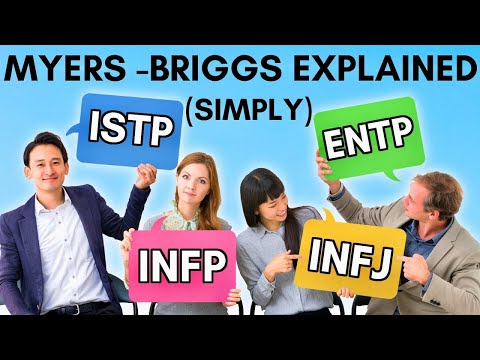
You know how sometimes you just click with someone? Like, you get each other instantly? That’s all about personality.
So, what if I told you there’s this cool tool called the Myers-Briggs Type Indicator, or MBTI for short? It’s not just some random quiz. It can actually give you insights into how you think, feel, and interact with the world around you.
Here’s the thing: understanding your personality type can seriously help with mental health. It can shine a light on your strengths and weaknesses, helping you navigate life’s ups and downs a bit easier. Think of it like having a map for your emotional journey!
Stick around as we dig into the different types and how they play a role in mental well-being. It might just change how you see yourself—and others! Sounds good, right?
Exploring the Correlation Between MBTI Personality Types and Mental Illness: Insights and Implications
The connection between MBTI personality types and mental health is a pretty interesting topic. A lot of folks are curious about whether their personality type can give insights into their mental well-being or predispositions. So, let’s break this down in a simple way.
First off, the Myers-Briggs Type Indicator (MBTI) categorizes people into 16 different personality types based on four dimensions: introversion vs. extraversion, sensing vs. intuition, thinking vs. feeling, and judging vs. perceiving. Each of these types kinda reflects how someone perceives the world and makes decisions.
Now, when it comes to mental health, it’s essential to remember that no specific MBTI type is directly linked to any particular mental illness. But there are some patterns we can notice among different types.
Types can experience stress differently. For instance, an INFJ might internalize their feelings more than an ESTP. When faced with stress, INFJs may retreat inwardly and struggle with anxiety or depression because they think so deeply about their emotions and the world around them. In contrast, ESTPs tend to take action—like hitting the gym or going out with friends—to cope with stress.
Social dynamics play a role. Extraverts generally seek social interactions which can be protective against certain mental health issues since they often have larger support networks. However, if this social interaction becomes overwhelming or draining, they might feel anxious or burnt out too! Introverts might find themselves more prone to feelings of loneliness but could also benefit from deep connections with a select group of friends who understand them well.
Another point is the way different personality types process emotions and experiences. Feelers (F), like INFPs for instance, may experience emotional pain more acutely than Thinkers (T). This doesn’t mean Thinkers don’t feel emotions; rather, they might approach problems from a logical standpoint which could help in managing challenges related to mood disorders.
You know what’s fascinating? Certain types might gravitate towards specific careers or hobbies that align with their personalities but also could lead to unique challenges in their mental health journey. A high-strung ENTJ pursuing leadership roles may face burnout if they don’t learn balance since they thrive on achievement but often neglect self-care in pursuit of success.
To wrap it up—and I’m just scratching the surface here—understanding your MBTI personality type may offer you insights into your emotional landscape but isn’t a diagnostic tool for mental illness. Remember that individuals are complex and shaped by tons of factors outside of just personality!
In sum:
- No direct correlation between MBTI types and specific mental illnesses.
- Stress coping varies among personalities; some retreat while others act out.
- Social needs differ; extraverts may need connection while introverts find fulfillment in deeper relationships.
- Emotional processing varies; Feelers often feel things deeply which impacts their mental state.
- Certain career choices influenced by type can lead to unique challenges.
So yeah, while there’s definitely something cool about exploring this connection between personality types and mental wellness—it’s only part of the bigger picture when it comes to understanding ourselves!
Discover the 4 Key Personality Types and How They Influence Your Mental Health
There are tons of ways to look at personality types, but one of the most popular is the Myers-Briggs Type Indicator, or MBTI for short. So, let’s break it down into four key personality types and see how they might affect your mental health.
1. Introverts vs. Extroverts
This is probably the most well-known dimension. Introverts recharge by spending time alone, while extroverts thrive in social settings. If you’re an introvert, you might feel overwhelmed in big groups, which can lead to anxiety or burnout. A friend of mine used to dread office parties; she needed quiet time afterward to regroup. On the flip side, extroverts may experience loneliness when they’re isolated for too long. You know that feeling when you just want to hang out but nobody’s around? Yeah, it can mess with your mood.
2. Sensing vs. Intuition
Sensing folks focus on concrete facts and details, while intuitive people are more about the big picture and possibilities. If you’re a sensing type and life throws you a curveball, like an unexpected job loss, you might feel really stressed because you’re focused on immediate details (like bills!). Intuitive types might feel restless if they’re stuck in routine jobs; their creativity could suffer if they’re not pushing boundaries.
3. Thinking vs. Feeling
This one’s all about decision-making styles. Thinkers tend to analyze situations logically, whereas feelers place more emphasis on personal values and emotions. So if there’s conflict at work? Thinkers might aim for efficiency over harmony, which could lead to tension with colleagues who prioritize feelings over facts. Meanwhile, feelers may take criticism personally—like when someone overlooks their hard work and it leads to feelings of inadequacy or self-doubt.
4. Judging vs. Perceiving
Judgers like structure and planning; perceivers are more flexible and spontaneous. If you’re a judger facing a last-minute change—maybe your plans get canceled—you might find it really throws you off balance and fuels anxiety instead of going with the flow like perceivers would do easily.
In sum, understanding these personality dimensions isn’t just academic; it has real-world implications for mental health! Basically, knowing your personality type can help you navigate challenges better and make sense of your experiences in life—and relationships too! It’s kind of like having an instruction manual for yourself that helps avoid unnecessary stressors based on your natural tendencies!
Exploring the Different Types of Personality in Psychology: A Comprehensive Guide
So, let’s chat about personality types, specifically the Myers-Briggs Type Indicator (MBTI), and how it ties into mental health. You know, understanding your personality can make a big difference in how you relate to yourself and others.
The MBTI groups people into 16 distinct personality types. These types are based on four pairs of opposing traits, kinda like two sides of a coin. Here’s how they break down:
- Introversion (I) vs. Extraversion (E): This deals with where you draw your energy from. Introverts recharge by spending time alone while extraverts thrive on social interactions.
- Sensing (S) vs. Intuition (N): This pair looks at how you process information. Sensing folks focus on the present and concrete details, while intuitive types are more about seeing the big picture and future possibilities.
- Thinking (T) vs. Feeling (F): This is all about decision-making. Thinkers prioritize logic and objectivity, whereas feelers emphasize emotions and personal values in their choices.
- Judging (J) vs. Perceiving (P): Judging types prefer structure and planning, while perceiving folks are more flexible and spontaneous.
Now, let’s say you’re an INFP—you’re likely an introverted idealist who feels deeply but may struggle with making decisions quickly because you value personal beliefs over cold hard facts.
Understanding these types isn’t just intellectual fun; it can seriously influence your mental health journey. Like if you’re an extrovert who spends too much time alone, you might feel drained or even depressed over time because you’re not getting that needed social interaction.
However, remember that each type has its strengths and weaknesses. For example:
- An ESTJ might excel in leadership roles thanks to their organizational skills but could come off as overly critical towards more sensitive types.
- An INFJ may be great at deep connections but struggle with asserting themselves in group settings due to their introverted nature.
It’s fascinating how this can play out in therapy too! A therapist familiar with MBTI can tailor their approach depending on your type. They might encourage an introvert to explore feelings more deeply or support an extravert in finding constructive outlets for their energy.
But let’s not forget: these personality types aren’t boxes to trap us in; they’re just one layer of who we are! Each person is unique—like a complex mix of flavors in a smoothie where some ingredients shine brighter than others depending on the situation.
To wrap it up: understanding your Myers-Briggs type can lead to greater self-awareness and help you navigate relationships better—both personal and professional. It’s all about knowing who you are so you can live life more fully!
You know, personality tests can be kinda fun, right? I mean, who doesn’t love discovering whether they’re more of a dreamer or a planner? When it comes to the Myers-Briggs Type Indicator (MBTI), many people see it as just a quirky quiz to figure out which Disney character they align with. But there’s more to it than that. Let’s dig into how those personality types relate to mental health.
First off, the MBTI breaks us down into 16 different personality types. Each type reflects how you perceive the world and make decisions. For instance, an INTJ might approach challenges with a strategic mindset while an ESFP could be all about action and experience. Understanding your type can help you gain insight into your emotional patterns and behaviors.
I once had a friend who was an ISFJ—super nurturing and always ready to lend an ear. But she often took on everyone else’s problems without addressing her own. She thought being supportive was her main role in friendships, which led her to feel overwhelmed sometimes. Even though understanding her personality type helped her recognize this pattern, it took some time for her to accept that it was okay to prioritize self-care too.
The thing is, knowing your MBTI type doesn’t magically solve mental health issues—you still have to put in the work! But it can open up avenues for understanding yourself better. For example, if you’re more introverted, you might need quiet time after social events to recharge. Or if you’re extroverted, being cooped up alone for too long could feel suffocating.
Plus, recognizing how your type interacts with others can improve communication in relationships—which is huge when we talk about mental health! Conflict often arises from misunderstandings or different ways of processing emotions. Let’s say you’re an INFP who feels deeply but struggles to express that feeling—if your partner is an ESTJ who values straightforwardness and practicality, well… those two approaches might collide hard at times!
But there’s also this idea of using your MBTI type as a reflection point for coping strategies. For instance, thinking through what kinds of environments help you feel balanced can be eye-opening. An ENFP might thrive in creative spaces where they can brainstorm freely while an ISTJ could feel most productive in structured surroundings.
So yeah, while the Myers-Briggs might not cure anything per se—it’s like holding a mirror up to yourself and seeing where you shine or maybe where shadows lurk a bit longer than you’d like them too. That self-awareness can be empowering when it comes to managing mental health—and trust me; every little bit counts!