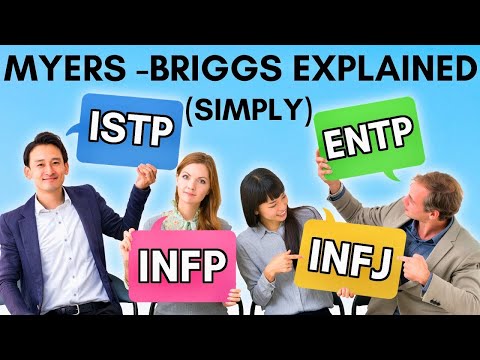
Hey! So, let’s talk about this fun thing called the Myers-Briggs test. You know? The one everyone seems to be buzzing about?
It’s not just some random quiz you take for kicks. It can actually give you, like, real insight into who you are. Seriously!
Imagine learning about your personality type and how it influences your relationships, work life, and even how you handle stress. Wild, right?
Plus, it’s totally free! Who doesn’t love that? So come on, let’s dive into this little adventure of self-discovery together. What do you say?
Understanding the Myers-Briggs Test: A Comprehensive Guide to Personality Types in Psychology
The Myers-Briggs Test, have you heard of it? It’s like this fun way to figure out your personality type. Seriously, it feels like a little mirror reflecting back who you are. The test basically sorts people into 16 different types. Each type is represented by a combination of four letters, which stand for four pairs of opposites. Here’s how it breaks down:
- Introversion (I) vs. Extraversion (E): This is all about where you get your energy from. If you’re an E, you recharge by hanging with friends—lots of social time! I types prefer quiet time alone to refuel.
- Sensing (S) vs. Intuition (N): This pair looks at how you take in information. S types focus on present details and facts, while N types are more about the big picture and future possibilities.
- Thinking (T) vs. Feeling (F): Here’s the emotional side! T types tend to make decisions based on logic and objectivity, while F types prioritize feelings and values when figuring stuff out.
- Judging (J) vs. Perceiving (P): J types are organized and like structure in their lives, whereas P types are more flexible and open to new experiences.
So when you take the test, it asks a bunch of questions that help identify which side of these pairs you lean towards. For example, do you prefer to plan every detail ahead or go with the flow? The answers shape your unique four-letter code.
Say you’re an ENFP—that means extroverted, intuitive, feeling, and perceiving. You might be super creative and love exploring new ideas! Or if you’re an ISTJ—introverted, sensing, thinking, judging—you might be really detail-oriented and love structure in your life.
Now think about this: knowing your type can actually help in everyday life. You might realize why some activities drain you while others invigorate you or why certain situations feel comfortable or stressful.
And the cool part? It’s not just for self-discovery; businesses use these tests to build better teams too! Like knowing a team’s mix can help match people up for projects based on strengths.
But here’s a heads up: although it’s popular and fun to reference Myers-Briggs for insights into personality, there are some critics out there saying it’s not the most scientifically valid tool around. Some argue that humans are way too complex for just 16 personality categories.
Still curious? There are plenty of free versions online that can give you a taste without chasing after one that costs money or is overly complicated.
In a nutshell, the Myers-Briggs Test offers a quirky yet insightful glimpse into who we are as individuals—and understanding this can make life just a bit easier!
The Most Popular Personality Test in Psychology: Exploring Its Impact and Insights
Personality tests have a knack for catching our attention. One that’s super popular is the Myers-Briggs Type Indicator (MBTI). It gives you a glimpse into your personality by categorizing you into one of sixteen types, based on four pairs of opposing traits. Think of it like a little map showing how you think and behave.
The main categories in the MBTI are:
- Introversion (I) vs. Extraversion (E): This is all about where you get your energy from. Do you recharge alone or with others?
- Sensing (S) vs. Intuition (N): Here’s where it gets interesting. Do you focus on the present and concrete facts, or are you more about the big picture and possibilities?
- Thinking (T) vs. Feeling (F): This one’s about decision-making, whether you’re more logical or empathetic.
- Judging (J) vs. Perceiving (P): Are you someone who prefers structure and plans or do you go with the flow?
When people take this test, they often feel like they’re getting a better understanding of themselves. It’s like shining a light on parts of their personality that might be hidden in everyday life.
But why does this matter? Well, knowing your type can help in everyday situations—like figuring out how to handle relationships or approach work tasks effectively. For instance, let’s say you’re an INFP, known as «The Mediator.» You might find that creativity fuels your ideas but struggle in highly structured environments.
However, not everything’s sunshine and rainbows with the MBTI. Some folks argue that it can oversimplify people into neat boxes when we’re way more complex than that! Plus, critics say it lacks scientific rigor compared to other assessments like the Big Five Personality Traits. If you’ve spent time in therapy or self-discovery circles, you’ve probably heard debates around its effectiveness!
Another thing to keep in mind is that people often use these labels to justify their behaviors instead of seeing them as part of a bigger picture—like saying «I can’t do public speaking because I’m an introvert,» when maybe it’s just something they haven’t practiced enough.
In essence, while the Myers-Briggs test can be insightful and fun for self-discovery, it’s important to treat it as just one tool among many. Don’t let it define who you are entirely! Life is full of shades and nuances; personality tests just help us explore some of those layers a bit more deeply.
So if you’re curious about yourself—or even trying to understand others better—taking a free Myers-Briggs test online could be worth a shot! But remember to keep an open mind and use what resonates with you—not every label will fit perfectly!
Unlock Self-Discovery: Take a Free Myers-Briggs Test Online for Insightful Psychological Exploration
The Myers-Briggs Type Indicator (MBTI) is a popular tool for self-discovery. It’s based on Carl Jung’s theories about personality types. The MBTI helps you uncover your preferences in how you perceive the world and make decisions. By taking a free Myers-Briggs test online, you can get some insight into your personality.
What Does the Test Measure?
The MBTI sorts people into 16 different personality types, based on four main dimensions:
- Introversion (I) or Extraversion (E) – This shows where you focus your attention.
- Sensing (S) or Intuition (N) – This indicates how you take in information.
- Thinking (T) or Feeling (F) – This reflects how you make decisions.
- Judging (J) or Perceiving (P) – This describes how you approach the outside world.
So, if you’re an INFP, for instance, that means you’re more of an introvert who relies on intuition and feelings, preferring to keep things open-ended rather than structured.
The Benefits of Self-Discovery
When you understand your type, it can lead to some serious benefits:
- You get clarity about what drives you.
- You can improve your relationships by understanding differences in other people.
- You might discover new career paths that fit your personality better.
Take Sarah, for example. She was always unsure of why she clashed with her coworkers. After taking the Myers-Briggs test and learning she’s an ISTJ, she realized her preference for structure didn’t always mesh well with her colleagues’ spontaneous styles. Now, instead of being frustrated by them, she appreciates their strengths.
The Online Experience
Once you’re ready to take a test online, it’s pretty straightforward. Most tests consist of about 15-30 questions that ask about your preferences and behaviors in various situations. You’ll answer honestly—there’s no right or wrong here!
Afterward, you’ll receive a type description that digs into what being that type often means in terms of communication style, strengths, and weaknesses. You might even find charts showing how different personalities interact with each other.
Cautionary Notes
Just keep in mind that while the MBTI can be insightful, it’s not everything! Life is way too complex to fit neatly into one type. Also, remember that people change over time—your results can shift as new experiences shape who you are.
So, let’s chat about the Myers-Briggs test. You might’ve seen it floating around online—like those quirky quizzes that tell you if you’re more of a cat person or a dog person, right? But really, this test digs a bit deeper. It’s about understanding yourself better. Seriously, it can be pretty eye-opening.
I remember when I first took the Myers-Briggs test. I was kind of just doing it for fun, you know? Like everyone else seemed to be taking it. But when I got my results back, I found out I was an INFP—kind of like being the dreamer and idealist of the bunch. At first, I thought, “Oh great! More labels.” But then it started to make sense when I reflected on my friendships and choices.
The thing is, this test is based on a theory by Carl Jung that suggests we all have different ways of perceiving the world and making decisions. So yeah, it’s not just some random quiz—it actually has some psychological backing to it! It breaks down your personality into four key areas: where you get your energy (introversion vs extroversion), how you take in information (sensing vs intuition), how you make decisions (thinking vs feeling), and how you live your life (judging vs perceiving).
What’s interesting is that once you get your personality type, it can feel like someone has handed you a roadmap. Sure, not everything fits perfectly because we’re all unique snowflakes. But it can kind of validate your quirks and struggles. Like for me as an INFP, understanding why I’m so drawn to creative pursuits or why I sometimes feel overwhelmed in social situations was liberating.
Now, don’t get me wrong; this isn’t some magic bullet for self-discovery or anything. It’s just one tool in this big ol’ toolbox we call personal growth. Some people might shrug their shoulders at it or think it’s too simplistic—it won’t solve all your problems or reveal every secret about who you are.
But if you’re looking for a little insight into yourself—or hey, even if you’re just bored—taking a free Myers-Briggs test could be worth your time! Just remember to approach it with an open mind and see what resonates with you. After all, figuring ourselves out is a journey with lots of twists and turns along the way!