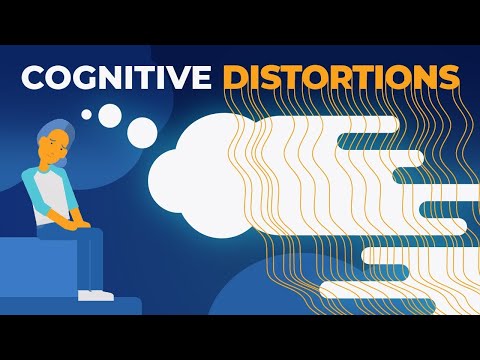
You know those thoughts that just sneak in and mess with your day? Yeah, those.
Negative cognitions can be like uninvited guests, crashing the party in your head. They show up when you least expect it, whispering all sorts of junk that makes you feel awful.
Maybe it’s a little voice telling you you’re not good enough or that you’ll never get it right. Honestly, it can be exhausting just dealing with them.
But hey, you’re definitely not alone in this struggle. We’ve all had those moments when our brain decides to play tricks on us, am I right? So let’s chat about some examples of these pesky thoughts and how they fit into the bigger picture of mental health.
10 Common Cognitive Distortions You Need to Know: Examples and Impact on Mental Health
Cognitive distortions are basically those sneaky little thoughts that slink into your mind, twisting reality into something darker. They’re like wearing funky glasses that change how you see the world. Recognizing these distortions can seriously help with your mental health. So, let’s chat about ten common cognitive distortions, and why they’re important to watch for.
1. All-or-Nothing Thinking
This is when you see everything in black-and-white. Like if you don’t ace a presentation, you might think you totally bombed it. This kind of thinking can lead to a lot of unnecessary stress and disappointment in yourself.
2. Overgeneralization
Here’s where you take one negative experience and make it seem like it’ll always happen. If you mess up one time on a test, you might feel like you’re gonna fail every test from now on. It’s a real mood killer.
3. Mental Filter
Imagine focusing only on the negative aspects of an event while ignoring the positives. Like after a party where many people enjoyed themselves, but all you dwell on is that one awkward moment with someone else.
4. Discounting the Positive
This is when good things don’t count in your book. Even if someone tells you your outfit looks great, you’re quick to say they’re just being nice or don’t really mean it. That can be super draining emotionally!
5. Jumping to Conclusions
You ever feel like you’ve got psychic abilities? This distortion includes mind reading and fortune telling — assuming someone’s mad at you without any evidence or predicting bad things will happen without seeing any signs.
6. Catastrophizing
You might blow things out of proportion here — thinking that losing your job means you’ll end up homeless and destitute! It’s like turning a minor setback into this massive disaster in your brain.
7. Emotional Reasoning
If you’re feeling anxious or sad, it’s easy to think there’s something genuinely wrong — as if feelings dictate facts! Just because you’re scared doesn’t mean danger is lurking around every corner.
8. “Should” Statements
Saying things like “I should be working harder” sets unrealistic expectations for yourself and creates guilt or disappointment when those expectations aren’t met.
9. Labeling and Mislabeling
Instead of just saying “I made a mistake,” some people label themselves as «a failure.» That kind of language sticks with you and can really hurt self-esteem over time.
10. Personalization
Taking responsibility for something that’s out of your control? That’s personalization! Let’s say your friend is upset about something unrelated; somehow, it feels personal when really it has nothing to do with you at all.
Recognizing these cognitive distortions allows for healthier thinking patterns and helps improve overall mental well-being — which is super vital! If we challenge these negative thoughts head-on instead of letting them linger, we create space for more balanced feelings and experiences moving forward, if that makes sense?
Understanding Cognitive Distortions: Free PDF Guide to Improve Your Mental Health
Cognitive distortions are basically those sneaky little thought patterns that can mess with your head. You know, the ones that twist reality and make things seem way worse than they actually are? These distortions can play a huge role in mental health issues like anxiety and depression. Understanding them is key to improving your mental well-being.
So, what exactly are cognitive distortions? They’re irrational ways of thinking that can lead you to feel anxious, sad, or overwhelmed. It’s like wearing glasses with the wrong prescription—you just can’t see things clearly.
Here’s a quick look at some common types:
- All-or-Nothing Thinking: This is when you see things in black-and-white terms. For example, if you don’t get an A on a test, you might think, “I’m a total failure.”
- Overgeneralization: This happens when one negative experience snowballs into seeing everything in a negative light. If you have one bad date, you might tell yourself you’ll always be alone.
- Mental Filter: Here’s where you focus only on the negatives and ignore the positives. Like if someone compliments your work but all you can think about is the one critique.
- Disqualifying the Positive: Ever brush off compliments? That’s this distortion. You might hear someone say you did great at a project but dismiss it as “they’re just being nice.”
- Jumping to Conclusions: This involves assuming something bad will happen without evidence. For instance, thinking your friend didn’t text back because they’re upset with you—when really they might just be busy.
Let’s talk about how these thoughts feel in real life. Imagine Sarah, who recently got passed up for a promotion at work. Instead of seeing it as an opportunity for growth or feedback, she starts spiraling into all-or-nothing thinking. “If I’m not promoted now,” she thinks, “I’ll never get ahead.” It’s tough seeing someone go through that because it feels so real to them—like their whole future is set in stone.
But here’s where it gets hopeful! Recognizing these distortions is step one to changing them. It’s like shining a flashlight into dark corners of your mind; suddenly things don’t seem so scary anymore.
Now, there are tools out there—like workbooks or guides—that dive deeper into this stuff and help challenge those negative thoughts effectively through techniques like cognitive restructuring or journaling.
Just remember: changing how you think takes time and practice. And that’s totally okay! Be gentle with yourself while working through this process because everyone’s journey looks different.
In short, cognitive distortions can really cloud your perspective on life. Spotting them? That’s where the magic happens in reclaiming your mental health journey!
Comprehensive PDF Guide to Negative Cognitions in EMDR Therapy
Negative Cognitions and EMDR Therapy are pretty important when considering how we process trauma and distressing memories. So, what’s the deal with negative cognitions anyway? Well, it’s all about those pesky thoughts that tell us something is wrong with us or the world. You know, the stuff that keeps our inner critic working overtime.
In EMDR (Eye Movement Desensitization and Reprocessing), a therapy designed to help people process traumatic events, addressing these negative cognitions can be a game-changer. When you’re in therapy, you might be guided to identify these negative beliefs that pop up in your mind after a trauma. It’s kind of like uncovering hidden monsters under your bed!
Some common negative cognitions could include:
- “I am worthless.” This one is a classic.
- “I will never be happy.” Feels heavy, huh?
- “It’s my fault.” Oh boy, so relatable but so unfair.
- “I can’t trust anyone.” Isolation at its finest.
- “I’m not safe.” This one can keep you on edge.
So, during EMDR sessions, therapists help clients confront these beliefs while processing the traumatic memories associated with them. Imagine being on a rollercoaster: you’ve got to face some scary drops before you get back to level ground. Through bilateral stimulation (that’s just fancy talk for alternating sounds or taps), clients can start reframing those negative thoughts into more positive ones.
For example, if someone feels they are worthless after experiencing failure or rejection, guided imagery might help them realize their value in other areas of life.
You see? It’s all about shifting the perspective from “I can’t” to “I can,” even if it feels impossible at first.
But working through these cognitive shifts isn’t always easy—it requires patience and sometimes a lot of emotional labor. Picture this: a friend trying to climb out of a dark hole; every step is tough because they keep slipping back down. It takes time but eventually gets easier with practice and support.
The magic happens when those new beliefs start sticking around longer than just fleeting thoughts. They become part of your self-talk—a new way of thinking about yourself that nurtures resilience instead of self-doubt.
In summary, tackling negative cognitions in EMDR therapy helps address deep-seated beliefs that often follow traumatic experiences. By focusing on reframing these negatives into positives through specific techniques during therapy sessions, individuals can gradually build healthier thought patterns. It may feel like climbing uphill at first but remember—it gets easier with each step forward!
Negative cognitions can be a real mind trap, you know? They weave in and out of our thoughts, often without us even realizing it. It’s like when you’re trying to relax, and suddenly that little voice in your head starts nagging you about all the things you did wrong today. You might think, “I should have done this differently,” or “I’m not good enough.” Those thoughts can hit hard.
I remember this one friend of mine who struggled with anxiety. She would often replay conversations in her head, convinced that every word she said was cringeworthy. She’d think stuff like, “Why did I say that?” or “They must think I’m so stupid.” It made her feel isolated because she genuinely believed people were judging her harshly. The thing is, those thoughts were way more damaging than any of us could see from the outside.
It’s not just anxiety where negative cognitions show up. Depression has its own nasty playlist. You might find yourself thinking things like “I’ll never feel better” or “Nothing matters anyway.” Those kinds of beliefs can sink in deep and create a fog that’s hard to shake off.
Even everyday stress can bring out those pesky negative thoughts. Let’s say you’re late for work; suddenly you think, “I’m such a failure” or “This always happens to me.” And bam! There goes your day, spiraling downward before it even began.
Recognizing these patterns is key, though—like shining a flashlight on those shadowy corners of your mind. Once you know they’re there, it gets easier to challenge them. You realize they’re not the truth; they’re just uninvited guests at your mental party!
So yeah, negative cognitions are like unwanted weeds in the garden of your mind but digging them up? That’s part of the journey toward feeling better. Just remember—you’re definitely not alone in this struggle!