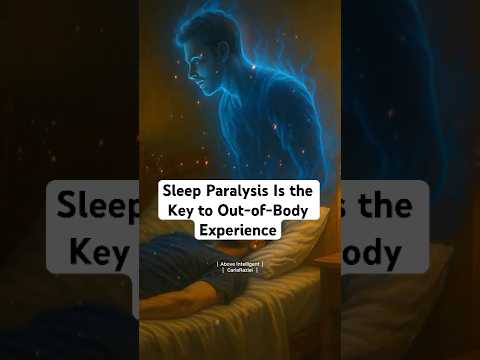
You ever wake up and feel like you’ve just been on a wild adventure? Like, suddenly you’re back in your bed, but the stuff you saw? Mind-blowing.
Yeah, I’m talking about those moments when you feel like you stepped out of your body. It’s kind of freaky, right?
But there’s more to it than just a strange nighttime experience. Sleep and those out-of-body feelings are tied together in some pretty cool ways.
So let’s chat about what’s going on in that brain of yours while you snooze and what these experiences might really mean. Trust me; it’s not just magic!
Understanding the Causes of Out-of-Body Experiences During Sleep: Insights into Sleep Phenomena
Out-of-body experiences (OBEs) during sleep are kinda fascinating, right? You might feel like you’re floating above your body, looking down at yourself. It sounds like something out of a sci-fi movie, but these experiences have been reported by plenty of people. So what’s going on here?
First off, **OBEs can be linked to several psychological and physiological factors**. When we sleep, our brain goes through different stages, including REM (rapid eye movement) sleep. This is when most dreaming happens. Sometimes, as you transition between wakefulness and sleep, your brain might get a bit confused. It starts dreaming while your mind is still partly awake.
One popular theory suggests that **stress and anxiety play a big role** in triggering these experiences. Imagine you’re lying in bed after a long day at work. Your mind is racing with thoughts about tomorrow’s presentation or that awkward chat with a friend. This mental chaos can lead to an OBE as your brain tries to cope with all the stress.
Another cause could be **sleep disorders**, like narcolepsy or sleep paralysis. Narcolepsy can hit you with sudden sleep attacks during the day or night, while sleep paralysis happens when you wake up but can’t move for a few seconds or even minutes. This disconnect can feel really unsettling and might kickstart an OBE.
Now, let’s not forget about the **role of dissociation** here! You know how sometimes when you’re really stressed out or overwhelmed, it feels like you’re watching your life from outside? That kind of mental detachment can also sneak into your sleep experience and manifest as an OBE.
There’s also some research suggesting that **brain activity during OBEs resembles that of lucid dreaming**. In lucid dreams, you’re aware that you’re dreaming and can control certain aspects of it. It’s believed that this awareness combines with the weird brainwaves happening during REM sleep to create those floating sensations.
Lastly, we’ve got cultural factors too! Some beliefs surrounding OBEs come from spiritual practices or even folklore—people often interpret these experiences in ways that fit their cultural narratives about life after death or spiritual exploration.
To sum it up:
- Brain Activity: The switch between waking and sleeping leads to confusion.
- Stress & Anxiety: High levels of stress may trigger OBEs.
- Sleep Disorders: Issues like narcolepsy or sleep paralysis increase likelihood.
- Dissociation: Feelings of detachment manifest in dreams.
- Cultural Interpretations: Different backgrounds shape understanding of these experiences.
So next time you hear someone talk about their out-of-body experience during sleep, you’ll know there’s a lot more behind it than just some spooky tale! These events weave together elements from our minds and bodies in ways we’re still trying to fully understand. Isn’t it wild how our brains work?
Exploring Out of Body Experiences: A Psychological Perspective
Out-of-body experiences (OBEs) can feel like something straight out of a sci-fi movie. Imagine this: you’re lying in bed, maybe just drifting off or waking up, and suddenly you feel like you’re floating above your body, looking down at yourself. Sounds trippy, right? Let’s unpack what’s going on here from a psychological viewpoint.
First off, OBEs typically occur during transitions between sleep and wakefulness. When you’re dozing off or coming to consciousness, your brain can enter a state where the boundaries of your “self” feel a bit fuzzy. You might lose track of where your body ends and where the world begins.
A fascinating thing about OBEs is how they relate to sleep paralysis. Ever had that creepy feeling where you can’t move when waking up? That’s sleep paralysis, and it often happens when you’re caught in that weird in-between state. Some folks report having OBEs during these episodes, which makes sense since both involve tricky brain states.
From a psychological angle, researchers think these experiences might be tied to how our brains process body awareness. Basically, there’s this part of your brain called the temporoparietal junction (TPJ). It helps us understand our position in space. If something goes off there while you’re waking up or falling asleep, it could lead to that sensation of floating above yourself.
Another significant aspect is the emotional tone surrounding OBEs. Lots of people describe them as peaceful or even euphoric—kind of like embracing freedom for a moment. For some individuals dealing with stress or trauma, experiencing an OBE might provide a brief escape from reality… which sounds kind of nice but could also mean avoiding whatever’s bothering them.
Some studies even link these experiences with certain psychological conditions like anxiety or depression. You know how sometimes stress can feel so overwhelming that it’s like you need to step outside yourself for a breather? That’s one theory floating around here—OBEs might be a coping mechanism for overwhelming emotions.
But here’s the kicker: just because OBEs feel real doesn’t mean they have any mystical significance or necessarily speak to life after death—at least from what we currently understand scientifically. Most psychologists view them as fascinating phenomena tied closely to brain function and mental states rather than anything supernatural.
So next time someone mentions an OBE or if you happen to experience one yourself, keep all this in mind! It’s all tied back into those intricate workings of our minds during those twilight moments between wakefulness and sleep—a place where reality gets a little bendy and surreal.
In summary:
- OBEs often occur during transitions between sleep and wakefulness.
- They may be linked with sleep paralysis.
- The temporoparietal junction plays a vital role in body awareness.
- Many report OBEs as peaceful escapes from stress.
- They may connect with psychological conditions like anxiety.
- Most psychologists view them through a scientific lens rather than mystical interpretations.
It’s pretty wild how complex human consciousness is! Understanding these experiences sheds light on not just our minds but also how we interact with our surroundings when things get dreamy—or maybe surreal—just before drifting off into dreamland.
Understanding the Psychological Term for Out of Body Experiences: A Deep Dive Into Dissociation
Dissociation is a really interesting psychological term that describes experiences of feeling disconnected from yourself or your surroundings. You might have heard about this in the context of out-of-body experiences (OBEs). Basically, it’s when you feel like you’re observing yourself from outside your body. Sounds trippy, right? Let’s break it down together.
What is Dissociation?
Dissociation can happen in many ways. It’s like your brain’s safety mechanism kicking in during stressful situations. When things get overwhelming, you might detach from reality to protect yourself emotionally. This can range from mild forms—like daydreaming—to more intense experiences where you truly feel like you’re not in your own skin.
Out-of-Body Experiences
OBEs are a type of dissociative experience where people report feeling as if they have left their physical body. Some describe floating above themselves and watching what’s happening below, almost like a spectator in their own life. It’s often reported during trauma, extreme stress, or even when someone is close to death. But don’t worry; OBEs aren’t necessarily bad—they’re just part of how some brains cope with intense situations.
Different Types of Dissociation
You might be surprised to learn there are various forms of dissociation. Here are a few:
Each type serves as a way for our minds to protect us from emotional pain.
The Role of Stress and Trauma
Often, dissociation crops up during traumatic events or high-stress moments. It’s like your mind saying, “Whoa! This is too much.” For example, if someone goes through something super traumatic—a car accident or losing a loved one—they might dissociate as a way to escape their feelings temporarily.
But here’s the tricky part: while it can provide short-term relief, if these experiences become frequent or severe, they might interfere with daily life or signal something deeper going on—like PTSD.
Coping and Treatment
If someone finds themselves struggling with dissociative symptoms regularly, talking about it with a therapist can help! Therapies like cognitive-behavioral therapy (CBT) can be useful because they teach techniques to manage those overwhelming feelings and ground oneself back in reality.
Sometimes mindfulness practices help too! By focusing on the present moment—like noticing what you see around you or feeling textures—you can reduce feelings of disconnection.
So remember: while dissociation and OBEs can sound pretty wild and out there, they’re just normal human responses to stress and trauma—like how we deal with life’s heavy moments when our minds need a break.
You know, sleep’s this weird yet fascinating state we all go through, right? We can drift off and be whisked away to dreamland, but have you ever thought about what happens to your mind when it does? Seriously, sleep is like this secret portal into our psychological world.
So, here’s the thing: during sleep, particularly in those deep stages and REM cycles, our brains are working overtime. They’re processing memories and emotions. It’s like giving your mind a little tune-up! But then there are those moments where some people report having out-of-body experiences—OBEs for short—while they’re asleep or even waking up. Imagine floating above your body, looking down at yourself lying there. That sounds wild, doesn’t it?
A friend of mine once told me about an experience she had during a particularly stressful time in her life. She was lying in bed one night after an exhausting week of work and worry. Instead of just sleeping, she felt like she somehow floated above her body and looked down at herself struggling with anxiety. It was unsettling yet strangely freeing for her. It’s like she got a glimpse of herself from the outside, which helped her realize how much pressure she was putting on herself.
Researchers think that OBEs might be linked to how our brain processes sensory inputs when we fall asleep or experience extreme stress. Our brains can sometimes get a bit mixed up while interpreting these signals. When that happens, it might feel like we’re stepping outside ourselves for a moment.
But honestly? The whole thing is still a bit of a mystery. Different cultures have different interpretations too—with some seeing OBEs as spiritual experiences while others lean towards them being purely psychological phenomena.
Either way, sleep and its quirks affect us more than we realize! So next time you find yourself drifting off or staring at the ceiling unable to sleep, maybe take a moment to appreciate that complex dance happening in your head—and who knows? You might end up with your own story to tell about floating above it all!