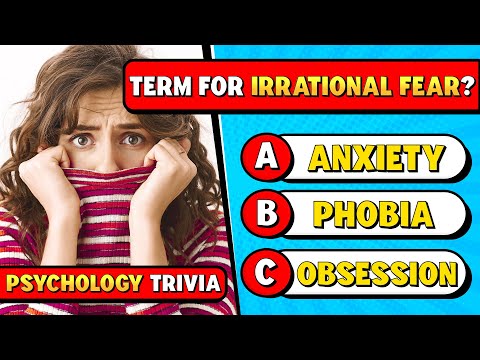
Hey! So, you ever find yourself wondering just how much you really know about your own mind? Yeah, me too. It’s wild how complex our brains are, right?
Well, how about we put that curiosity to the test with a fun little psychology quiz? Seriously, it’s a great way to see what you actually know and maybe learn something new along the way.
You might be surprised by some of the questions. Or maybe you’ll totally ace it—and that’s cool too! Either way, it’s gonna be a good time. So grab a comfy seat and let’s see what you’ve got!
Take Our Free Online Psychology Quiz to Test Your Mental Health Knowledge!
So, you might have stumbled upon this cool idea—taking a free online quiz to test your mental health knowledge. Sounds interesting, right? But what are these quizzes really all about? Let’s break it down.
Firstly, these quizzes usually come packed with questions on various topics in psychology. They can cover anything from mental health disorders to basic psychological theories. You’ll find yourself answering questions about things like anxiety, depression, or even broader concepts like cognitive behavioral therapy.
Now, you might be wondering, “What’s the point?” Well, taking these quizzes can help you gauge how much you actually know about mental health. It’s kind of like a little self-checkup for your brain! You might think you know a lot, but then you hit a question that makes you go, “Wait… what’s that?”
But here’s the catch: while it can be fun and educational to take these quizzes, remember they’re not a substitute for professional help. They’re more of an informal way to learn than they are any kind of diagnostic tool. So if something strikes a chord with you or brings up feelings you weren’t expecting—like when I took one and realized I had some misconceptions about PTSD—it might be worth chatting with someone who knows their stuff.
You’ll usually find questions laid out pretty simply. For example:
- What is the primary symptom of depression?
- Which psychological approach focuses on observable behavior?
- How does anxiety manifest in different people?
These kinds of questions get at the heart of things we experience or see around us every day. It’s eye-opening when you realize how little—or how much—you truly know.
Something else that’s great about these quizzes is that they often include explanations for each answer after you’ve finished. So even if you got it wrong (hey, it happens!), you’ll learn something new right then and there.
And let me tell ya—being educated about mental health is super important! The more we know, the better equipped we are to support ourselves and others. Imagine having a friend who opens up about feeling anxious all the time; understanding what that means helps create empathy and connection.
In summary, taking one of those free online psychology quizzes can be fun and enlightening—you get to test your knowledge while learning new stuff along the way. Just keep in mind that they’re not professional assessments or replacements for therapy. Hopefully, after taking one, you’ll feel inspired to dive deeper into understanding mental health… because there’s always more to learn!
Challenge Yourself: Take Our Fun Online Psychology Quiz to Boost Your Mental Health Knowledge
Trying your hand at a psychology quiz can be a fun way to challenge yourself while picking up some valuable knowledge about mental health. Seriously, quizzes are like little brain workouts! They help you spark curiosity about how our minds work and the various emotional experiences we go through.
Now, let’s talk about why quizzes kickstart your learning. They engage you, right? You’re not just passively reading—you’re actively thinking. It’s like being in a conversation where you’re piecing together info instead of just soaking it in. When you answer questions, it gets that mental muscle flexing!
Taking a simple online quiz can cover a range of topics. Here are some fun examples:
When I first tried out a psychology quiz, I thought it would be easy peasy. But then I stumbled upon a question about the symptoms of generalized anxiety disorder and totally blanked! It was an eye-opener for me—realizing I needed to brush up on my knowledge made me more aware of how common these issues are.
The great thing is, once you take the quiz and see which areas you’re rocking in or where you need to improve, it gives you motivation. You might want to delve deeper into specific topics. Maybe you’ll look up resources or even decide to chat with someone knowledgeable or take classes.
Also, keep in mind that learning isn’t linear. Like, sometimes things click one day and then the next week you’re scratching your head again over similar concepts! That’s normal—our brains are complex and filled with twists and turns.
Plus, knowledge empowers you to support others too! If you’ve got friends or family who struggle with mental health issues, having some facts under your belt can help you understand their experience better. Thoughtful conversations matter!
In short, taking an engaging online psychology quiz boosts not only your knowledge but also opens doors for deeper understanding of yourself and others around you. And who knows? It could even inspire someone else to learn more as well!
Challenge Your Mind: Take Our Free Psychology Quiz and Enhance Your Knowledge!
Sure! Testing your knowledge with a psychology quiz can actually be pretty fun and enlightening. It’s like a little mental workout. So, let’s break it down.
What’s the point of a psychology quiz? Well, for starters, it’s a great way to gauge what you know about the mind and behavior. You might think you know everything there is to know, but quizzes can surprise you. Maybe you’ll stumble on something intriguing that challenges your beliefs or makes you think differently.
Quizzes can cover all sorts of topics. You might encounter questions about different psychological theories—like Freud’s ideas on the unconscious mind or Skinner’s work with behaviorism. These topics can be dense, but quizzes simplify them into bite-sized bits that are easier to digest.
There’s also something about competition. Whether you’re going solo or against friends, there’s this motivating factor when you’re trying to beat someone else’s score. Plus, it opens up discussions—you can chat with someone after the quiz and share thoughts on tricky questions. You might find out they think differently about an answer than you do!
Here’s a little snapshot of what to expect from a psychology quiz:
- Theory-based questions: These ask about major psychological theories and who created them.
- Famous experiments: Questions could cover iconic studies like the Milgram experiment or Pavlov’s dogs.
- Mental health disorders: You might be asked about symptoms of anxiety or depression—important stuff!
- Cognitive psychology: Expect puzzles related to memory processes and decision-making skills.
Remember that learning never truly stops. Even if you’re already into psychology, there’s always more around the corner. It could spark an interest in reading more books or diving into current research articles that catch your eye.
So hey, next time you feel like stretching your brain a bit—or just passing some time—grab that quiz! You could end up learning something new, having some laughs, and maybe even challenging some old ideas you’ve held onto for ages. Who knows? You may discover a passion for delving deeper into human behavior!
You know, sometimes it’s easy to forget just how much we actually know about psychology and ourselves. Like, take a moment and think about it: everything we’ve learned about emotions, behaviors, and the mind—it’s pretty fascinating stuff. So, why not throw a little quiz into the mix?
I recently took one for kicks. Honestly, I wasn’t sure what to expect. I mean, I read books and articles all the time, but when you’re answering questions about things like cognitive biases or attachment styles? It gets real. Some of those questions totally stumped me! Like, I thought I was on solid ground with social learning theory… turns out I need to brush up on some details.
And here’s a little story for you. A friend of mine took a quiz while we were chatting over coffee. She got tripped up by one question that asked about the difference between intrinsic and extrinsic motivation. We ended up diving into a full-on discussion! It was cool to see how talking it out helped us both understand those concepts better.
But here’s the kicker: quizzes can be super eye-opening. They don’t just test your knowledge—they can also shine a light on areas where you might wanna dig deeper or things you weren’t even aware of before. It’s like discovering new paths in your own mind! Plus, they always come with that little thrill of seeing if you actually remember what you’ve read or learned.
So if you’re ever feeling curious or maybe a bit sluggish in your understanding of psychological concepts, why not test yourself? It could spark some interesting conversations or even inspire you to learn something new—seriously, what’s not to love about that?