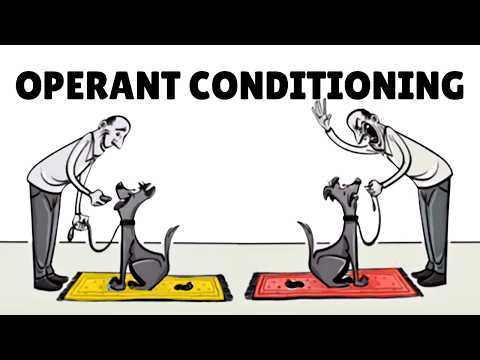
So, you know how sometimes you wonder why you do the things you do? Like, why you can’t resist having that extra slice of pizza or why your dog gets all excited when it hears the treat bag crinkle?
That’s where operant conditioning comes in. It’s this cool idea from psychology about how we learn through rewards and consequences. Super simple but super powerful!
Think of it like training a puppy. You give a treat when it sits, and boom—it learns! But it’s not just for pups. Seriously, this stuff applies to our everyday lives too.
Whether it’s getting motivated for work or breaking a bad habit, operant conditioning has your back. Let’s break it down together and see how this concept shows up in our own little corners of the world!
Applying Operant Conditioning in Everyday Life: Practical Tips for Positive Change
Using operant conditioning in our everyday lives can be super helpful for making positive changes. So, let’s break it down, yeah? Operant conditioning is all about how behaviors are influenced by reinforcement or punishment. Basically, if you do something and get a reward, you’re more likely to do it again. If you get a negative consequence? Well, chances are you’ll think twice about repeating that behavior.
Now, here are some ways you can apply this cool concept in your daily life:
- Positive Reinforcement: This means rewarding yourself or others when something good happens. Like, if you stick to your workout plan for a whole week, treat yourself to that fancy coffee you’ve been eyeing. It makes you want to keep going!
- Negative Reinforcement: Not to be confused with punishment! This is about removing something unpleasant when a desired behavior happens. For example, if doing the dishes means you can watch your favorite show without feeling guilty, then BOOM—you’re incentivized to wash those dishes!
- Punishment: Here’s where it gets tricky. Applying punishment shouldn’t be about being harsh; it’s more about reducing unwanted behaviors. Let’s say your kid keeps leaving their shoes everywhere. If there’s a consequence (maybe no playtime until they pick up), they might learn to put their shoes away.
- Shaping Behavior: This is all about taking baby steps toward the final goal. If you’re trying to write every day, start by rewarding yourself for just writing one paragraph! Gradually increase the goal as you build that habit.
You know what I find interesting? It’s not just about changing behavior for ourselves but also how we can use these techniques with friends or family members. Ever tried using positive reinforcement with a coworker? A simple “Hey! Great job on that presentation!” can boost morale and encourage them to keep up the good work.
A while back, I had a friend who struggled with procrastination—which we all deal with from time to time! She decided to apply positive reinforcement by tracking her tasks and treating herself whenever she completed something on time. Before she knew it, she was smashing her deadlines and enjoying her evenings without the stress hanging over her.
And here’s the thing: consistency is key. You can’t just try this stuff once and expect magic—it’s got to be persistent over time. Just like watering plants; do it regularly and watch them thrive.
So go ahead! Play around with operant conditioning in your life—it can lead to some pretty neat changes whether you’re working on personal goals or helping those around you too!
Exploring Three Real-World Applications of Operant Conditioning in Mental Health
Operant conditioning might sound like a fancy term, but it’s all about learning through consequences. Basically, it means that behaviors are more likely to happen again if they’re followed by rewards—and less likely if they’re followed by punishments. This concept can be applied in various ways in mental health settings. Let’s look at three real-world applications of operant conditioning that really stand out.
1. Behavioral Therapy for ADHD
When kids with ADHD struggle to focus or sit still, it can be pretty chaotic. One effective approach is using operant conditioning in behavioral therapy. For example, children might earn points for completing tasks or staying attentive during class. These points can then be exchanged for rewards—like extra playtime or small treats.
This method encourages positive behavior and teaches the kids that their efforts are noticed and appreciated. Over time, they start to see focusing as something positive rather than just a chore.
2. Aversive Conditioning for Substance Abuse
Now, aversive conditioning takes things up a notch—it involves using unpleasant experiences as a way to discourage unwanted behaviors, like substance abuse. In this case, someone might take a medication that makes them feel really sick if they drink alcohol.
This creates an immediate consequence that’s hard to ignore! Over time, the idea is that the person learns to associate drinking with feeling bad—instead of the usual “fun” association—and hopefully they’ll choose not to drink at all.
3. Reinforcement Strategies in Group Therapy
Group therapy often uses operant conditioning without anyone even realizing it! When someone shares their feelings or supports another group member, the whole group can make an effort to reinforce that behavior with positive feedback—like applause or encouraging words.
This creates a safe space where you feel motivated to share and connect more deeply with others. As you continue sharing positive experiences and receiving affirmation from your peers, it promotes further open discussions.
So there you have it—operant conditioning isn’t just theory; it’s actively shaping how people learn and grow within mental health contexts every day! You can see how these strategies help individuals develop healthier habits while also creating supportive environments.
Understanding Operant Conditioning: Practical Examples You Can Use at Home
Operant conditioning is a term that can sound a bit fancy, but at its core, it’s really just about how we learn from the consequences of our actions. You know how when you do something good and get a reward, it makes you want to do it again? Well, that’s operant conditioning in action.
So what exactly is it? It’s all about using rewards and punishments to shape behavior. There are two major players here: reinforcements (which can be positive or negative) and punishments (also positive or negative). Positive reinforcement is giving something nice when you want a behavior to happen more often. Negative reinforcement is taking away something unpleasant for the same reason. On the flip side, positive punishment adds something unpleasant when you want to decrease a behavior, while negative punishment takes away something pleasant.
To put this into perspective, let’s say you have a dog who loves treats. Every time he sits on command, you give him a treat. That’s positive reinforcement. He’s more likely to sit again because he wants that yummy treat! Alternatively, if he jumps on guests and you take away his favorite toy every time he does it, that’s negative punishment. Now he knows jumping means losing playtime.
Now, let’s talk practical examples at home:
- Homework Time: If your kid finishes their homework without a fuss and gets 30 minutes of screen time after, that’s positive reinforcement! They’re likely to repeat that behavior.
- Cleaning Up: Maybe your roommate annoys you by leaving dirty dishes everywhere. If each time they clean up, you offer to make dinner for them (a little bribery never hurt), you’re positively reinforcing the cleaning!
- Pet Training: Like I said earlier with dogs—if your pet stays off the couch and gets treats or cuddles afterward, they’re going to keep staying off the couch.
- Self-Care Routines: Set up a little chart for yourself where you reward yourself with something enjoyable (like a donut) after each workout—or whatever makes you happy! That’s solid self-positive reinforcement.
It’s also important to mention those punishments, even though they can get controversial. Applying them too harshly can lead to fear rather than learning—the goal is always growth.
Just remember: consistency matters! If you’re going to add rewards or consequences into your routine, make sure they’re applied regularly so people (or pets!) know what’s expected. And hey, if things don’t seem to work out as planned? It’s okay; everyone learns at their own pace!
So yeah, operant conditioning can really help shape behaviors in everyday life—understanding it gives you tools for better relationships with pets and people alike!
Operant conditioning is one of those concepts that sounds all technical and fancy, but honestly? It’s kind of everywhere in our daily lives—if you pay attention. Basically, it’s about how our behaviors are shaped by consequences. You do something, get a reward or a punishment, and that either encourages you to do it again or steer clear next time. Super simple, but super powerful.
I remember back when I was trying to get my dog, Max, to stop barking at every little sound outside. So I decided to give him treats whenever he stayed quiet during our evening walks. At first, he looked at me like I was nuts for rewarding him for being quiet. But after a few days? He caught on fast! The barking dropped like a lead balloon. That’s operant conditioning in action—teaching through rewards.
And it’s not just pets. Think about kids and their behavior at home or school. When they do something well—like finishing their homework or sharing toys—they might get praise from parents or teachers, right? That positive reinforcement can be such a game changer for encouraging good habits.
But here’s the thing: it’s not all about the sweet rewards. There’s also the flip side with punishments. If a kid throws a tantrum and gets sent to their room—well, that might just make them think twice about acting out in public later on. So yeah, there’s a balance between both sides of this operant conditioning coin.
Even in workplaces, you see it play out all the time with promotions or bonuses for hard work. People are motivated to excel when they know there’s something positive waiting for them at the end of the tunnel.
So next time you’re wondering why your dog suddenly stops barking or why kids behave better after getting some praise—think of operant conditioning working its subtle magic in real life!