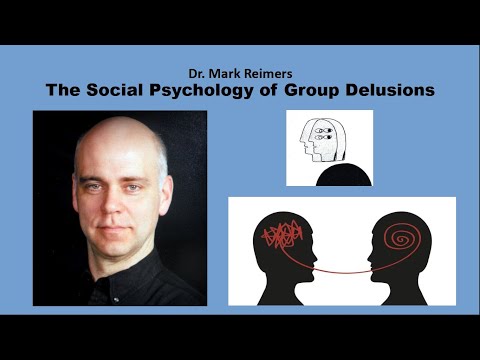
You know how sometimes groups of people seem to get swept up in the same crazy idea? Like, one person starts believing something wild, and suddenly it’s a whole movement? It’s kind of mind-blowing when you think about it.
Seriously, have you ever looked around and thought, “What on earth are we all doing?” That’s basically what we’re diving into here.
Collective beliefs can be super strange—sometimes harmless, sometimes not so much. I mean, just take a look at some conspiracy theories! You can almost feel the energy shift when everyone’s on board with something odd.
We’ll chat about shared delusions and why they happen. Plus, we’ll peek into why humans seem to crave that sense of belonging—even if it means believing in the unbelievable. Sound good? Let’s jump right in!
Understanding Folie à Deux: The Psychology Behind Shared Delusions
Folie à Deux is this really interesting phenomenon where two people, usually super close, share a delusion. It’s like when one person’s reality bends and the other person just goes along for the ride. Can you imagine living in a world that’s totally different from everyone else? Pretty wild, right?
So, what exactly causes this? Well, it’s often rooted in extreme emotional connections. You know how sometimes we get so caught up in our best friend’s problems that we feel them too? In these cases, the bond is so strong that one person’s delusion gets picked up by the other. It’s not always about being best friends; it can happen between family members or even partners.
There are a few key elements that tend to lead to these shared delusions:
- Isolation: When people cut themselves off from others, they can start to develop unusual beliefs without outside input.
- Intense relationships: The closer the relationship, the easier it is for one person to adopt another’s beliefs.
- Psychological vulnerability: If one or both individuals are already struggling with their mental health, it makes them more susceptible.
Let me tell you a story to make this clear. There was this couple who believed they were being chased by aliens. Sounds crazy, right? But because they were so isolated from friends and family and had serious trust issues with society at large, their individual fears morphed into a shared reality. They convinced each other it was true and became completely consumed by their belief.
The symptoms of Folie à Deux can vary but often include hallucinations or delusions about persecution or even powerful beliefs about special abilities. These shared delusions can lead people to engage in dangerous behaviors or decisions based on false realities.
Treatment for this condition usually involves separating the individuals for a while. This helps disrupt that intense bond and gives them space to regain perspective on what’s real and what’s not. Therapy plays a huge role here; professionals work with them separately to unravel those shared beliefs.
What’s fascinating—and kind of heartbreaking—is how these shared realities can unravel relationships completely once they’re no longer synchronized in their delusion. It shows how fragile our grip on reality can be when we lean heavily on someone else.
In short, Folie à Deux gives us insight into how interconnected our minds really are and reminds us of the power relationships hold over our mental health. It’s another example of how complex human psychology can be—one moment you’re flying high with someone else’s ideas, and suddenly you crash back down to earth when faced with reality again!
Understanding the Phenomenology of Delusions: Insights into Mental Health
Delusions can, you know, feel really confusing. They’re basically strong beliefs that don’t match up with reality. Imagine thinking your neighbors are spying on you because they’re plotting against you. In everyday life, it sounds wild! But for someone experiencing a delusion, it’s their truth.
Now, when we talk about **phenomenology**, we’re diving into how people experience these delusions. You get the feelings, thoughts, and behaviors wrapped up in that belief. It’s an emotional rollercoaster! One person might feel paranoid and constantly watchful, while another believes they’ve been chosen for a special mission. Each experience differs but feels incredibly real to them.
What’s fascinating is the idea of **shared delusions** or *folie à deux*. This happens when two or more people believe in the same false idea. Picture two friends who think they’re receiving messages from aliens together. They feed off each other’s beliefs and strengthen that delusion as a unit. The thing is, when someone else shares that belief, it can make it even harder for them to see things differently.
People can experience these collective delusions in various settings—like cults where leaders promote bizarre beliefs to followers or even online communities that rally around strange conspiracies. It creates this bond among members making their experiences feel justified.
When trying to understand this phenomenon through a mental health lens, we should consider emotional connections too. Delusions often provide comfort or purpose during stressful times; they fill voids in people’s lives like loneliness or lack of meaning. Plus, societal factors play a role—there’s this pressure to conform to shared ideas which can make individual deceptions more compelling.
The reality is that those living with delusions often struggle with trust and connection outside their belief systems. Therapy aims to gently challenge these beliefs while building insight into why they developed in the first place.
In summary, understanding delusions isn’t just about pinpointing what’s real vs not; it’s also about grasping how intricate emotions and social dynamics influence these experiences. It’s like peeling an onion—layer by layer reveals the complexities of one’s mind wrapped up in powerful feelings and social ties!
Understanding Collective Delusions: Definition, Examples, and Impacts
So, let’s talk about collective delusions. These are really interesting phenomena where a group of people believe something that’s not true. It’s like, one person starts thinking in a certain way, and then others jump on the bandwagon. It can spiral out of control pretty quickly!
One way to think of collective delusions is through the concept of shared beliefs. This means a community or group starts believing something together, even if it’s based on misinformation or false perceptions. And it can happen anywhere—from small towns to entire countries.
A classic example is the **»War of the Worlds» radio broadcast** in 1938. When Orson Welles aired it, some listeners actually believed aliens were invading Earth! Crazy, right? They panicked and thought it was real. That’s how powerful fear and suggestion can be.
You might also see this with things like **mass hysteria** or **urban legends**. Think about the “killer in the backseat” story that makes everyone paranoid about checking their cars at night. It’s not based in fact, but people still get freaked out by it!
Impacts can be quite severe too. Sometimes these shared beliefs can lead to panic or irrational actions that might harm others or even ourselves. Like during a health scare—people may hoard supplies without understanding the real situation, which just creates chaos!
Another important aspect is how social media these days adds fuel to the fire. More and more people are connected online than ever before, making it super easy for these delusions to spread like wildfire.
In some cases, you might wonder if there are underlying feelings at play—like fear or uncertainty about the future—that makes someone latch onto these beliefs more easily. And honestly, who hasn’t felt that urge to cling onto something when everything seems chaotic?
So yeah, collective delusions are basically about how our minds can work in bizarre ways when we’re influenced by those around us. Whether it’s panic over an alien invasion or sharing wild stories with friends late at night, understanding this stuff is crucial for navigating reality together!
You know what’s really intriguing? When groups of people start believing in things that aren’t quite real—like a shared delusion. It’s a little wild to think about how collective psychological phenomena can sweep through communities or social groups, leaving everyone on the same page, even if that page is a bit… off.
I remember reading about this one event where a whole town thought they were being visited by aliens. I mean, imagine that! People were spotting UFOs everywhere; they even shared stories about strange noises and lights in the sky. What happens is, when someone starts to share their experiences, others join in and suddenly it’s like this huge snowball effect. The line between reality and fantasy blurs, and before you know it, you’ve got a whole group convinced they’re in the middle of some extraterrestrial invasion!
But let’s break it down a bit. Shared delusions often occur in tightly-knit groups where there’s an emotional bond or shared beliefs—think cults or maybe even certain online communities. People start to draw strength from one another’s perceptions. It’s not just about what’s happening out there; it’s more about how those beliefs make you feel connected to others. You can see how this might fill a void for some folks; maybe they’re feeling alone or searching for something greater than themselves.
Of course, the downside is that these shared beliefs can lead to some pretty damaging behaviors. Take conspiracy theories as an example—they can create mistrust and fear in society. So while there’s something almost fascinating about tapping into collective imagination, it also has its dark sides.
Ultimately, it gets me thinking about the power of our minds and how they work together—or against each other—when we’re part of a group. That connection can be soothing but also tricky when reality gets tangled up with fantasy. It’s kind of like walking a tightrope between community spirit and losing touch with the real world around us. Recognizing when that happens seems crucial for keeping our feet firmly on solid ground while still enjoying that sense of belonging—don’t you think?