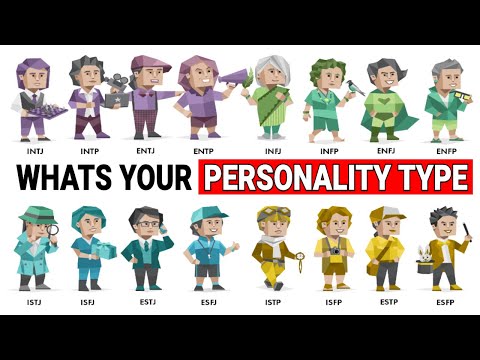
You know how sometimes you meet someone and instantly click? Or, like, you just can’t figure out what makes someone tick? That’s where personality types come in.
It’s pretty wild to think about how different we all are. Seriously, our personalities can shape our thoughts, feelings, and even how we handle stress.
So, let’s chat about the sixteen personality types. Understanding these can be a total game-changer in mental health. You might discover stuff about yourself or your friends that just clicks.
Imagine realizing why your buddy is all chill while you’re flipping out over the smallest thing. Or why certain conversations always feel like pulling teeth.
Here’s the scoop: these types aren’t just labels—they’re tools that help us understand ourselves and others better. Ready to take a peek into this colorful world?
Unlocking Insights: What the 16 Personality Test Reveals About You
The 16 Personality Test, often called the Myers-Briggs Type Indicator (MBTI), offers a fascinating look into our personalities. It’s based on Carl Jung’s theory of psychological types. You know, that whole introvert/extrovert thing? Well, it goes deeper than just that.
So here’s the scoop: the test categorizes people into **16 distinct personality types**. Each type is made up of four dichotomies. They’re really like guiding lights that show how people interact with the world and make decisions.
First off, let’s break down these four sets:
- Introversion (I) vs. Extraversion (E): This one’s about where you get your energy from. Introverts tend to recharge by spending time alone, while extroverts thrive in social situations.
- Sensing (S) vs. Intuition (N): This deals with how you take in information. Sensing folks focus on concrete details and facts, while intuitive types prefer to think about possibilities and big-picture ideas.
- Thinking (T) vs. Feeling (F): This dichotomy highlights decision-making styles. Thinkers rely on logic and objective criteria; feelers prioritize personal values and how decisions will affect others.
- Judging (J) vs. Perceiving (P): Finally, this last pair looks at lifestyle preferences. Judgers favor structure and planning; perceivers enjoy spontaneity and flexibility.
Now, combine these letters together to find your personality type—like ESTJ or INFP—and bam! You’ve got a snapshot of who you are.
One thing that’s often overlooked is how understanding your personality type can help in mental health situations too! For example, if you’re an INFP—known for being idealistic and empathetic—you might find yourself emotionally drained after a long day spent helping others without much time for yourself. Recognizing this pattern could encourage you to set aside regular «me-time» for recharge.
But here’s where it gets even cooler:
Understanding these personality types not just helps in everyday life but can also play a role in therapy! A therapist who knows your type might tailor their approach to suit your style better. For instance:
- If you’re an INTJ, they might present concepts more logically rather than emotionally.
- If you’re ESFJ, they could focus more on relational aspects of therapy since you value connection.
The nuances offered by the 16 Personality Test mean it can serve as a helpful tool in navigating relationships too; both platonic and romantic ones! Understanding that your friend is an ESTP—they love adventure—can remind you to be spontaneous with them instead of sticking to routine plans.
You see? It’s not just about identifying quirks or traits—it leads us toward better communication and connection with each other.
So what’s the bottom line?
The 16 Personality Test isn’t perfect—it won’t define every single aspect of who you are—but it can provide valuable insights into your behavior and emotional responses. Plus, knowing this stuff could lead to stronger relationships or improved self-care habits!
And hey, if nothing else, learning about different personality types can be a fun way to explore yourself—and while you’re at it, bond with others who share your traits or challenge them in enlightening ways!
Takeaway? We all have things we bring to the table—and understanding those things makes life just a little bit easier for everyone involved!
Exploring Personality Types: Which Ones Are Most Susceptible to Mental Illness?
When we talk about personality types and mental health, it’s important to understand that not all personalities are created equal when it comes to being vulnerable to mental illness. You see, specific traits can make some people more susceptible to certain issues.
To break this down a bit, let’s highlight a few key personality types and how they might fare in the mental health department:
Now, think about your friend who always seems composed but eventually breaks down during stress. That’s a classic case of a Type C personality where the pressure just builds up.
Moving on to the **Myers-Briggs Type Indicator** (MBTI) which adds another layer to this discussion:
So how do you tie this back to mental illness? Well, different personalities react differently in stressful situations, which can play a big role in whether someone develops conditions like depression or anxiety.
Let’s talk about extraversion versus introversion for a second. Extraverts generally have larger social networks which gives them support when times get tough. But introverts may struggle because they often deal with issues internally rather than reaching out.
Take my friend Jake—he’s an introvert who’s super creative but tends to isolate himself when he’s feeling low. Over time, this pattern has made coping harder for him because he doesn’t seek that external support.
Then there’s the emotional side of things; **highly sensitive people** tend to feel emotions more deeply. This can make them more susceptible to mood disorders since everyday stresses hit harder for them.
However, it’s crucial not to box people into categories too rigidly! Just because certain personality traits seem linked with mental health struggles doesn’t mean everyone fits the mold or will experience difficulty.
It’s all about finding balance—maybe an extroverted Styler learns mindfulness from an introverted Analyst. Being aware of our tendencies helps us cultivate healthy responses instead of letting our personalities run amok.
In short, different personality types have different vulnerabilities when it comes to mental health challenges like anxiety or depression. Recognizing these patterns isn’t just helpful—it creates room for understanding ourselves and each other better in this journey called life!
Exploring Personality Types in Mental Health: Understanding Their Impact on Well-Being
Understanding personality types can really open up a new way of looking at mental health. It’s like having a map that guides you through your emotional landscape. So, let’s break this down, shall we?
First off, you’ve got the **16 personality types**—thanks to the Myers-Briggs Type Indicator (MBTI). This framework classifies personalities into categories based on four different preferences: where you get your energy from, how you take in information, how you make decisions, and how you prefer to organize your world. Sounds simple enough, right? But the thing is, these types can influence how we experience stress and joy.
Stress Management is one big way personality types come into play. For instance:
- Introverts may need more alone time to recharge when life gets overwhelming.
- Extroverts, on the other hand, tend to thrive off social interactions and could feel drained without them.
You see? Each type has its own way of dealing with tough times.
Then there’s communication style. Think about it this way: Some people are all about directness and clarity—like the **Thinking** types. They might tackle problems head-on. Others might lean towards emotions and empathy—these are often **Feeling** types who navigate conversations with care and sensitivity. This doesn’t mean one is better than the other; it’s just about what works for each person!
Now let’s talk about relationships. Different personality types can lead to different dynamics in friendships or romantic partnerships. For example:
- An **ESFJ**, who values connection and harmony, might feel stressed if their partner is an independent **INTP** who prefers distance.
- This difference can create misunderstandings but also opportunities for growth if both parties are willing to adapt.
It’s like a dance; sometimes you step on toes but learn new moves over time!
Then there’s mental health awareness itself. Certain personality traits can make some folks more prone to specific issues. For instance:
- The more anxious **NFs** (Intuitive-Feeling types) might find themselves overthinking situations more often.
- Meanwhile, some **STJs** (Sensing-Thinking Judging) may have trouble expressing their feelings openly.
Recognizing these tendencies helps in finding better coping strategies.
Let’s also think about career choices. Your personality type can steer your job path too! Someone with an adventurous spirit like an **ESTP** might thrive in fast-paced environments like emergency rooms or sales jobs. In contrast, a methodical planner such as an **INTJ** may shine better in research or strategy roles.
Lastly, consider this: self-awareness is key! Understanding your personality type helps you recognize why you react the way you do in various situations—whether it’s stress at work or relationships with friends.
Overall, exploring these personality types in relation to mental health truly illuminates how we interact with ourselves and the world around us. It’s kind of enlightening when you think about it! Embracing this knowledge opens doors for greater personal growth and well-being.
You know, personality is a big deal when it comes to understanding yourself and others, especially in mental health. It’s like peeling an onion—there are layers you can’t see at first. One interesting way to look at personality is through the lens of the Sixteen Personality Types, which kinda breaks down how people think and behave into distinct categories.
So, let’s say you’re someone who tends to keep everything inside, processing emotions quietly while being logical about things. You might fall into a type like INTJ or INTP. I had a friend like that once. She was super smart but would often struggle to connect with others emotionally because she was more focused on analyzing situations than feeling them. Over time, though, she learned that her type didn’t define her completely. She started working with a therapist who helped her appreciate her emotional side too.
But here’s the thing: knowing your type can be eye-opening! It might give you insights into why certain situations feel overwhelming or why you click better with some people than others. Like, if you’re an extroverted feeler (like an ESFJ), being around others energizes you and helps boost your mood. But if you’re more introverted and prefer quiet reflection, social gatherings can leave you drained.
These personality types even help therapists tailor their approaches to fit you better. If they know your style—like whether you’re more intuitive or sensing—they can craft strategies that resonate with your natural inclinations. It’s not a one-size-fits-all deal; everyone has unique quirks!
Still, it’s important not to box yourself in too much with these labels. Your personality type can offer valuable insights but shouldn’t limit your potential for growth or change. And remember: life is messy! We change over time based on experiences and relationships, so what fits today might evolve tomorrow.
In the end, unveiling these personality types isn’t just about categorizing people; it’s about deepening understanding—of ourselves and those around us—and fostering empathy along the way.