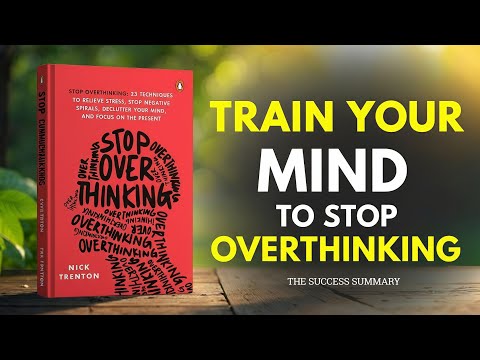
Hey, have you ever found yourself stuck in your head, just spiraling into a million thoughts? Yeah, we’ve all been there. It’s like your brain won’t shut up, right?
Nick Trenton gets it. In «Stop Overthinking and Find Peace of Mind,» he’s got some solid stuff to share about breaking free from that mental hamster wheel.
You know how sometimes you just need someone to say, “Chill out a bit”? Nick does that. He offers real talk and practical ways to get some peace back in your life.
So if you’re ready to kick overthinking to the curb and make some room for calm, this book might just be what you need.
Stop Overthinking: A Comprehensive Summary of Effective Strategies and Insights
Overthinking can feel like a never-ending loop, right? You get stuck in your head, second-guessing every little decision or replaying conversations. It’s exhausting. So, let’s explore some strategies to help you break free from that cycle and find some peace of mind.
Recognize the Triggers. First things first, you gotta know what sends you into overthinking mode. Is it when you’re stressed about work? Or maybe after a tough argument with a friend? Jot down those situations when your thoughts start spiraling. Once you spot those triggers, it’s easier to manage them.
Practice Mindfulness. This is all about being present instead of letting your mind race ahead into «what-if» scenarios. You might try simple breathing exercises or even meditation. Just focus on your breath: inhale for four counts, hold for four, and exhale for six. It sounds easy but can really ground you in the moment.
Challenge Your Thoughts. When those pesky thoughts creep in, question them! Ask yourself if they’re realistic or just worst-case scenarios you’re imagining. Let’s say you’re worried about messing up at work; think about the times you’ve done well instead. This shift can seriously lighten that mental load.
Set a Time Limit. Ever found yourself stuck overthinking something for hours? Try setting a timer—maybe 10 minutes—to think about whatever’s bothering you. After that time’s up, move on to something else! It helps create boundaries around your thought patterns.
Engage in Distractions. Sometimes, getting swept up in activities can pull you out of overthinking mode. Whether it’s exercising, drawing, or watching funny videos online—find what works for you and dive into it.
Talk It Out. Sometimes just bouncing ideas off a friend can help clear your mind. They might offer insights or even help put things into perspective! You’d be amazed at how just saying stuff out loud makes everything feel lighter.
Avoid Information Overload. In our digital age, we have constant access to info which can lead to overthinking «the facts.» Set boundaries on how much information you consume regarding any one issue; less is sometimes more!
Accept Imperfection. The thing is: no one is perfect! Accepting that mistakes are part of life allows us to let go of unrealistic expectations we set for ourselves. Give yourself permission to be human—it’s totally okay!
Just remember that it’s normal to overthink sometimes—it happens to everyone in one way or another! With some practice and patience using these strategies, you’ll find yourself breaking free from those overwhelming thought patterns and moving towards greater peace of mind. You got this!
Unpacking ‘Stop Overthinking’: Key Insights and Takeaways for a Clearer Mind
Overthinking. We all do it, right? It’s that all-too-familiar cycle where your mind just won’t quit. You start analyzing every little thing, and before you know it, *bam*, you’re trapped in a mental maze. “Stop overthinking,” they say. But how do we actually do that?
To get a clearer mind, let’s unpack some insights on this whole overthinking thing.
Understanding Overthinking
Overthinking is mostly about dwelling on the past or worrying about the future. It feels like your brain is stuck on repeat, replaying the same thoughts over and over again. Think about a time when you replayed a conversation in your head, wishing you’d said something differently or worried about what someone might think of you. That’s classic overthinking!
Common Triggers
Often, specific situations spark our overthinking tendencies. Some common triggers include:
It’s like your mind decides to throw a party for all those worries—but no one really wants to be there!
The Cost of Overthinking
Staying in that thought loop can seriously mess with your peace of mind and even affect your physical health. You might feel drained or anxious; it can lead to insomnia too! Just think back to a night when you couldn’t sleep because your mind wouldn’t shut up.
Shifting the Focus
So how do we shift gears? One simple way is practicing mindfulness. This means bringing your attention back to the present moment instead of getting lost in “what if” scenarios. Here’s an exercise: when thoughts swirl around, take a deep breath and focus on what you’re feeling physically—like the ground beneath your feet or the air filling your lungs.
Setting Time Limits
Another helpful tip is setting aside time specifically for overthinking. Seriously! Give yourself, say 10 minutes to worry and think through something—then move on! When those unwanted thoughts pop up later, remind yourself that you’ve already done some thinking on it.
Taming Negative Thoughts
You can also challenge negative thoughts directly by asking yourself questions like: “Is this thought really true?” or “What evidence supports this idea?” It sounds simple but flipping these thoughts can ease anxiety levels big time.
Acknowledgment Matters
Lastly, just recognizing that you’re caught in an overthinking spiral can help lift some of that weight off you shoulders! Acknowledge what’s happening without judgment—you’re not alone; most people deal with this at some point.
So there you have it—a few key insights into stopping that pesky habit of overthinking. Life’s complicated enough without adding extra mental clutter! Try these strategies out; who knows? You might find that clearer headspace you’ve been searching for!
Conquer Overthinking: 7 Effective Strategies to Find Mental Peace
Overthinking can feel like a storm in your mind. It’s that nagging voice that keeps playing scenarios on loop, right? You might find yourself caught in endless “what ifs” or replaying conversations from days ago. It can be exhausting! But there’s hope. Here are some effective strategies to help you conquer overthinking and find a little more peace.
1. Acknowledge Your Thoughts
The first step is recognizing when you’re overthinking. Instead of trying to push those thoughts away, take a moment to observe them. Just notice what’s happening in your head without judgment. It’s okay that your mind wants to run wild, but acknowledging it helps you gain control.
2. Set Time Limits
You ever notice how some thoughts just take up way too much time? Give yourself permission to think about something for, say, 10 minutes a day, and then move on. You can even set a timer! When those minutes are up, gently remind yourself that it’s time to switch gears.
3. Practice Mindfulness
Mindfulness is all about being present in the moment, which is like hitting the pause button on overthinking. Try focusing on your breath or engage fully with whatever you’re doing—like really tasting your food or feeling the wind on your skin. It pulls you back from those spiraling thoughts.
4. Challenge Your Thoughts
This one’s interesting. When you catch yourself spiraling into worry, ask if these thoughts are true or helpful? For example, if you’re thinking about how everyone at work hates you after one awkward conversation, remind yourself of all the times people have communicated positively with you.
5. Distract Yourself
Sometimes the best way to deal with overthinking is just to do something else that requires focus! Read a book, go for a walk, or try out that hobby you’ve been putting off—anything that helps shift your attention can be super effective.
6. Write it Down
Journaling can be powerful when it comes to sorting out those swirling thoughts in your head. Writing things down allows you to see them clearly and can often bring relief because you’re taking control of those chaotic feelings instead of letting them swirl endlessly.
7. Seek Support
Don’t hesitate to talk things out with someone—a friend or even a therapist can help put things into perspective! Sometimes just vocalizing what’s going on in your head makes it feel lighter and less daunting.
Finding peace of mind is so much about treating yourself kindly when you’re caught up in overthinking patterns—because let’s be real: we all go through it sometimes! Implementing these strategies could be the key to breaking free from that mental loop and finding some peace again.
You know, overthinking can be a real pain, right? It’s like your brain has a mind of its own, running in circles and getting stuck on the same thoughts. I mean, who hasn’t been there? Picture this: you’re trying to fall asleep, but instead of drifting off, your mind is replaying every awkward thing you said that day. It’s exhausting!
Nick Trenton’s “Stop Overthinking and Find Peace of Mind” really hits home on this issue. He talks about how overthinking not only messes with our peace but can also lead to anxiety and self-doubt. I remember a time when I was so caught up in my head about a decision—big or small, who even knows?—that I forgot what it felt like to just breathe. It’s like being trapped in a mental maze.
Trenton offers some practical ways to break free from that cycle. He emphasizes the importance of grounding yourself in the present moment instead of spiraling into hypothetical scenarios that may never happen. Seriously, how many times have you stressed about something that ended up being a total non-issue? It’s wild!
One thing he suggests is to just write it down. If you’re sitting there ruminating over something that feels like it’s going to swallow you whole, putting pen to paper might just be the release you need. It clears your head and gives you perspective.
Also, he encourages finding activities that bring joy or relaxation without the mental chatter—like going for a walk or picking up a hobby you’ve been putting off for too long. That sounds simple enough but can make such a difference!
It’s all about giving yourself permission to let go of those racing thoughts—seriously hard but totally worth it when you finally find some peace. Life’s too short to be stuck in our heads all the time!