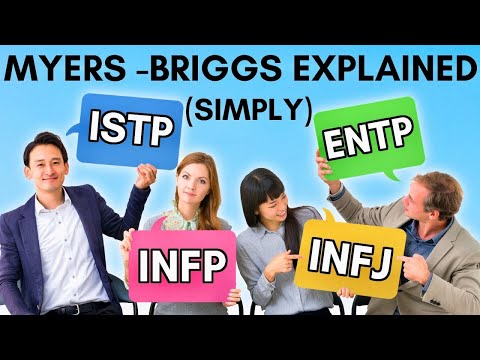
Hey, you! Ever feel like you’re kind of a mystery to yourself? Like, why do you react a certain way in different situations?
Well, let me tell ya about something cool—the TypeFinder Personality Test. It’s a tool that can help you dig into your mind and figure out what makes you tick.
Honestly, it’s kinda like a roadmap for understanding your quirks and how you vibe with others. Think of it as a way to make sense of your thoughts and feelings.
And who wouldn’t want to know more about themselves, right? Stick around! I’ll break it all down for you.
Unlocking Your Potential: Discovering the TypeFinder Personality Test Explained
The TypeFinder Personality Test is one of those tools that tries to help you understand yourself a bit better. It’s designed based on the well-known Myers-Briggs Type Indicator (MBTI), which divides people into 16 different personality types. Now, this isn’t just a quirky quiz you take for fun; it’s built on some serious psychological ideas.
First off, the test looks at four main pairs of traits:
- Introversion vs. Extraversion: Are you more energized by being alone or hanging out with others?
- Sensing vs. Intuition: Do you focus more on concrete details or bigger pictures and possibilities?
- Thinking vs. Feeling: When making decisions, do you lean towards logic or personal values?
- Judging vs. Perceiving: Do you prefer structure and planning, or are you more spontaneous and flexible?
So basically, after answering a series of questions, the test gives you a four-letter code that represents your personality type, like INFP or ESTJ. Each letter tells something about how you interact with the world and make decisions.
It’s pretty cool because knowing your type can help in various areas of life—personal growth, career choices, relationships. For instance, if you’re an INFJ (which stands for Introverted-Intuitive-Feeling-Judging), you might be more suited for roles that involve deep thinking and empathy, like counseling or art.
Now let’s talk about how it feels to take the test and discover your type. A friend of mine was skeptical at first—thought it was all a bunch of fluff. But when she took it, she found out she was an ENFP (Extraverted-Intuitive-Feeling-Perceiving). The description hit home so hard! She started to understand why she thrives in creative environments and struggles with rigid structures at work.
But keep this in mind: no personality test is perfect. They can’t capture every nuance of who you are. People change over time too; what fits now might not fit later. That said, insights from tests like these can lead to those lightbulb moments where everything clicks into place.
In short, if you’re looking for a way to dive deeper into your personality traits and uncover potential paths in life—be it in relationships or careers—the TypeFinder Personality Test might just be worth your time!
Unlocking Self-Discovery: A Guide to Interpreting Your Myers-Briggs Test Results
Self-discovery can feel like a wild ride, right? And tools like the Myers-Briggs Type Indicator (MBTI) can help you make sense of yourself. You might already know your type, but understanding what it means can really level up your self-awareness. So, let’s chat about how to interpret those results.
First off, the MBTI is all about personality types. It breaks it down into 16 different combinations based on four dichotomies:
- Extraversion (E) vs. Introversion (I): This is about where you get your energy from.
- Sensing (S) vs. Intuition (N): This deals with how you take in information.
- Thinking (T) vs. Feeling (F): Here, we see how you make decisions.
- Judging (J) vs. Perceiving (P): This reflects how you prefer to live your life.
Let’s break it down a bit more! You know when you’re in a crowded room and some folks are buzzing with energy while others are quietly observing? Extraverts recharge by socializing, while introverts need that alone time to refocus.
Now, sensing types are like detectives—they notice the details and facts right in front of them. On the flip side, intuitive types think big picture and love connecting ideas that might seem unrelated at first glance.
When it comes to decision-making, thinkers often lean towards logic and objectivity. Feelers usually focus more on people’s feelings and values—like when a friend asks for advice on a big life decision and you’re torn between what sounds practical versus what feels right.
Then there’s judging vs. perceiving! Judging types thrive on structure and planning the future—think of them as planners who love their calendars! Perceiving types embrace spontaneity; they adapt easily to change, kind of like going with the flow instead of sticking to an agenda.
Now that you’ve got your type down—let’s say you’re an INFJ—you might wonder what that really means for you personally. INFJs are known for being compassionate idealists who connect deeply with others but might have rich inner worlds that aren’t always visible on the outside.
It’s easy to get pigeonholed into these categories though, so remember: **your type is not set in stone**! It’s just one piece of who you are as a person. Use it as a tool for growth and self-reflection.
Maybe you’re realizing that your tendency to reflect deeply helps you tackle problems differently than someone who’s more action-oriented? That awareness can help improve relationships or even work dynamics when collaborating with others who have contrasting styles.
One important thing is to consider context—our personalities may shift depending on our environment or experiences. The Myers-Briggs isn’t predicting behavior but rather offering insights into preferences; think of it more like a compass than a map!
So whether you’re feeling confused about career choices or looking for better communication strategies with loved ones, use those MBTI insights as jumping-off points for deeper exploration in therapy or self-reflection techniques, like journaling or meditating.
And hey—don’t be afraid to share your results with friends or family members! You might find that having conversations around these topics can open doors to understanding each other better—and honestly? That can be pretty liberating too!
The journey towards understanding yourself is ongoing. Keep embracing those quirks and traits that make you unique while remaining open to new experiences along the way!
Exploring the Accuracy of TypeFinder: A Deep Dive into Personality Assessment
Personality assessments like TypeFinder can feel like a fun way to get to know yourself better. But, let’s take a moment to unpack how accurate these tests really are, shall we?
First off, TypeFinder is based on the well-known Myers-Briggs Type Indicator (MBTI). It’s all about categorizing you into one of 16 distinct personality types. These types are derived from four dichotomies: Introversion vs. Extraversion, Sensing vs. Intuition, Thinking vs. Feeling, and Judging vs. Perceiving. Pretty cool, right? Each combination creates a unique profile that can give insights into your preferences and behaviors.
However, accuracy is where things get a little murky. The test can sometimes oversimplify complex human personalities into neat boxes. You know how it goes—people are often more nuanced than any test can capture.
Here’s where it gets interesting: Studies show that some people might not fit neatly into one category or might change over time due to different life experiences or personal growth. Life throws curveballs at us, and our personalities can evolve with those changes. So even if you’re identified as an “INFP” today, you might find that label fits less perfectly five years from now!
Also, personality tests typically lean on self-reported data. Like when you answer questions about your preferences, you’re essentially telling the test how you see yourself at that moment in time. But what if that day was an off day? Those results could reflect mood swings rather than true personality traits.
Moreover, there’s the issue of validity and reliability in testing these models. While advocates of the MBTI argue for its usefulness in understanding communication styles and team dynamics, critics point out that rigorous scientific backing for its predictive power is lacking.
It’s essential to remember this: using TypeFinder or similar tests can be helpful as long as you treat them as tools rather than definitive answers about who you are or what you’ll become in life.
To wrap up this exploration:
- TypeFinder is based on MBTI: It tries to categorize us into one of 16 types.
- Accuracy concerns: Personalities are complex; sometimes we don’t fit neatly into categories.
- Self-reporting issues: Your mood on test day might skew your results!
- Scientific backing: While useful for some people, critics call for more rigorous validation.
So basically, using tools like TypeFinder can give you fun insights but keep in mind they’re just pieces of a much bigger puzzle called YOU!
Alright, let’s chat about this thing called the TypeFinder Personality Test. You know, figuring out who you really are can be kind of mind-boggling sometimes. It’s like peeling an onion—layer after layer, and you might even shed a few tears along the way!
So, the TypeFinder test is pretty much like a fun little quiz that gives you insights into your personality type. It’s inspired by the well-known Myers-Briggs Type Indicator (MBTI) but has its own spin on things. Basically, it asks you a series of questions about how you think, feel, and act in different situations. After that, it helps to categorize you into one of 16 personality types based on your answers.
I remember when I first took a similar test; I was nervous as heck! I thought, “What if it tells me I’m a total weirdo?” But honestly? It was actually kind of cool to see myself labeled as “INFP” or something like that—not that I knew what it meant at first! It felt like someone had peeked into my brain and put words to feelings I’d had for ages but couldn’t really articulate.
The thing with these personality tests is that they can help you understand why you click with certain people and butt heads with others. For example, if you’re an introvert and your best friend is a total extrovert who thrives on social gatherings, it totally explains those moments when you’re drained after hanging out at a party for too long!
But look, don’t get too caught up in the labels. Just because a test says you’re one way doesn’t mean you can’t grow or change over time. Life throws curveballs at us all the time! You might find yourself developing traits from other types as life throws challenges your way—like suddenly becoming more assertive or adaptable.
So yeah, while finding your type can be enlightening—it’s not the end-all-be-all answer to life’s questions. Use these insights to maybe gain some clarity about yourself and how you interact with others. And take it with a grain of salt; it’s okay not to fit perfectly into any mold.
At the end of the day, embracing who you are (quirks included) is really what matters most. Those tests can sometimes spark those enlightening “aha” moments where everything clicks into place—but don’t forget to keep exploring beyond those results!