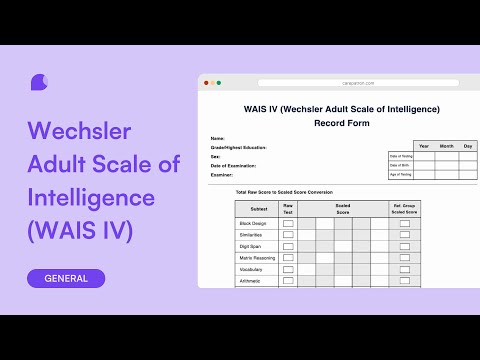
You know, when it comes to understanding how our brains work, intelligence tests can feel a bit like a rollercoaster ride.
The Wechsler Scale? That’s a big name in the world of testing. But don’t let that freak you out; it’s all about getting to know how you think and process stuff.
Imagine sitting there, answering questions that gauge everything from your problem-solving skills to your verbal abilities. It’s kind of wild when you think about it!
And honestly, what does it even mean to be “intelligent” anyway? There’s so much more than just book smarts. So let’s dive into this and break it down together!
Understanding the Wechsler Adult Intelligence Scale: A Comprehensive Guide to IQ Assessment
The Wechsler Adult Intelligence Scale, often called WAIS, is like a main character in the world of intelligence testing. Developed by David Wechsler, it’s designed to measure an adult’s cognitive abilities—basically, how smart you are in different ways. But it goes beyond just one number, because intelligence is more than what a simple IQ score can tell ya.
Structure of the WAIS
This test has various components. It’s split into four primary indices:
Each of these areas can give insights into different parts of your intelligence. Say you score high on Verbal Comprehension—maybe you’re great at reading and expressing ideas. If you struggle with Processing Speed, that may mean you’re not as quick with straightforward tasks.
The Testing Process
So, what’s it like to take this test? You sit down with a trained professional who hands you tasks ranging from answering questions about general knowledge to solving puzzles. The whole thing usually takes around 60 to 90 minutes. It’s not just a bunch of random questions; they’re designed to assess those four indices I mentioned earlier.
Anecdote Time: I once knew someone who took the WAIS for a college program application. They were super stressed about their scores but ended up discovering strengths they never knew they had, especially in Perceptual Reasoning. That opened up new pathways for them! Just goes to show that sometimes these tests can be eye-opening experiences.
The Application
Now you might be asking yourself why all this matters? Well, the WAIS is used for various reasons:
Remember though, while the WAIS is a well-respected tool, it’s just one piece of the puzzle when considering someone’s overall capabilities or potential.
In wrapping up this little chat about the Wechsler Adult Intelligence Scale: it’s not just about numbers; it’s about understanding different aspects of intelligence and how they relate to real life. Whether you’re curious for personal knowledge or needing it for a specific reason, knowing how WAIS works makes all of this way more interesting and useful!
Understanding Intelligence: How the Wechsler Scales Accurately Measure Cognitive Abilities
Understanding Intelligence is such a fascinating topic, isn’t it? It’s like peeling back the layers of a very complex onion. You might have heard about the Wechsler scales before; they’re a big deal when it comes to measuring cognitive abilities.
The thing is, intelligence isn’t just one simple score. It’s multidimensional, which means it includes various aspects. The Wechsler scales break this down into different components that provide a clearer picture of someone’s cognitive abilities. And there are several versions, but we’ll focus on the adults for now.
So, these scales have different areas to consider:
- Verbal Comprehension: This measures your ability to understand and use language. Think about how you explain something complex to a friend—that skill reflects how you process verbal information.
- Perceptual Reasoning: Here’s where it gets interesting! This area looks at how well you can solve problems with visual and spatial information. Picture doing a jigsaw puzzle without knowing what the final image looks like!
- Working Memory: This is like your mental sticky note! It measures how well you can hold onto information temporarily while manipulating it—like remembering a phone number just long enough to dial it.
- Processing Speed: Ever felt rushed while taking a test? That’s where this comes in! It gauges how quickly and efficiently you can complete tasks using simple visual information.
Each of these areas adds up to give us something called an IQ score. But remember, that number doesn’t define you entirely; it’s just one piece of the puzzle.
Now, let’s talk about why these tests are significant. It’s not so much about labeling someone as «smart» or «dumb.» Instead, they help identify strengths and weaknesses in various cognitive areas. For instance, if someone scores high in Verbal Comprehension but lower in Processing Speed, they might excel in writing or discussion while feeling challenged by tasks that require quick responses.
It’s important for professionals too! Using the Wechsler scales can support decisions in educational settings or workplaces when considering accommodations or roles that align with one’s strengths.
And hey, I get it—testing can feel intimidating! Just think back to those awkward moments during exams when stress levels spike through the roof. But remember that these assessments aim to understand you better—not box you into a corner.
In summary, understanding intelligence through tools like the Wechsler scales opens doors for personalized support and growth. It’s all about harnessing your unique gifts and navigating challenges in ways that work for **you**.
Understanding WAIS Scores by Age: What Is Considered a Good Score?
Understanding WAIS scores can feel a bit daunting, especially if you’re just dipping your toes into the world of intelligence testing. So, let’s break it down together without any fluff.
The WAIS, or Wechsler Adult Intelligence Scale, is a popular test that measures different aspects of intelligence in adults. It gives scores in a few areas, but the most talked-about number is the Full Scale IQ (FSIQ). This score helps assess how someone performs compared to others their age.
Now, when it comes to what’s considered a “good” score on the WAIS by age, it kind of varies. Basically, the average IQ score is around **100**. That’s right – most people will land somewhere close to this number.
But here’s where things can get interesting. Depending on your age group, the interpretation of these scores may shift slightly due to factors like educational opportunities and societal changes. To give you a clearer picture:
- Adults (Ages 20-40): For this group, scores between 90 and 110 are often seen as average. Hitting above 110? That’s generally considered above average.
- Middle-Aged Adults (Ages 41-60): You might notice slight variations here too; a score between 85 and 105 tends to be pretty typical during these years.
- Seniors (Ages 61+): As folks enter their later years, cognitive speed can start to change. Scores from about 80 to 100 are common.
It’s important to remember that **context counts**! Age-related factors like experience and life challenges can play a big role in how we interpret these numbers. Think about it: somebody could score lower not because they’re less intelligent but maybe they’ve had limited access to education or are dealing with health issues that affect cognitive function.
Also, keep in mind that WAIS tests measure various cognitive abilities including verbal comprehension and perceptual reasoning—so if someone excels in one area but lags in another, their overall FSIQ might not capture their true potential.
Lastly, being aware of how significant life events can affect performance is crucial too—stressful situations like job loss or family issues can lead anyone’s score slipping unexpectedly.
So when you’re looking at WAIS scores by age and wondering what really qualifies as «good,» just remember: averages give us a baseline but don’t define who someone is or what they’re capable of achieving!
So, when you hear someone mention the Wechsler Scale, you might picture some old-school test in a stuffy office with a clipboard and a stern-looking psychologist. But it’s way more relatable than that! The Wechsler Intelligence Scale for Adults (or WAIS) is kinda like a tool that helps assess how people think and process information. It’s not just about IQ numbers; it digs deeper into different areas of intelligence.
Imagine someone named Alex. He took the WAIS because he was struggling with work tasks that required problem-solving. He thought he wasn’t smart enough, but the test showed him something different. Instead of just getting a straight-up score—it broke down his abilities in things like verbal reasoning and working memory. That was eye-opening for him! It helped him realize where his strengths lay and where he could improve.
What I love about this scale is its human aspect. It doesn’t box someone into a single definition of intelligence. There are so many factors at play—how you handle new info, how quickly you can recall facts, even your creativity! Plus, it gives insight into things like emotional intelligence and practical skills.
Sure, tests can feel kinda daunting, but this one’s designed to be engaging—like puzzles and questions that make you think instead of just rote memorization stuff. After all is said and done, the goal isn’t to label or define someone harshly but to open doors for personal growth. You know? It’s not about being better than someone else; it’s about understanding yourself better.
In a world that loves quick judgments based on scores or grades, the Wechsler Scale reminds us there’s so much more to being intelligent than meets the eye. It’s like peeling back layers to see what’s really going on up there in your noggin’. So next time you think about intelligence tests, remember that there’s a broader picture—a journey rather than just numbers on paper!