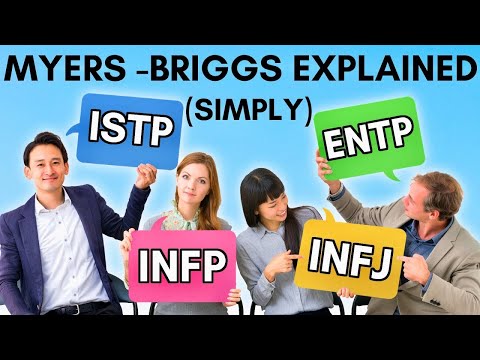
So, let’s talk about the MBTI. You know, the Myers-Briggs Type Indicator?
It’s that personality test that seems to pop up everywhere. You answer a bunch of questions, and boom—you get a four-letter type.
But here’s the thing: it’s not just some quirky quiz you take for fun. It can really help us understand ourselves and others better.
I mean, think about it. Knowing your type could shine a light on why you feel or react in certain ways. Ever had that moment when you finally get why you clash with someone? It’s like, ohhhh, now I get it!
And honestly, in today’s world—where mental health is finally getting the attention it deserves—the MBTI can be a cool tool for sparking those conversations.
So grab a cozy drink, and let’s dive into how this personality framework intersects with mental health awareness!
Exploring the MBTI Types Most Common Among Therapists: Insights into Mental Health Professionals
Sure thing! Let’s chat about the MBTI types that pop up most often among therapists. This stuff can be super insightful, especially if you’re trying to understand why therapists might vibe with certain approaches or clients.
First off, the MBTI, or Myers-Briggs Type Indicator, is all about personality traits. It breaks people down into 16 different types based on four dichotomies:
Introversion vs. Extraversion
Sensing vs. Intuition
Thinking vs. Feeling
Judging vs. Perceiving
So, where do therapists fit in all this? Well, there are a few types that show up more frequently in the therapy world.
One of them is the INFJ. If you’ve ever met an INFJ, you probably noticed they have this intuitive handle on emotions and can really feel what others are going through. They often see therapy as a calling rather than just a job. Their natural empathy helps them connect deeply with clients.
Another type you might encounter is the ENFJ. These folks are often seen as charismatic and engaging. They love working with people and tend to create a warm and inviting atmosphere in sessions. ENFJs are pretty good at picking up on social dynamics because they’re tuned into others’ feelings.
Then there’s the INFP, who also brings a unique flavor to therapy sessions. They tend to focus on personal values and deep emotional connections, making them great at helping clients explore their inner worlds. INFPs are often idealistic and seek to understand individuals’ struggles from a compassionate perspective.
Last but not least, we have the ISFJ. These ones are usually detail-oriented and have strong values when it comes to caring for others—they’re like emotional caretakers! They create safe spaces for clients, which can be super comforting during tough times.
Now, you might wonder why these specific types lean towards being therapists more than others, right? Well, it boils down to their inherent traits:
- Empathy: Many of these types possess strong empathy skills.
- Eagerness to help: There’s usually a desire to support and uplift others.
- A deep understanding of emotions: These personalities often grasp complex emotional landscapes well.
- A preference for meaningful connections: Building trust is key in therapy!
Having said that, don’t think other types aren’t capable of being amazing therapists too! It’s just that these personalities sometimes resonate more with typical therapeutic practices.
Also worth noting is how diversity in therapist personality types can spark different approaches in therapy itself. Like an ESTP might take on life coaching with enthusiasm because they enjoy action-oriented strategies while an INTJ may dive deep into cognitive theories before formulating plans!
So basically, understanding MBTI can shed some light not just on therapist styles but also on how you personally connect with professionals in mental health settings. Next time you’re talking with someone about feeling understood or challenged in therapy, remember—it could be influenced by their personality type too! The whole thing adds depth to our conversations around mental health awareness—what works for one may not work for another!
And isn’t that what it’s all about?
Unlocking Your Mind: Understanding Cognitive Functions Tests and Their Impact on Mental Health
Cognitive functions tests, like the Myers-Briggs Type Indicator (MBTI), are often seen as this cool way to peek into our minds. They can help you understand how you think, feel, and interact with the world. These tests aren’t just for fun; they actually can have a real impact on your mental health. You know?
Cognitive Functions
The term «cognitive functions» refers to different ways we process information and make decisions. The MBTI breaks these down into eight functions, which are grouped into four pairs: sensing vs. intuition, thinking vs. feeling, judging vs. perceiving, and extroversion vs. introversion. So basically, if you identify as an ENFP (for instance), you’re more likely to rely on intuition and feeling than sensing or thinking.
Understanding these cognitive functions helps you make sense of your own thought patterns and behaviors. This knowledge is empowering because it gives you a better grip on yourself, right?
The Role of MBTI in Mental Health Awareness
Now let’s talk about how this connects to mental health awareness. When you take an MBTI test or similar assessments like cognitive function tests, you’re not just getting a label; you’re gaining insights. For instance:
- You might discover why you get overwhelmed in social situations if you’re an introvert.
- Or maybe you’ll understand your need for structure if you’re a judging type.
- It can even help in recognizing stress triggers—like how your intuitive side might struggle with too much detail-oriented work.
This kind of awareness can be super helpful in therapy or just day-to-day life because it allows for more effective coping strategies.
Real-Life Example
Imagine Sarah, who always felt anxious about her choices at work. She took the MBTI test and found out she’s an ISFJ—someone who naturally takes on responsibilities and is sensitive to others’ needs but may struggle with decision-making under stress. Knowing this helped her communicate better with her manager about her workload and also prompted her to practice saying «no» sometimes.
This doesn’t mean the MBTI is a cure-all for mental health issues! But understanding cognitive functions could lead to healthier relationships and improved self-awareness.
Limitations of Cognitive Tests
You should also keep in mind that these tools have their limitations. Some folks over-identify with their type or use it as an excuse for certain behaviors—like saying they’re just “too introverted” to join social events when they actually want to go but feel anxious about it.
So while it’s helpful to get insights from these tests, it’s crucial not to box yourself or others into a single category too tightly.
Conclusion
Cognitive function tests like the MBTI offer valuable insights into how we think and interact with the world around us. This understanding enhances awareness around one’s mental health and emotional well-being but remember: they’re just one piece of a much bigger puzzle! Embracing complexity means recognizing that people are multidimensional beings that cannot be easily defined by a mere test score.
So whether you’re diving into these tests out of curiosity or looking for ways to cope with challenges in your life, knowing yourself better is always a big win!
Exploring Cognitive Functions in MBTI: Understanding Personality Types and Their Impact on Mental Health
Understanding cognitive functions in the MBTI (Myers-Briggs Type Indicator) can give you some real insight into how personality types affect mental health. So, if you’ve ever taken that fun little personality test and thought, “What does this mean for me?”—you’re in the right place.
Cognitive Functions Explained
At its core, MBTI categorizes people into 16 different personality types based on four dichotomies: extraversion/introversion, sensing/intuition, thinking/feeling, and judging/perceiving. Each type has a stack of cognitive functions—basically, these are the mental processes we use to perceive the world and make decisions.
For example, if you’re an INTJ, your primary function is Introverted Intuition. This means you might be good at seeing patterns and future possibilities but may struggle with day-to-day tasks or social interactions.
The Eight Functions in Play
So what are these eight functions? They include:
- Introverted Sensing (Si): Relies on past experiences to interpret new information.
- Extraverted Sensing (Se): Focuses on immediate sensory experiences.
- Introverted Intuition (Ni): Sees connections between ideas over time.
- Extraverted Intuition (Ne): Generates possibilities based on external cues.
- Introverted Thinking (Ti): Analyzes situations internally using logic.
- Extraverted Thinking (Te): Organizes information to achieve goals efficiently.
- Introverted Feeling (Fi): Guides decisions based on personal values.
- Extraverted Feeling (Fe): Harmonizes with others’ emotions and social dynamics.
These functions dictate how you respond to stress or joy. Like, someone strong in Fe might be very tuned into others’ feelings but could feel overwhelmed when they can’t help people.
The Impact on Mental Health
You might wonder how all this plays into mental health. Well, the thing is that understanding your cognitive function can help you spot your triggers and strengths. For instance, someone high in Ne may thrive in chaotic environments but feel burnt out after prolonged stress without creativity.
Here’s a little story for perspective: Sarah was an INFP who always felt misunderstood. She valued harmony deeply; however, her tendency towards idealism sometimes left her frustrated when reality didn’t match her expectations. By learning about her introverted feeling function—Fi—Sarah realized she could express her feelings better instead of bottling them up until she was empty.
Coping Strategies Based on Types
Every MBTI type faces unique challenges that can influence their mental health:
- If you’re an ENTJ dealing with stress, remember it’s okay to slow down; taking breaks can help clear your mind.
- If you’re an ISFJ feeling overwhelmed by others’ needs, set some boundaries so you’re not stretched too thin.
- An INTP might get lost in their thoughts; practicing mindfulness helps bring them back to the present moment.
Recognizing these patterns allows you to take proactive steps for better mental wellness.
In short, getting familiar with your MBTI type and its cognitive functions isn’t just some quirky personality quiz—it has real implications for understanding your emotional landscape! You get where I’m coming from? Exploring this connection could help reduce anxiety and improve relationships too.
So whether you’re just curious about your own type or looking to understand friends better—keep this stuff in mind! It really makes a difference when we know ourselves better because that’s how we can take care of our mental health effectively.
So, you know, the MBTI—Myers-Briggs Type Indicator—has become, like, super popular when it comes to understanding ourselves and others. Honestly, people love to dig into their personality types and see how they fit in this great big puzzle we call life. You might be an ENFP or an ISTJ, right? But what does that all mean for mental health awareness?
Well, let’s unpack this a bit. The MBTI helps shine a light on how we process information, make decisions, and interact with the world around us. It can be a game-changer when it comes to recognizing our own emotional triggers or understanding why we jive with certain people while others just… well, don’t click.
I remember chatting with a friend who was feeling totally overwhelmed at work. She didn’t know why she was struggling so much. After taking the MBTI test, she found out she was an introvert in a super extroverted environment. Instead of just pushing through the discomfort and trying to adapt without insight, she could now clearly see why things felt off for her. It was like turning on a light bulb! She realized she needed quieter spaces to recharge and that it’s okay to ask for those breaks.
But here’s where it gets interesting: while knowing your type can boost your self-awareness, it doesn’t define you completely. I mean sure, an INFJ might tend to be more sensitive or empathetic—traits linked to their personality type—but that doesn’t mean every single INFJ will respond the same way in every situation. Mental health is influenced by so many things: life experiences, upbringing, just being human!
That’s why I think the MBTI can be a helpful tool but shouldn’t be treated like some sort of psychological gospel. It opens conversations about mental health that may not have happened otherwise—like discussing how your type can influence stress management or relationship dynamics.
Anyway, when you combine this personality lens with mental health awareness, magic happens! It encourages empathy towards yourself and others; you start seeing those differences as strengths rather than weaknesses.
In short? Think of the MBTI as one piece of your larger mental health puzzle—not the whole picture but definitely worth considering in your journey toward better understanding yourself and how you relate to the world around you. You follow me?