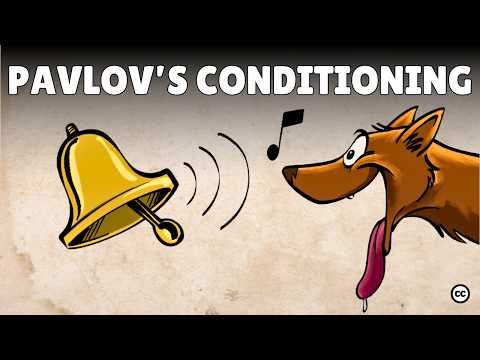
So, let’s talk about this guy, John B. Watson. Ever heard of him? He’s like the OG of psychology when it comes to understanding how we learn.
Watson came up with this idea called classical conditioning. It’s all about how we can learn through associations. Sounds simple, right? But trust me, it gets pretty interesting.
Think about it: you hear a bell ring and suddenly you’re hungry. Or every time you smell popcorn, you instantly think of the movies. That’s what he was on about!
Basically, what Watson showed us is that our behaviors aren’t just random—they’re shaped by what we’ve experienced. So, if you’re curious about how your own habits got there or why certain things trigger feelings in you, stick around. This stuff is wild!
Understanding Classical Conditioning: How It Shapes Our Behavior and Responses
Classical conditioning is one of those psychological concepts that might sound fancy, but it really boils down to how we learn to connect things in our environment. Basically, it comes from the work of a guy named John B. Watson and a Russian dude named Ivan Pavlov, who famously used dogs in his experiments. So, what’s the deal with classical conditioning? Let’s break it down.
What is Classical Conditioning?
It’s a learning process where we develop associations between different stimuli. For example, if you hear a bell ring and then every time after that you see food, eventually just ringing the bell can make you feel hungry—even if there’s no food around. It’s like your brain starts making connections all on its own without you even realizing it.
Key Components
There are some important pieces to this puzzle:
- Unconditioned Stimulus (US): This is something that naturally triggers a response. For instance, think about the smell of fresh-baked cookies—totally makes your mouth water!
- Unconditioned Response (UR): This is the natural reaction to the unconditioned stimulus. Like salivating when you smell those cookies.
- Conditioned Stimulus (CS): This is something neutral that eventually becomes associated with the unconditioned stimulus. If you ring a bell every time before baking cookies, the bell becomes your CS.
- Conditioned Response (CR): This is the learned response to that conditioned stimulus. So, now when you hear that bell, your mouth waters just thinking about those cookies—even if they’re not there!
The Power of Association
What happens is pretty incredible! Your brain starts linking things together in ways you might not even consciously notice. Think about it: ever had a specific song playing on repeat during a tough time? Now when you hear that song again, does it bring back all those feelings? That’s classical conditioning at work!
The Real World Impact
Classical conditioning isn’t just for dogs and bells; it shows up everywhere in life! You know how certain smells can transport you back to your childhood? Or how maybe a car engine starting makes your heart race because of an accident? Our experiences shape our emotional responses through these learned associations.
Treatment Applications
This concept plays into therapy too! If someone has trauma from a specific event—like getting bit by a dog—they might feel fear just by seeing any dog because their brain associates dogs with that scary experience. Understanding this helps therapists work with clients to break those negative associations and create healthier responses.
In short, classical conditioning shapes our behavior and reactions—it’s tucked away in our daily lives more than we realize! So next time you’re hit with an unexpected wave of emotion or nostalgia from something as simple as a sound or smell, remember: it’s probably just good ol’ classical conditioning showing itself.
Exploring John B. Watson’s Role in Classical Conditioning and Behavioral Psychology
John B. Watson was a major player in the world of psychology, especially when it comes to classical conditioning and the broader field of behavioral psychology. He believed that psychology should focus on observable behaviors rather than internal mental states. Pretty revolutionary back in his day, right?
Watson was inspired by the earlier work of Ivan Pavlov, who famously showed how dogs could learn to associate a bell with food—leading them to salivate just from hearing the sound. This idea kicked off a whole new way of thinking about human behavior. Watson took this concept and ran with it, arguing that all human actions are essentially learned responses to environmental stimuli.
Watson’s most notable experiment involved **Little Albert**, a baby he conditioned to fear white rats. Initially, Albert loved playing with the rat, but Watson paired the rat with loud, scary noises each time Albert reached for it. Before long, Albert was crying at just the sight of the rat! This classic study really highlighted how fear can develop through simple associations.
But let’s break down some key points about Watson’s contributions:
- Behaviorism: Watson founded this school of thought which focuses solely on behaviors that can be observed and measured.
- The Little Albert experiment: This is perhaps his most famous study, showcasing how emotions like fear can be conditioned.
- Stimulus-Response Theory: Watson proposed that behaviors are responses to specific stimuli in our environment.
- Application in therapy: The principles derived from his work have influenced therapeutic approaches like exposure therapy, helping people face fears by slowly introducing them to what they’re afraid of.
- Criticism and limitations: While groundbreaking, Watson’s focus on behavior also ignored internal mental processes—like thoughts or feelings—which play important roles in our actions.
So you see, while conditioning might sound like a one-way street—stimulus leads to response—there’s way more nuance involved. The way we respond emotionally or behaviorally is often tied up in past experiences and context.
Watson’s work laid the foundation for many ideas in behavioral psychology today and shifted how we approach learning and behavior modification techniques. His influence is still felt today in various fields, including education and therapy.
In short? John B. Watson opened up a new world where understanding human behavior meant looking at what we do instead of trying to read our minds! And that’s pretty cool if you ask me.
Understanding Classical Conditioning: The Key Theory Behind Behavioral Psychology
Classical conditioning is a fundamental concept in behavioral psychology, really shaping how we understand learning and behavior. It was popularized by Ivan Pavlov, you know? He did that famous experiment with dogs, where he rang a bell every time before feeding them. Over time, those pups started salivating just at the sound of the bell! They learned to associate that sound with food. Pretty neat, right?
So, what’s happening here is pretty straightforward. You’ve got a neutral stimulus (the bell) that becomes a conditioned stimulus after being paired repeatedly with an unconditioned stimulus (the food). This leads to a conditioned response (salivating at the bell) without needing the food. It’s like your brain makes shortcuts based on experiences.
Let’s break this down into some key points about classical conditioning:
- Unconditioned Stimulus (US): This is something that naturally elicits a response without any learning involved. Like, if you smell delicious cookies baking, your stomach might growl—that’s your body reacting naturally!
- Conditioned Stimulus (CS): This is previously neutral but becomes associated with the US after several pairings. In Pavlov’s case, it was the bell.
- Unconditioned Response (UR): The natural reaction to the US. So for our cookies example, it’s that stomach growl again.
- Conditioned Response (CR): This is the learned response to the CS alone. After lots of practice with those cookies, maybe now just hearing someone say “cookie” makes you feel hungry.
Now let’s chat about John B. Watson, who really took classical conditioning and ran with it! Watson believed that all behaviors could be explained through conditioning without needing to dig into thoughts or feelings—kind of radical back in his day! His most famous experiment involved a little boy named Albert. Watson paired a loud noise (an unconditioned stimulus) with a white rat (a neutral stimulus). Eventually, Albert became scared of the rat alone! That illustrates how fear can be learned through association.
But let’s think about how this applies in everyday life too! Have you ever felt anxious when going to see your doctor? Maybe it’s not because of them directly but because of past experiences associated with needles or painful shots. That’s classical conditioning in action! Your brain links those memories together.
And while classical conditioning has helped us understand many types of learning and behavior patterns—even in animals—it also raises important ethical questions when psychologists conduct experiments involving humans or animals.
In summary, classical conditioning digs deep into how associations shape our behaviors and reactions over time. It helps explain everything from phobias to habits—it’s pretty much everywhere around us! The next time you notice your own reactions or feelings tied closely to something seemingly unrelated, remember Pablov and Watson; they’re behind some fascinating insights into why we do what we do!
You know, there’s something pretty intriguing about how our experiences shape our behavior. Take Watson’s classical conditioning, for instance. It’s like this eye-opening theory that shows how we can learn through associations. So, picture little Albert, right? He was a baby who got scared of fluffy things because every time they brought out a cute little white rat, they banged a gong. Can you imagine? Over time, he learned to fear not just the rat but all things white and fluffy.
I mean, that really gets me thinking about how our past experiences stick with us in ways we don’t always notice. Like, have you ever heard a certain song and it just takes you back to that one summer with your friends? Or maybe the smell of cookies baking reminds you of your grandma? That’s basically classical conditioning at work! Your brain is linking those scents or sounds to feelings and memories.
But let’s get real here—sometimes those associations aren’t so positive. Think about people who develop anxiety or phobias after a traumatic experience. You might see someone jump at the sight of a dog after being bitten as a kid. It’s not something they choose; it’s just their brain having that knee-jerk reaction based on their past.
And the thing is, understanding this kind of stuff can really help us in therapy or everyday life. If you’re aware of what triggers certain behaviors or fears in yourself, well—you’re already taking steps towards change! Like my buddy Joe once told me about his struggle with public speaking; he realized he got super nervous because back in school he had a pretty rough time during presentations. Once he recognized that link, he worked on changing it.
So yeah, Watson’s classical conditioning isn’t just some dusty theory from psychology books. It’s very much alive in the way we interact with our world every day—shaping behavior in both good and bad ways!