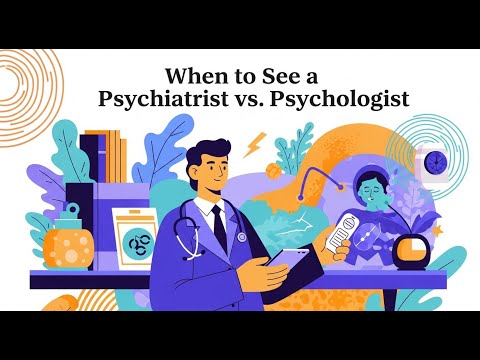
Alright, let’s get into it! You’ve probably heard the terms «psychiatrist» and «psychologist» thrown around a lot. Maybe you’re even confused about what each one really does.
I mean, it’s easy to mix them up, right? Both work with mental health, but they’ve got pretty different roles.
Like, some people think psychiatrists just hand out meds like candy. Others assume psychologists only talk about feelings. But there’s way more to it than that!
So let’s break it down in a chill way. Trust me, by the end of this, you’ll totally get the scoop on who does what! Ready?
Understanding the Differences: Psychologist vs. Psychiatrist in Treating Depression
When you’re dealing with depression, you might be wondering who to turn to for help—a psychologist or a psychiatrist? They both play important roles in mental health but are actually quite different. So let’s break it down.
Psychologists focus on understanding the mind and behavior. Their training is usually centered around therapy techniques, emotional processing, and coping strategies. They have master’s or doctoral degrees in psychology and are often skilled at conducting therapy sessions, like cognitive-behavioral therapy (CBT) or psychodynamic therapy. This means they help you work through your feelings and thoughts.
On the other hand, psychiatrists are medical doctors who specialize in mental health. They’ve gone through medical school and then trained specifically in psychiatry. Because they’re doctors, they can prescribe medications. If you’re feeling really low or struggling with severe depression, a psychiatrist might recommend antidepressants as part of your treatment plan.
So, how do these professionals approach treating depression? Here’s how it often goes:
- Psychologists: They typically provide talk therapy. You’ll sit down with them and explore your feelings, patterns of thinking, and behaviors that may be contributing to your depression.
- Psychoeducation: Psychologists help educate you about your condition—what’s happening mentally and emotionally—so you can better understand what you’re going through.
- Therapeutic Techniques: Their focus is on developing coping strategies that allow you to manage everyday life more effectively.
- Psychiatrists: They may conduct a full medical evaluation to rule out any physical issues affecting your mood.
- Medication Management: If deemed necessary, they’ll prescribe medication that can help balance chemicals in your brain which improve mood.
- Crisis Management: In cases of severe depression where there might be suicidal thoughts or actions, psychiatrists can step in quickly with medication adjustments or hospitalization if needed.
Imagine this: You’re feeling overwhelmed by sadness that just won’t lift. A psychologist could help you unpack those feelings—maybe suggesting journaling or mindfulness exercises while digging into the root causes of those emotions. Meanwhile, if it turns out that there’s a chemical imbalance involved—something more biological—a psychiatrist would assess this and possibly prescribe something like an SSRI (selective serotonin reuptake inhibitor) to help level things out.
You know what’s great? Sometimes both professionals work together! You could see a psychologist for regular therapy while also visiting a psychiatrist for medication management. This combo can be really effective for many people dealing with depression.
In summary, the choice between a psychologist and a psychiatrist usually depends on what you’re experiencing right now. If you’re looking to talk things through and want support navigating your thoughts and emotions, a psychologist might be the way to go. But if you’re leaning towards needing medication or running into severe symptoms of depression, reaching out to a psychiatrist makes sense too.
So no matter where you start—just know that both paths lead toward healing! And remember: it’s totally okay to ask questions when figuring out who might be best for you.
Psychologist vs. Psychiatrist: Understanding the Key Differences and Finding the Right Support for Your Mental Health
So, you’re trying to figure out the difference between a psychologist and a psychiatrist? It’s a good question, and honestly, a lot of people get confused about it. Let’s break it down so you can find the right support for your mental health.
First off, psychologists usually hold advanced degrees in psychology. They focus on how people think, feel, and behave. Their training emphasizes therapy techniques and behavioral science. You’ll often find psychologists involved in talk therapy—like cognitive-behavioral therapy (CBT)—where they help you explore emotions or develop coping strategies. They can’t prescribe medication, though.
On the flip side, psychiatrists are medical doctors. They have completed medical school and specialize in mental health after that. Because they’re doctors, they can prescribe medication if it’s needed as part of treatment for conditions like depression or anxiety disorders. Think of them as having both a broad understanding of mental health issues and deep medical knowledge.
Here are some key differences to consider:
- Education: Psychologists need doctoral degrees in psychology; psychiatrists need medical degrees.
- Treatment focus: Psychologists typically use talk therapy; psychiatrists may use medications as well.
- Approach: Oftentimes psychologists explore feelings deeply through therapeutic conversations; psychiatrists can look at issues from a physiological perspective.
Now let’s get into when to see one over the other! If your struggles are more about emotions, thoughts, or behaviors—like feeling down or anxious—seeing a psychologist might be your best bet. I remember talking to a friend who felt overwhelmed by work stress and just wanted someone to listen while helping him figure out how to manage his feelings better.
But if you’re dealing with something that might need medical intervention—like severe depression affecting your sleep and appetite—a psychiatrist could really help by evaluating whether medication might be beneficial alongside therapy.
Sometimes, people find it helpful to see both! You could start with a psychologist for therapy sessions while also checking in with a psychiatrist for ongoing medication management if that’s needed. Having that team approach often leads to better mental health outcomes.
However you decide to go about it—just make sure you’re comfortable with whoever is providing support. The right fit is key! Having someone you trust makes all the difference when discussing personal stuff like mental health challenges. Keep an eye out for professionals who really listen to you and where you feel understood because that connection is vital in this journey!
Understanding Salary Differences Between Psychologists and Psychiatrists: A Comprehensive Guide
Understanding the differences in salaries between psychologists and psychiatrists can be pretty eye-opening. At first glance, you may notice a significant gap in what these two professions earn. So, let’s break it down, shall we?
Education and Training is where it starts. Psychiatrists are medical doctors. They complete medical school, followed by a residency in psychiatry. This can take around 11 years of higher education and training! On the flip side, psychologists usually need a doctorate in psychology, which involves about 5 to 7 years of grad school after their bachelor’s degree. You follow me?
Because of that extra schooling for psychiatrists, they tend to earn more money on average. According to recent data, psychiatrists often make between $200,000 to $300,000 a year. In contrast, psychologists usually earn around $70,000 to $120,000. That’s quite the difference!
Another factor impacting salary differences is scope of practice. Psychiatrists can prescribe medications and treat more complex mental health conditions that might require medication management. Psychologists focus more on therapy and assessments—they can’t prescribe medicine (in most states). This difference means psychiatrists often work in settings where higher demands exist.
Work settings also play a role. For example:
- Psychiatrists might work in hospitals or private practices where patients are often severely affected and may require intensive care.
- Psychologists, on the other hand, might work in schools or community health centers where the volume of patients may be high but typically less severe.
This variation leads to different income levels because some settings simply have more resources or demand higher pay.
Then there’s demand for their services. With rising awareness of mental health issues, both fields are growing but psychiatry is booming with an increasing need for professionals who can prescribe treatments. Because fewer people go through the lengthy training required to become a psychiatrist compared to psychologists, this creates opportunities that drive salaries up.
Finally—location matters too! Some states offer better pay due to cost of living or shortage of professionals:
- If you’re working as a psychiatrist in California or New York City, you’re likely going to see those big numbers.
- Meanwhile, a psychologist working in rural areas might find lower compensation compared to their urban counterparts.
So when you look at salary differences between these professions—education level, scope of practice, setting demands and location—all play crucial roles.
In short: if you’re exploring careers in mental health and looking at your salary potential seriously consider these factors—your choice could steer your financial future!
You know, when it comes to mental health, there’s often a bit of confusion around the roles of psychiatrists and psychologists. You might think they’re just two sides of the same coin, but honestly, they have distinct jobs that cater to different needs.
Let’s break it down a little. Psychiatrists are basically medical doctors who specialize in mental health. They can prescribe medications and are trained to look at the biological aspects of mental illnesses. So, if you’re dealing with something like severe depression or anxiety that might need medication, a psychiatrist is your go-to person. I remember a friend who struggled with anxiety for years before finally seeing a psychiatrist—she found that having a medication plan really helped her find some stability and get back to enjoying life.
On the flip side, psychologists focus more on therapy and helping you work through emotional challenges using talk therapy methods. They can’t prescribe meds (in most states), but they’re like your personal cheerleaders as you navigate through your feelings and behaviors. Think of them as the guides helping you explore your mind’s intricacies.
There are overlaps too—some psychologists might use psychological testing or assessments to understand what someone is going through better. Like my cousin who went through weeks of sessions before figuring out how her childhood experiences shaped her adult relationships. That kind of deep dive was super helpful for her.
So when deciding between the two, it really depends on what you’re looking for. Are you after therapy sessions or more on exploring medication options? Each has its strengths, and sometimes people find both psychiatrists and psychologists beneficial at different points in their mental health journey.
In short, understanding whether you need a psychiatrist or psychologist can make all the difference in getting the support that truly suits you!