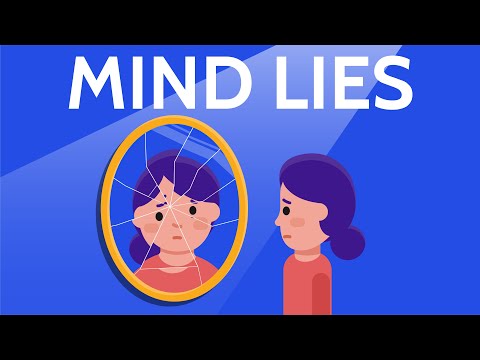
You know those days when your brain just won’t stop throwing negativity your way? Yeah, we’ve all been there. It’s like a bad playlist on repeat.
This blog provides content for informational, educational, and reflective purposes only. The information published here does not constitute medical, psychological, or psychiatric advice, and it does not replace the evaluation, diagnosis, treatment, or individualized guidance of a properly licensed professional. If you believe you may be experiencing a psychological or health-related issue, consult a qualified professional as soon as possible before making important decisions about your well-being. Do not self-medicate or start, stop, or change medications, therapies, or treatments on your own. While we aim to provide useful and accurate information, we do not guarantee that it is complete, current, or suitable for every situation. Your use of this content is at your own risk, and reading it does not create a professional, clinical, or therapeutic relationship with the author or this website.
But here’s the thing—there’s a way to flip that script. Seriously! Our minds can play tricks on us, making mountains out of little molehills. It’s so easy to get caught up in that cycle and think it’s all true.
I’ve had my share of those moments, too. Like, I once convinced myself I was terrible at everything just because I flubbed one presentation. Spoiler alert: I’m actually not terrible!
So let’s chat about challenging these common negative thinking errors. We can totally tackle this together and find a way to see things from a bit of a brighter angle!
Transforming Negative Thinking: Key Questions to Challenge Your Inner Critic
Alright, let’s talk about that pesky inner critic. You know, the voice in your head that seems to love pointing out every little flaw or mistake? It’s all about transforming negative thinking and challenging those not-so-helpful thought patterns.
First off, you might be wondering why that inner critic even exists. Well, it’s kinda like a survival mechanism. Our brains are wired to focus on threats and negativity because, historically, it helped us stay safe. But in modern life, this can lead to a bunch of unnecessary stress and anxiety. So how can you flip the script?
Key Questions to Challenge Your Inner Critic
1. **What evidence do I have for this thought?**
When you think something negative about yourself, ask yourself if there’s real proof behind it. You might feel like you’re terrible at your job because of one mistake. But look back on all the times you’ve done well! You know what? One flop doesn’t define your whole career.
2. **Am I being too harsh?**
It’s super easy to be harder on ourselves than we would be on others. If a friend messed up, would you be as critical? Probably not! So, give yourself a break already.
3. **What would I say to a friend in my situation?**
This one’s huge! Imagine your pal is feeling down about themselves—what words would you offer them? They’d probably get a load of compassion from you instead of judgment, right? Treat yourself with that same kindness.
4. **Is this thought helpful or hurtful?**
Sometimes our minds drag us into rabbit holes of negativity that don’t help at all—so why keep going there? Ask yourself if holding onto these thoughts is doing anything positive for you. If not, maybe it’s time to let them go!
5. **What’s the worst that could happen?**
When your inner critic kicks into overdrive with “what ifs,” take a moment to think through those scenarios calmly and realistically. Most of the time, what feels like a disaster isn’t nearly as bad when examined closely.
Let me share something personal here: I once had this debilitating fear of public speaking. My inner critic would yell things like “You’ll mess up!” or “People will laugh at you!” But when I started asking myself these questions, suddenly those fears felt way less scary—and honestly kind of silly!
Finding ways to challenge those nagging negative thoughts takes practice but can really change how you view yourself and your experiences—like flipping a light switch in a dark room where shadows used to loom large.
Final Thoughts
Putting these questions into play is all about reprogramming how you think about yourself and tough situations. It won’t happen overnight—but each little step counts! And remember: battling that inner critic isn’t just okay; it’s an act of self-love and care!
Understanding the Disorder of Negative Thinking: Causes, Symptoms, and Solutions
Negative thinking can really mess with your head, you know? It sneaks in like an uninvited guest and takes over your mind. You might find yourself caught in a loop of self-doubt, worry, and gloom. It’s important to break that cycle. Let’s talk about what causes this kind of thinking, how it shows up in your life, and some ways to tackle it.
Causes
Negative thinking isn’t just random; it often comes from several sources:
You know that feeling when something bad happens at work? Maybe you mess up a project and suddenly feel like you’re the worst employee ever. That’s your brain going down the rabbit hole!
Symptoms
So how do you know if negative thinking is affecting you? Here are some signs:
Imagine waking up and immediately dreading the day ahead because all you can think about is how things will go wrong. It’s exhausting!
Solutions
But here’s the thing—you don’t have to stay stuck in that mindset. There are ways to challenge those negative thoughts:
Remember that time when you thought you’d embarrass yourself at a big meeting but ended up getting praise for your ideas? That’s what happens when we challenge our negative thinking!
Negative thinking is tough but not unbeatable. By understanding what’s behind it and actively working against it, you can turn down the volume on that inner critic.
Sometimes just taking one small step—like talking to someone about how you’re feeling—can make all the difference! Each step counts in breaking free from those chains of negativity.
Overcoming Negative Thinking Errors: A Comprehensive Guide to Mental Health Strategies (PDF)
Negative thinking can really mess with your head. It’s like wearing a pair of glasses that only show you the worst parts of life. Sometimes, we get stuck in our own heads, spiraling into thoughts that don’t feel true or even fair. But the good news? You can learn to challenge and flip those negative thoughts on their head!
Cognitive distortions, as they’re sometimes called, are common traps we fall into when thinking about ourselves, others, or situations. Here’s a little breakdown of some regular offenders:
But here’s the *thing*: recognizing these patterns is the first step in beating them! Just like going to the gym strengthens your muscles, consistently challenging these thoughts helps build mental resilience.
You know how sometimes just saying something out loud makes it feel less scary? Well, try this little exercise: when a negative thought pops up, ask yourself if it’s really true. Is there any evidence that supports or contradicts it? I remember my friend Sarah had this constant worry about failing at her job. One day she wrote down her worries and looked at them objectively. By focusing on actual facts rather than feelings, she realized her fears were often overblown.
Another cool technique is reframing. Basically, it involves taking that nasty thought and flipping it around! Instead of thinking “I always mess things up,” switch it to “I’ve made mistakes before but also learned from them.” It sounds simple but trust me—it works wonders over time.
Also, let’s not forget about mindfulness. Practicing mindfulness can help ground you when those pesky thoughts start swirling around. Taking deep breaths or focusing on where you are right now can make those overwhelming feelings seem more manageable.
And if you’re looking for practical resources? Many people find therapy helpful too—for example, cognitive-behavioral therapy (CBT) specifically targets these types of thinking errors! So if offloading to a therapist feels right for you, go for it!
Remember: overcoming negative thinking takes time and practice. You’re retraining your brain to see things differently; it’s no small feat! Patience with yourself is key—celebrate the small victories along the way!
Every time you catch yourself falling into those negative patterns and make an effort to challenge them? That’s progress! Each step counts toward building healthier thought habits that benefit your mental health overall. Keep pushing through; you’ve got this!
Alright, so let’s talk about those pesky negative thinking errors that can really mess with your head. You know, like when you catch yourself spiraling down a rabbit hole of “I can’t do anything right” or “This will never get better.” Honestly, it’s super common—like, we’ve all been there at some point.
I remember a time when I was feeling really low. Everything seemed overwhelming, and I kept replaying all my mistakes in my head. It was exhausting! I thought, “Why even try?” But then I started to notice these thought patterns weren’t just annoying—they were straight-up lies!
One major error that people often fall into is all-or-nothing thinking. It’s like telling yourself you either have to be perfect or it’s a total failure. You finish one project and think it’s trash because it didn’t match some unattainable standard. But life isn’t black and white; it has so many shades of gray! Just because something didn’t turn out perfectly doesn’t mean it’s worthless.
Then there’s catastrophizing. This is where you predict doom and gloom at every turn, right? You might think that missing one deadline means you’ll lose your job or disappoint everyone around you. That kind of thinking can seriously paralyze you! Here’s the thing: most of the time, things aren’t as bad as they seem in our heads.
Challenging these errors takes practice but can be life-changing. What helped me was turning those negative thoughts into more realistic ones. Instead of thinking, “I’ll fail,” I’d remind myself, “Maybe I’ll struggle, but that’s part of learning.” It shifts your perspective from fear to possibility. Pretty powerful stuff if you ask me!
Another trick is to check in with reality—like asking yourself if there’s real evidence for these thoughts or if you’re just spinning tales in your mind. Most often than not, those thoughts are exaggerated or plain wrong.
So yeah, challenging negative thinking errors isn’t just about being positive; it’s about being real with yourself. Life can throw some curveballs; we’re allowed to feel down sometimes but recognizing these patterns helps clear the fog a bit. You start to see things more clearly and realize that there’s always hope for better days ahead—like seriously! So next time your brain tries to pull its usual tricks, give yourself a break and remember: you’re way stronger than those thoughts might lead you to believe.