You know when you see a baby giggle at something silly? It’s pretty much the cutest thing ever, right? But there’s actually some cool science behind that laughter.
This blog provides content for informational, educational, and reflective purposes only. The information published here does not constitute medical, psychological, or psychiatric advice, and it does not replace the evaluation, diagnosis, treatment, or individualized guidance of a properly licensed professional. If you believe you may be experiencing a psychological or health-related issue, consult a qualified professional as soon as possible before making important decisions about your well-being. Do not self-medicate or start, stop, or change medications, therapies, or treatments on your own. While we aim to provide useful and accurate information, we do not guarantee that it is complete, current, or suitable for every situation. Your use of this content is at your own risk, and reading it does not create a professional, clinical, or therapeutic relationship with the author or this website.
Like, when infants learn to connect their actions with reactions, it shapes how they grow and interact with the world. This whole thing is what we call operant conditioning.
It’s a bit like teaching your dog tricks but, in this case, we’re talking about tiny humans! They respond to rewards and, well, sometimes even consequences. So, let’s break it down a bit and see how this plays out in babyland.
Understanding Operant Conditioning: Its Impact on Infant Development [PDF Guide]
Operant conditioning is a fascinating concept in psychology that really shapes how infants learn and develop. Basically, it’s all about how behaviors are influenced by the consequences that follow them. If you remember that time when your toddler started clapping their hands every time they heard a song, it’s kind of like that! They learned that clapping leads to attention and smiles from you.
So here’s what happens: when a baby does something (like babbling, crawling, or even reaching for a toy), they usually get some sort of reaction from the people around them. This is where operant conditioning kicks in. The baby learns if their action is rewarded or ignored. If they get a smile and praise for saying “mama,” they’re more likely to repeat it. Positive reinforcement, right?
On the flip side, if an infant does something and gets no reaction or even a negative response, they might just stop doing that thing altogether. It’s like when a baby throws food on the floor during dinner—you might laugh at first, but eventually, if you ignore that behavior or say «no,» they’re gonna learn it doesn’t get them what they want.
Now let’s break down how operant conditioning plays out during those early years:
- Consistency Matters: Infants thrive on predictable responses. When they know yelling gets attention but quiet play doesn’t, they’ll adjust their behavior.
- Timing Is Key: Immediate reactions are crucial for babies. If you wait too long to reinforce their crying with comfort or food, they might not connect the dots.
- Variety of Responses: Different types of reinforcement keep things interesting! A smile can be as powerful as a treat later on; it’s all about mixing it up.
- Social Learning: Babies also pick up on social cues. When they see older siblings getting rewarded for good behavior—like sharing toys—they’re likely to imitate that behavior.
Think about those moments during playtime when you encourage your infant’s curious explorations—by showing excitement when they reach for new toys or make new sounds—you’re essentially setting them up for success through operant conditioning!
A quick story comes to mind—a friend once shared how her little one started stacking blocks after getting lots of cheers each time they successfully built a tower. At first, it was wobbly and all over the place but with every small win and your typical parent encouragement, she saw her child strive for better builds each day.
In essence, operant conditioning is not just some technical term; it’s fundamental in shaping behaviors throughout development. Those little reactions—smiles, words of praise—are powerful tools helping infants navigate their world! Who knew parenting could have such deep psychological roots?
Understanding Operant Conditioning: Key Examples in Infant Development
Operant conditioning is, like, a super important concept in psychology that explains how we learn behaviors through rewards and punishments. Think of it as a way babies understand the world around them. You see, they’re not just passive little beings; they’re always learning about what gets them attention or what leads to something not so pleasant.
Positive reinforcement is when something good happens after a behavior, encouraging that behavior to happen more often. For instance, when a baby smiles and coos at their parent, and the parent responds with laughter or affection, the baby is likely to repeat that adorable behavior. It’s like a little game of cause and effect where the baby learns that smiling leads to love.
On the flip side, there’s negative reinforcement. This isn’t about punishment but rather removing something unpleasant to encourage a behavior. Imagine a baby crying because they want to be picked up. Once they are held, the discomfort of being alone goes away. The next time they want comforting, they’re likely to cry again because they’ve learned it works!
Now let’s talk about punishment for a sec. It can be tricky. When we say punishment, we usually refer to making a behavior less likely by introducing an unpleasant consequence or taking away something enjoyable. If you see an infant reaching for something dangerous like a hot stove and stop them by saying «no» firmly, it’s meant to teach them not to touch it again. However, you’ve gotta be careful here—too much punishment can lead to fear instead of understanding.
Here are some examples of operant conditioning in infant development:
- Crying for Attention: A baby cries when they’re hungry or need changing. If their needs are met quickly, they learn that crying will get them what they want.
- Smiling at Faces: Babies often smile at caregivers who smile back enthusiastically. This encourages more social interaction.
- Toy Play: When babies hit or shake a toy and hear sounds from it, they’re more likely to do it again because it’s fun!
- Saying «Mama» or «Dada»: When babies babble these words and get excited responses from parents, they’re encouraged to keep trying.
The thing is, operant conditioning plays out every single day as infants grow into toddlers and beyond. They’re not just learning what gets them fed or comforted; they’re figuring out how their actions impact others around them—like knowing how much fun it is when they make someone laugh.
So remember: parenting isn’t just about keeping kids safe; it’s also about shaping their behaviors through feedback! Understanding this can help you be more aware of how your reactions—be it smiles or frowns—are paving the way for their future learning experiences!
Understanding Classical Conditioning: How It Shapes Behavior and Influences Mental Health
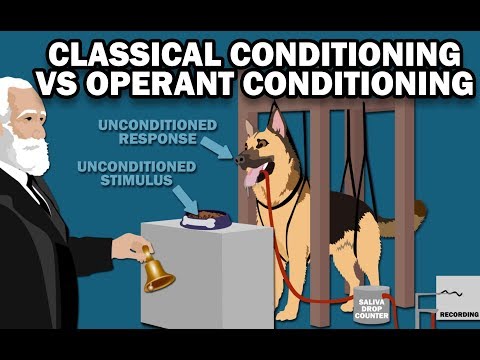
Classical conditioning, huh? It’s like a mental shortcut our brains take to associate one thing with another. You’ve likely seen this in action without even realizing it. Remember the famous experiment with Pavlov’s dogs? They heard a bell and, boom, they started salivating. That’s classical conditioning at work—linking a neutral stimulus (the bell) to something meaningful (food).
So, let’s break it down. The process usually goes like this:
- Unconditioned Stimulus (UCS): This is something that naturally triggers a response. Like food for those hungry pups.
- Unconditioned Response (UCR): This is the natural reaction to the UCS. For example, salivating when you see that food.
- Conditioned Stimulus (CS): This starts as a neutral thing and becomes associated with the UCS after being paired several times. Like that bell.
- Conditioned Response (CR): Now, this is learned behavior — the salivation from hearing the bell alone.
This whole dance of associations shapes how we react to the world around us. And believe me, it doesn’t just stop at dogs drooling over dinner; it plays a role in our mental health too.
Take anxiety as an example. Maybe you went through a tough experience in school, like getting bullied by older kids on your way home from class. Later on, just seeing that route might trigger feelings of fear or anxiety—even if there’s nothing dangerous happening anymore. You’ve got your brain saying: “Hey! Remember what happened here?” That is classical conditioning shaping your emotional responses.
Now, how does all this tie into operant conditioning and infant development? Operant conditioning is like its buddy—it’s about **rewards and punishments** shaping behavior instead of associations alone. In infants, you can see this during interactions with caregivers.
Imagine this scenario: when a baby cries because they’re hungry and their caregiver quickly responds with food (a reward), that baby learns: “Crying equals attention.” So next time they’re hungry—bam!—they cry again expecting a similar reaction.
In that sense:
- Classical Conditioning: Focuses on emotional responses to stimuli.
- Operant Conditioning: Centers on behaviors influenced by rewards or punishments.
Both are super important in understanding how behaviors develop and influence mental health over time.
Here’s something interesting: these learned behaviors can be unlearned too! With therapy techniques like exposure therapy for phobias or CBT for anxiety, folks can work through those conditioned responses step by step.
When you think about it this way, our minds are like big sponges soaking up experiences—some good and some not so great—and cool strategies help wrangle those thoughts back into shape or even erase them if needed.
So really, classical conditioning isn’t just some textbook concept; it’s woven into our daily lives and experiences in profound ways! Whether it’s learning to feel relaxed around friendly faces or anxious near the ones who hurt us long ago—understanding these mechanisms can be super empowering for anyone looking to improve their mental well-being.
So, operant conditioning, huh? It’s this fancy term you might hear in psychology classes. But really, it’s all about how behaviors get shaped by their consequences. If you’ve ever seen a baby giggle after being tickled or cried when they’re hungry, you’re kinda looking at the basics of operant conditioning right there.
Picture this: a little one coos and babbles in their crib. If you respond with smiles and cuddles, they learn that making those sounds gets them attention and love. It’s like a simple exchange; they do something cute, and boom! They get rewarded with your affection. That reinforcement encourages them to keep on babbling away. You know what I mean?
It’s not just about positive reinforcement either—there’s also negative reinforcement. Let’s say a baby’s fussing because they want their bottle. When the parent gives it to them, the crying stops; that teaches the baby that fussing leads to food. So in a way, they learn to communicate their needs through those cries.
But here’s where things can get tricky—what if a baby only gets attention when they scream? That could lead to them feeling like being loud is necessary for getting love. It’s kinda sad to think about, but it happens all the time. Sometimes our good intentions can unintentionally lead a child down the wrong path.
I remember when my niece was born; she was such a happy little thing most of the time. But if she didn’t get her way—like not getting that toy she wanted—boy did she scream! And seeing my brother rushing over every time made me realize how quickly those patterns set in. Over time, I saw her learn that all she needed was those big cries and suddenly all the grown-ups would rush over.
So yeah, operant conditioning plays a huge role in shaping how infants learn and interact with their world. Every little response we give can build or break habits for these tiny humans as they grow up! It’s wild how much power our reactions hold over their development… Isn’t it?