You know that feeling when nothing seems to go right? It’s like you’re stuck in quicksand, and the more you struggle, the deeper you sink. That’s learned helplessness for you.
This blog provides content for informational, educational, and reflective purposes only. The information published here does not constitute medical, psychological, or psychiatric advice, and it does not replace the evaluation, diagnosis, treatment, or individualized guidance of a properly licensed professional. If you believe you may be experiencing a psychological or health-related issue, consult a qualified professional as soon as possible before making important decisions about your well-being. Do not self-medicate or start, stop, or change medications, therapies, or treatments on your own. While we aim to provide useful and accurate information, we do not guarantee that it is complete, current, or suitable for every situation. Your use of this content is at your own risk, and reading it does not create a professional, clinical, or therapeutic relationship with the author or this website.
Imagine being in a tough spot and thinking there’s no way out. It can really mess with your head, right? But here’s the thing: psychologists have been rethinking this whole idea.
They’re digging deeper, reshaping theories, and figuring out how we can bounce back from tough situations. It’s pretty fascinating stuff! So, let’s unpack what this means for us and how it relates to our everyday lives.
Understanding the Three Dimensions of the Reformulated Learned Helplessness Model in Psychology
Alright, let’s dig into this whole “Reformulated Learned Helplessness Model” thing. It’s a psychology concept that’s pretty important for understanding how people respond to stress and failure. So, the model was originally about how, when people or animals feel they don’t have control over their environment, they might just give up trying. Pretty intense, right? But then researchers realized it’s not just that simple. They added some more dimensions to it.
First Dimension: Contingency
This is all about understanding the relationship between your actions and the outcomes you experience. If you try hard at something but keep failing, like studying for a test and still getting poor grades, that can lead to feelings of helplessness. You start thinking things like, “Why bother?” The idea here is that when outcomes are unpredictable or seem separate from your efforts, it can lead to a sense of helplessness.
Second Dimension: Cognition
Okay, so cognition refers to how we think about situations and our place in them. When you face setbacks, your thoughts play a huge role in shaping your emotional response. If you believe that failures are due to some internal flaw (like thinking “I’m just not smart enough”), you’re more likely to feel helpless than if you view failures as temporary setbacks («Maybe I didn’t study enough»). This dimension emphasizes the power of our beliefs and interpretations.
Third Dimension: Motivation
The motivation aspect delves into how helplessness affects what we want to do—or don’t want to do—moving forward. For instance, if someone feels defeated after multiple job rejections, they might stop applying altogether. That feeling of being stuck can totally kill motivation. It’s interesting because sometimes people don’t even realize this is happening until they notice they’re avoiding challenges altogether.
Now think back on those moments when things didn’t go your way—maybe you applied for multiple internships but got turned down each time. That sense of being trapped could make it hard for you to apply again later on or even try something new.
In essence, the reformulated model shows us that learned helplessness isn’t just about feeling hopeless; it involves how we interpret our experiences and the impact on our drive moving forward. These three dimensions—contingency, cognition, and motivation—paint a fuller picture of why people react the way they do in tough situations.
So there you have it! Understanding these three dimensions helps us grasp why some people bounce back from failure while others throw in the towel after one setback. It’s all connected—really!
Understanding the Reformulated Learned Helplessness Theory: How Attribution of Bad Experiences Affects Mental Health
So, let’s chat about the **Reformulated Learned Helplessness Theory**. This is a pretty fascinating concept in psychology that digs into how we explain bad experiences and how these explanations influence our mental health.
First off, the original idea of learned helplessness came from experiments with animals, where they’d be put in situations where they couldn’t escape discomfort. Over time, they learned to stop trying to escape, even when opportunities arose. Now, imagine if we apply this to people? If someone continually faces tough situations and feels powerless, it can lead to feelings of hopelessness and even depression.
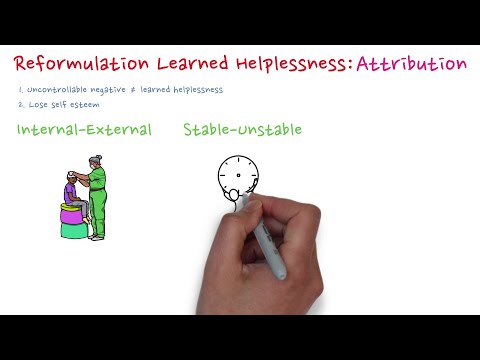
But here’s where the reformulated theory kicks in. It doesn’t just say we feel helpless; it looks at **how** we explain those bad experiences. The *attribution theory* breaks this down into three main areas:
1. Locus of Control: This is about whether you believe you have control over your life or if things just happen to you. People who think they can change their circumstances (internal locus) are generally better off than those who feel like life just happens to them (external locus). Imagine two students failing a test—one thinks it’s because they didn’t study enough (internal), while the other believes it’s because the teacher is unfair (external). That different mindset can totally shape their future responses.
2. Stability: This piece deals with whether you think these negative events are permanent or temporary. If someone thinks that failing at a job interview means they’ll never get hired again, that’s pretty stabilizing—like putting on heavy chains! But if they see it as just one setback in a series of growth experiences, they’re more likely to bounce back quickly.
3. Global vs Specific: Here, we look at whether people see failures as reflecting on their entire lives or just specific areas. For instance, if someone fails once at making friends and thinks “I’m terrible at all relationships,” that feels way worse than thinking “I just need to find a better group.”
Looking at these different ways people interpret setbacks really matters for mental health because it shapes behaviors and emotional responses down the line.
Here’s a quick example: let’s say you’ve been looking for jobs but keep getting rejection emails—ugh! If you take an internal approach and think “I’m not good enough,” that could zap your motivation big time! But if you interpret those rejections as part of a tough market or something out of your control, you’re likely to keep pushing forward.
The cool thing about understanding this reformulated theory is that it opens up paths for change. By shifting your interpretations from negative attributions to more positive ones (like seeing failures as temporary or isolated), you can shift how bad experiences affect your well-being long-term.
So basically, framing matters! Our minds are like lenses through which we see the world—they can focus on obstacles or opportunities depending on our interpretation styles. And hey, being aware of this could be a game changer when tackling mental health issues!
Understanding Reformulated Helplessness Theory: Key Insights and Implications for Mental Health
I get it, the whole concept of reformulated helplessness theory can feel a bit heavy at first. But don’t worry, let’s break it down together in a way that makes sense.
So, the original idea of **learned helplessness** came from experiments with animals. Basically, when they were placed in a situation where they felt they had no control, over time, they just stopped trying to escape or change their fate. It was like they surrendered to the situation entirely. Sound familiar? Sometimes we all feel like that—a bit stuck, you know?
Now, reformulated helplessness theory takes this original idea and spins it on its head a little. It focuses more on how people interpret their experiences rather than just what happens to them. Here’s where it gets interesting. According to this newer approach:
- Attributions Matter: How you explain your failures or setbacks plays a big role in whether you feel helpless or not. If you think bad things happen because of something out of your control—like luck or fate—you might end up feeling pretty powerless.
- Global vs Specific: If you see one setback as something that affects every part of your life (global), that can be really overwhelming. But if you view it as just one tiny bump in the road (specific), you’re more likely to keep pushing through.
- Optimism vs Pessimism: Your tendency to be optimistic or pessimistic impacts how you handle challenges. A more positive outlook can help buffer against feelings of helplessness.
Here’s an example: Let’s say you bomb an exam and think, “I’ll never be good at this subject.” That’s kind of global thinking and can lead to feeling pretty hopeless about studying altogether. But if you think, “Maybe I just need better study strategies,” then you’re in a much more empowered mindset.
Now, what does all this mean for mental health? Well, reformulated helplessness theory suggests there are some key insights for therapy and personal development:
- Cognitive Behavioral Therapy (CBT): This approach helps tackle negative thought patterns and teaches strategies for reframing those global views into something more specific and manageable.
- Empowerment Strategies: Focusing on building resilience and fostering a sense of control over one’s circumstances is crucial in therapy settings.
- Aptitude Awareness: Helping individuals recognize their strengths can shift the viewpoint from feeling trapped to seeing possibilities for growth.
In practice, this could look like someone working with a therapist who encourages them to set small goals to achieve success instead of focusing solely on their failures.
The thing is, understanding these dynamics can seriously change how folks deal with stressors in their lives. Instead of curling up into a ball when things get tough—or feeling like nothing will ever change—they can learn ways to push back against those thoughts.
It’s all about shifting perspective! Embracing the idea that while some things may be outta our hands, we have power over our reactions and interpretations—that’s what helps people regain motivation and find hope again.
So yeah, reformulated helplessness theory shines a light on how our thoughts shape our mental health experiences. And by tweaking those thoughts guided by understanding these concepts—it opens up so many pathways toward healing!
So, learned helplessness, huh? It’s a concept that’s kinda wild when you think about it. The idea that people can come to believe they have no control over their life, based on past experiences, is honestly gut-wrenching. I mean, picture yourself in a situation where no matter what you do, nothing seems to change. After a while, it’s like your brain just gives up and thinks, “What’s the point?” That can feel really heavy.
A friend of mine went through something similar during a tough period in his life. He tried so hard to make things better—working endless hours at a job that drained him—but felt stuck. Eventually, he just stopped trying altogether. It was heartbreaking watching him go through this cycle of feeling defeated. He didn’t even realize how much he’d internalized that feeling of helplessness until someone pointed it out to him.
Now here’s where things get intriguing: over time, researchers started rethinking this whole idea. You know how science isn’t static? Well, psychologists began looking at learned helplessness through different lenses. They realized it wasn’t just about being passive when faced with challenges but also connected to how we interpret situations and our own abilities.
Like, some folks might face adversity and bounce back because they see their struggles as temporary or solvable. This reframing opens up the conversation about resilience—how some people manage to hold onto hope even when times get tough.
And then there are newer theories that incorporate the role of mindset and emotional intelligence. This shift makes sense because it points out that we’re not entirely at the mercy of our surroundings; we’ve got power within us too! So yeah, every time someone manages to turn their situation around or just keeps pushing forward despite the setbacks—*that* shows how complex human motivation really is.
It’s got me thinking about how vital support systems are in this whole process too—you know? Having people around who remind you that change is possible can really make all the difference! In a way, it’s comforting knowing there are paths forward—not just doom and gloom scenarios—and that we can reshape our beliefs about ourselves.
At the end of the day, learned helplessness isn’t just a psychological theory anymore; it’s become part of an ongoing discussion about how we tackle challenges in life—both individually and as communities. And seriously? That feels kinda empowering!